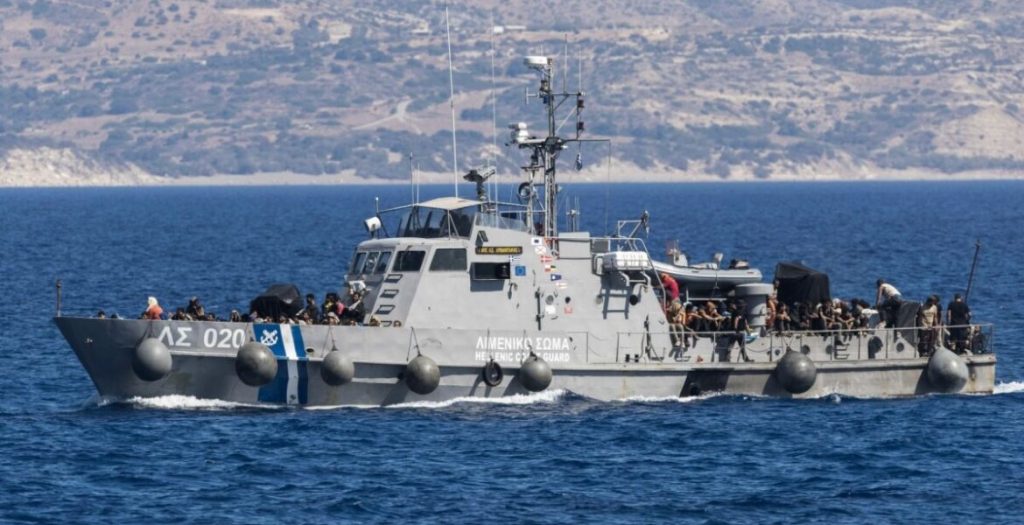
Proceedings against Aegean Boat Report founder adjourned until 6 April 2027
I was represented at the hearing by my lawyer, Zacharias Kesses, acting under my authorisation. I could not attend in person because I am subject to an arrest warrant.
The case rests on an extraordinarily unjust and fundamentally flawed indictment. It portrays the work of Aegean Boat Report as criminal despite its inconsistency with international law and with what Greek courts have recognised in previous decisions.
My lawyer submitted a motion challenging the validity of the summons to the accused. The court did not rule on that motion. It adjourned the hearing until 6 April 2027 because counsel for my co-defendant, Panagiotis Dimitras, was unable to attend.
Alongside these outrageous charges, I am also confronting a violation of a fundamental right: the right to know the accusation in a language I understand.
Delays in the administration of justice are a persistent problem. Regrettably, on this occasion, the delay was also compounded by my co-defendant’s side, which has contributed to the further judicial harassment I am facing.
Tommy Olsen Founder, Aegean Boat Report 6 October 2026
Today, the criminal case against me is due before a court on Rhodes.
I deny the charges.
For almost nine years, my work with Aegean Boat Report has been to document what happens at Europe’s borders — arrivals, people in distress, disappearances, pushbacks and human-rights violations.
In March, I was arrested at my home in Norway under a European Arrest Warrant issued by Greece.
Greece asked Norway to surrender me.
Norway refused.
But the prosecution continued.
Today, that case reaches a courtroom on Rhodes.
I will be in Norway. My Greek lawyer will be in court representing me.
I will not speculate about what happens in the courtroom today. I will speak about developments only when the facts have been confirmed by my lawyer.
For almost nine years, I have documented what happens at Europe’s borders.
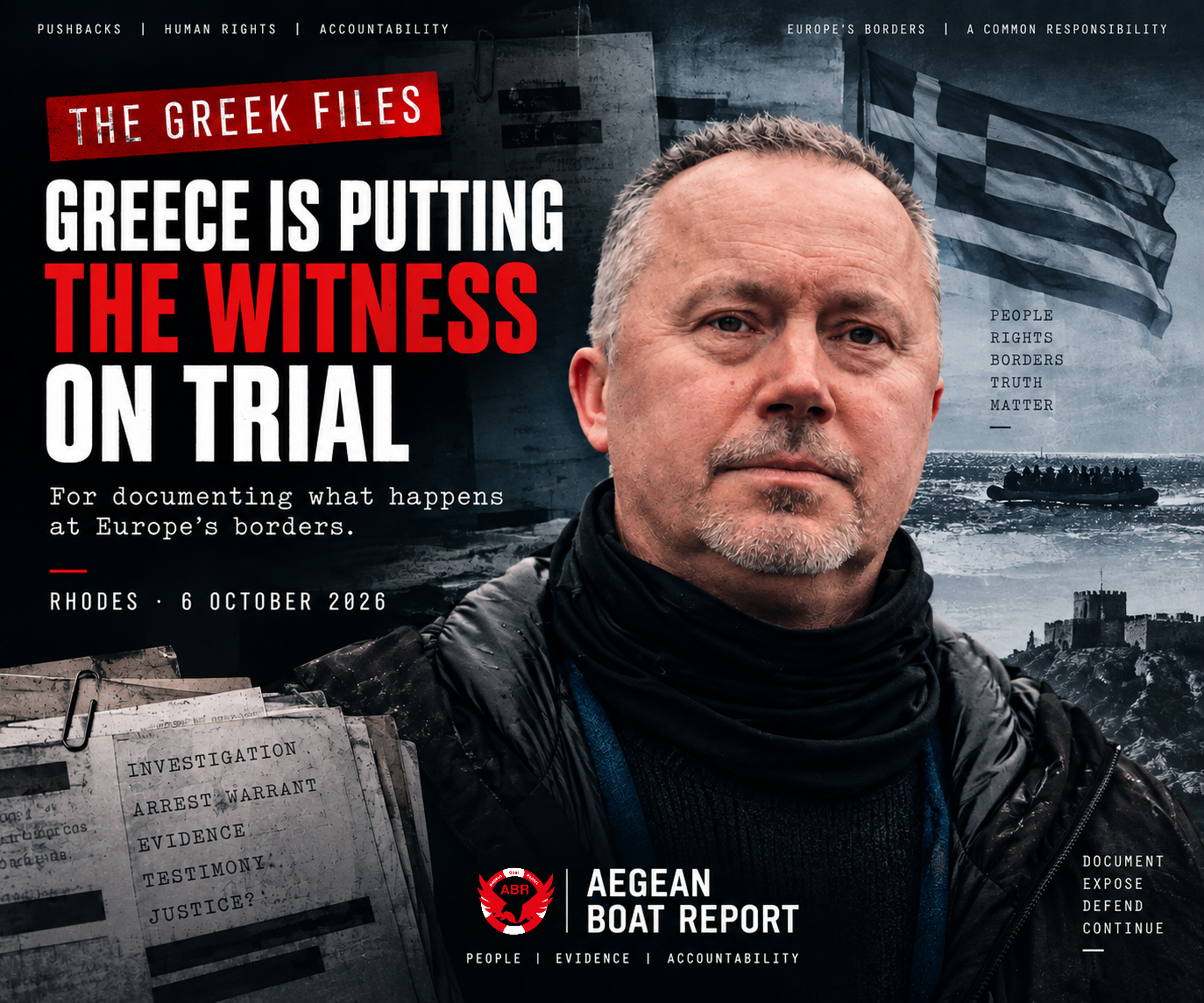
Today, Greece puts the witness on trial.
Whatever happens, Aegean Boat Report’s work continues.
Tommy Olsen Founder, Aegean Boat Report
Defending myself in Greece costs money. If you want to help, you can support my legal defence here:
Tomorrow, a criminal case against me will come before a court on Rhodes.
For years, this case has existed in police files, legal documents, arrest warrants and court decisions. It has crossed borders and eventually reached my home in Norway, where I was arrested in March.
Tomorrow it reaches a courtroom.
I will be in Norway. My lawyer will be on Rhodes representing me.
There is little left for me to say about the accusations that I have not already said. I deny the charges against me.
But before this trial begins, there is something I do want to say.
For almost nine years, Aegean Boat Report has documented what happens at Europe’s borders when there are few, if any, independent witnesses.
We have documented people arriving on Greek islands and people in distress at sea. We have documented people who disappeared after reaching Greek territory, and people who were later found back in Turkey or drifting in life rafts in the Aegean.
We have documented pushbacks and other human-rights violations because somebody has to create a record of what happened — and because people should not simply be able to disappear without anyone asking where they went.
That work has made things visible that some would undoubtedly have preferred remained unseen.
Tomorrow, I become a defendant in a criminal trial in Greece.
That is a strange position to find myself in after years spent documenting the actions of others.
But prosecution does not change what we documented. It does not erase the photographs, videos, coordinates, testimonies or records collected over the years. And it does not change why this work was necessary in the first place.
Whatever happens tomorrow, that record remains.
And so does Aegean Boat Report.
We are still here. We are still documenting. And we are still watching.
When we talk about the criminalisation of human-rights defenders, attention naturally tends to focus on the most visible parts: investigations, criminal charges, arrest warrants, arrests and eventually court proceedings.
These are the things that make headlines, and understandably so, but they are only part of what it means to live for years under the weight of a criminal case connected to the work you do.
What receives far less attention is everything that happens in between, and how slowly it accumulates.
There is always another document that needs to be read, another conversation with a lawyer, another accusation that needs to be dealt with, another question that needs an answer, another decision that has to be made.
There are periods when very little seems to happen, but the case never actually goes away. It remains there in the background, requiring attention, time and resources, while normal life and work are somehow expected to continue alongside it.
I have experienced this for years now.
There have been numerous serious investigations against me in Greece, accusations repeatedly published in the Greek press, coverage I regard as part of smear campaigns against me and my work, online hatred and attacks, a Greek arrest warrant and eventually a European Arrest Warrant that resulted in me being arrested at my home in Norway.
Norway refused to surrender me to Greece, but even that did not bring the process to an end. The criminal proceedings in Greece continue, and so does everything that comes with them.
Perhaps this is one of the things I understood least when all of this started: you don’t simply defend yourself when you eventually enter a courtroom.
You have to defend yourself throughout the entire process, and when that process stretches over years it gradually becomes something that occupies a significant part of your life whether you want it to or not.
When the case follows you into your work
For me there is another dimension to this, because Aegean Boat Report is not a large organisation with a legal department, administrative staff and people who can simply take over when I have to focus on my own case.
I am the same person who has to deal with lawyers, criminal files, warrants and court proceedings, while at the same time monitoring the Aegean, responding to people asking for assistance, documenting pushbacks and disappearances, investigating human-rights violations, speaking with journalists and lawyers, and keeping the organisation functioning every day.
That means the cost of criminalisation is not limited to what happens to me personally.
Every hour and every resource that has to be diverted into defending myself is something that cannot be used elsewhere, and over years that begins to matter.
It is impossible to calculate how much time has been taken away from the work, how many investigations could have received more attention, or what else Aegean Boat Report could have done with the resources that instead had to go towards dealing with criminal proceedings.
A cost that cannot be put on an invoice
There is also a cost that is much harder to measure.
When something like this continues for years, it does not affect only the person whose name appears on the criminal file.
The people closest to you are forced to live with parts of it as well – the uncertainty, the pressure, the worry about what happens next, and the time and attention that the case constantly takes away.
They didn’t choose any of this, but they carry part of it nevertheless.
That is not something that appears on an invoice or in a court document, but it is still part of the price that is paid.
Then there is the financial reality
And then there is the financial reality, which is perhaps the most straightforward consequence of all.
If you are prosecuted, you need a lawyer. If the proceedings continue, you continue needing that lawyer.
One thing is certain: for as long as you need legal representation, the bills will keep coming. It is inevitable.
They do not stop because the case against you has already lasted for years, because you run a small organisation, or because you simply do not have the money to pay them.
Over the years I have been fortunate to receive financial support towards my legal defence from a number of organisations.
Without that support, I simply could not have defended myself through everything that has happened. It has covered substantial legal costs at different stages and has made it possible for me to have the legal representation I needed when I needed it.
But that also illustrates the problem.
The need for legal representation does not end when one bill has been covered or one stage of a case has been dealt with.
As long as the proceedings continue, so does the need to defend yourself, and inevitably there will be another bill that needs to be paid.
The fact that others have helped carry those costs in the past does not make the underlying financial burden disappear.
Sometimes the process becomes the punishment
This is something I think deserves more attention when we talk about the criminalisation of human-rights defenders.
A case does not need to end with someone being convicted or imprisoned before it has caused damage.
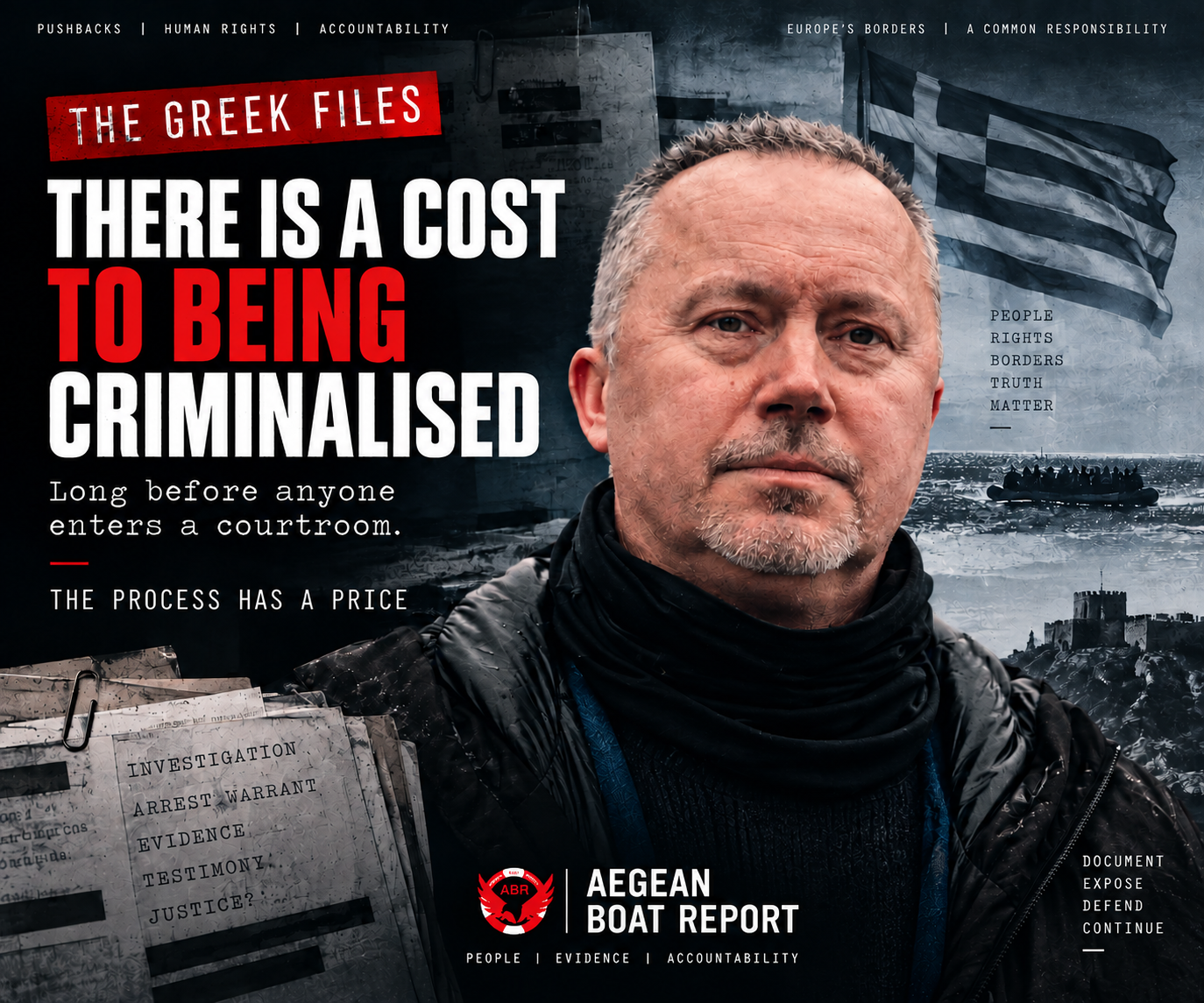
If convicted, the verdict may bring its own punishment, but sometimes the process becomes the punishment.
Years of investigations and criminal proceedings can consume time, capacity and resources, affecting not only the person targeted but also their family, their work and the organisation around them, long before any court reaches a final decision.
And there is a particularly difficult reality behind all of this: you can reach a point where you simply cannot afford the legal defence that you nevertheless cannot afford to be without.
The proceedings do not stop because you have run out of money.
The need for a lawyer does not disappear because you cannot pay the next bill.
You still have to defend yourself, and somehow the money has to be found.
For a large organisation there may be structures capable of absorbing some of that pressure. For Aegean Boat Report there are not.
Eventually you reach a point where determination is no longer enough, because lawyers and legal proceedings have to be paid for regardless of how strongly you believe in continuing the work.
That is the point I have reached.
Asking for help
I have been extremely fortunate that organisations have helped carry parts of this burden over the years, and without that support I honestly don’t know how I could have managed it.
But proceedings that continue also continue to generate costs, and there are limits to what organisations can cover and certainly limits to what I can cover myself.
A legal-defence fundraiser has therefore been opened.
Not because this is suddenly about money, and not because the financial cost is more important than everything else this process has taken, but because money is one of the very practical things required if you are going to continue defending yourself.
I don’t know how long the proceedings in Greece will continue, and I don’t know what they will demand from me or from the people around me before they eventually end.
What I do know is that I intend to continue the work I have been doing, documenting what happens at Europe’s borders and speaking about the human-rights violations I witness, regardless of how uncomfortable that may be for those responsible.
Because frankly, it is the right thing to do.
But continuing that work while defending myself has a cost.
Some of that cost can never be measured in money, while another part quite literally arrives as an invoice that has to be paid.
After carrying this for years, with the help of many others along the way, I have reached the point where I have to ask for help again.
If you want to support my legal defence, if you want to help me carry some of this burden, or if you simply want to make sure that I can continue defending myself without taking even more resources away from the work of Aegean Boat Report, I would be deeply grateful for your support.
And if you are not in a position to contribute financially, sharing the fundraiser can be just as important.
I have carried this for a long time, with invaluable help from others along the way.
I will continue to defend myself, and I will continue the work of Aegean Boat Report, because it is the right thing to do.
But I have reached a point where I cannot carry the financial burden that comes with it.
When people documenting what states do at Europe’s borders face criminal investigation and prosecution, the consequences extend far beyond the individual defendant.
My case is not only about what happens inside one courtroom on Rhodes.
It raises a wider question about the space available for human-rights defenders, journalists, lawyers, volunteers and organisations documenting what states do at Europe’s borders.
For years, Aegean Boat Report has documented pushbacks and human-rights violations in the Aegean.
That work has included documenting people who arrive on Greek islands, people in distress at sea, people who disappear after reaching Greek territory, and people who are later found back in Turkey or at sea.
It has also meant challenging official accounts and providing documentation to journalists, lawyers and human-rights organisations.
A wider concern
The concerns surrounding this case did not begin with my arrest in Norway, and they are not mine alone.
For years, international human-rights bodies and organisations have raised concerns about the treatment and criminalisation of people working on migration and human rights in Greece.
The UN Special Rapporteur on the situation of human rights defenders, Mary Lawlor, reported after visiting Greece that human-rights lawyers, humanitarian workers, volunteers and journalists working on migration had faced smear campaigns, threats, attacks and misuse of criminal law.
More recently, a joint communication by five UN Special Procedures mandates specifically identified my case while raising concerns about restrictions on civic space and the environment for those defending the rights of refugees, migrants and asylum seekers in Greece.
Human Rights Watch has described the case against Panayote Dimitras and me as part of a wider pattern of prosecutions affecting people working with refugees and migrants.
The Observatory for the Protection of Human Rights Defenders, a partnership of OMCT and FIDH, has addressed my case under arbitrary detention, judicial harassment and transnational repression.
Fair Trials has also raised concerns about the European Arrest Warrant issued against me and about a wider pattern affecting human-rights defenders documenting violations at Europe’s borders.
And yesterday, Amnesty International issued perhaps its clearest assessment of the case so far.
Amnesty said the criminal charges against Panayote Dimitras and me are a “gross misuse of anti-smuggling legislation” and “are not backed by evidence.” It said we are being targeted for our work documenting serious human-rights violations against refugees and people on the move.
Amnesty went further.
It said that, for the first time, human-rights workers in Greece are being referred to trial for helping people access asylum procedures, and described construing such activity as “smuggling” as a distortion of international and domestic law.
Based on the information available to it, Amnesty said there is no indication that our work went beyond legitimate activities assisting people in exercising their human rights and documenting what was happening.
These are independent organisations’ assessments. They are not findings of the Greek court.
The Greek prosecution maintains that the conduct amounts to serious criminal offences. The Greek court has not yet determined the charges.
My assessment
I believe this prosecution is politically motivated.
I also believe the history and nature of the case raise serious concerns that the prosecution is connected to Aegean Boat Report’s documentation of pushbacks.
Those are my assessments. I do not attribute them to the Norwegian court, and I do not present them as findings of the Greek court.
But there is now a much bigger question than what I personally believe about my prosecution.
What happens when documenting what states do at their borders carries the possibility of years of criminal investigation, arrest warrants, restrictions and ultimately a criminal trial?
The consequences do not stop with the people who are prosecuted.
Other people see what happens.
Other organisations calculate the risk.
Other witnesses decide whether speaking publicly is worth it.
And that is precisely why the wider context matters.
6 October
On 6 October, Panayote Dimitras and I are due to stand trial on Rhodes.
According to Amnesty International, if convicted, we face up to 20 years in prison.
I respect the role of the Greek court. It did not initiate this prosecution, and it is for that court to consider the case. I will not attempt to litigate the evidence here.
But whatever happens inside that courtroom, the question raised by this prosecution will remain:
How much space does Europe leave for those who document what happens at its borders?
THE GREEK FILES exists to ensure that question is not lost.
🔗 Defending myself in Greece costs money. If you want to help, you can support my legal defense here:
On 16 March 2026, I was arrested at my home in Tromsø under a European Arrest Warrant issued by Greece.
Greek authorities wanted Norway to surrender me so that I could be prosecuted in Greece.
Two months later, on 15 May, the Hålogaland Court of Appeal unanimously refused.
That judgment is one of the most important documents in this case.
Not because Norway decided whether I am guilty or innocent under Greek law. It did not.
But because, before Norway could surrender me, a Norwegian court had to examine the conduct Greece relied upon in seeking my surrender.
And what the court actually found deserves to be read.
What the Norwegian court examined
The Court of Appeal considered whether the legal requirements for surrender were satisfied.
One of the central questions was dual criminality: whether the conduct described by the Greek authorities would also constitute criminal conduct under Norwegian law.
Because the court found that the relevant conduct had been carried out wholly or partly from Norway, it concluded that the dual-criminality requirement applied fully. 13_04 Kjennelse Hålogaland lagm…
The court then examined the Greek accusations against me.
The conduct attributed to me included communicating with others, receiving information about people travelling towards Greece and assisting in initiating asylum procedures.
The Court of Appeal found that assisting someone in applying for asylum is not a criminal act under Norwegian law. It also found that merely receiving information from another person is not in itself criminal. 13_04 Kjennelse Hålogaland lagm…
The court examined whether my actions could amount to participation or complicity in organised unlawful activity connected to unlawful border crossings.
Its reasoning is important.
The court observed that the actions attributed to me — receiving personal information and initiating asylum applications — were relatively far removed from the core conduct of an unlawful border crossing.
The Greek charge did not state that I influenced who undertook the journey or their decision to travel.
Nor did it describe me as having a role in deciding where the border crossing would take place.
The court also noted that I was in Norway.
And it found that I was not a necessary link in the course of events. 13_04 Kjennelse Hålogaland lagm…
Assisting people to seek asylum
There is another part of the judgment that I believe is particularly important.
The Court of Appeal pointed out that initiating asylum procedures did not simply have a weak connection to an unlawful border crossing.
It pointed in the opposite direction.
The court reasoned that assisting with asylum procedures was a contribution towards asylum seekers presenting themselves to public authorities.
It further found that the actions attributed to me, considered in isolation, were lawful acts protected by international treaties binding on both Norway and Greece. 13_04 Kjennelse Hålogaland lagm…
The court also considered the allegation that I had facilitated people avoiding legally required border controls.
It found that the Greek charge did not concretely describe what required control had been avoided, what act of evasion had occurred, or how I had assisted anyone in avoiding such controls.
Again, the court noted the contradiction: helping someone initiate an asylum procedure requires that person to present themselves to public authorities. 13_04 Kjennelse Hålogaland lagm…
After examining the accusations, the Court of Appeal concluded that the dual-criminality requirement was not satisfied.
The request for my surrender therefore had to be refused.
But the court did not stop there.
Freedom of expression
The Court of Appeal separately examined whether surrender would be compatible with the European Convention on Human Rights.
This part of the judgment concerned Article 10 — freedom of expression.
The court stated that my expressions are protected under Article 10. It then considered the wider situation in Greece, including the treatment of refugees and the situation faced by human-rights defenders documenting their treatment. 13_04 Kjennelse Hålogaland lagm…
The court referred to findings of the European Court of Human Rights, the European Commission, the UN Special Rapporteur on the situation of human rights defenders and the Council of Europe Commissioner for Human Rights.
It specifically considered documented pushbacks and concerns about smear campaigns, threats, attacks and misuse of criminal law against human-rights defenders working on migration. 13_04 Kjennelse Hålogaland lagm…
The Court of Appeal then considered whether there was a connection between my protected expression and the criminal proceedings against me.
Its conclusion was clear:
There were concrete indications that the charges against me represented a real risk of violation of my freedom of expression protected by Article 10 of the European Convention on Human Rights.
For that reason as well, the request for surrender had to be refused.
The decision was unanimous. 13_04 Kjennelse Hålogaland lagm…
The formal conclusion of the Court of Appeal was:
“The conditions for surrendering Tommy Olsen to Greece are not met.”
What the judgment did not decide
It is equally important to be precise about what the Norwegian judgment did not decide.
The Court of Appeal did not acquit me of the Greek charges.
It did not terminate the criminal proceedings in Greece.
And it did not decide what the Greek court must do when my case comes before it.
Its task was to determine whether Norway could lawfully surrender me to Greece on the basis of the European Arrest Warrant.
The answer was no.
International reaction
The significance of the decision was subsequently recognised by international human-rights organisations.
Amnesty International reported that the Norwegian court had confirmed that the actions for which I am prosecuted in Greece are not punishable under Norwegian law and that the charges represent “a real risk of violation of his freedom of expression.” Amnesty also reported that the decision would not be appealed. Amnesty International
Human Rights Watch reported that the Court of Appeal unanimously recognised that the acts described by the Greek authorities did not constitute criminal offences under Norwegian law and that surrender would risk violating my freedom of expression under Article 10. Human Rights Watch called on Greece to revoke the European Arrest Warrant and drop the charges. That call is Human Rights Watch’s position, not a finding of the Norwegian court. Human Rights Watch
The Greek prosecution continues
The Norwegian decision ended the attempt to surrender me from Norway.
It did not end the case in Greece.
The European Arrest Warrant remains active, and my trial is scheduled to begin on Rhodes on 6 October. Amnesty confirmed after the Norwegian decision that the warrant and Greek charges remained in place. Amnesty International
That creates an extraordinary situation.
A Norwegian appellate court has examined the conduct Greece relied upon when seeking my surrender and concluded that the dual-criminality requirement was not satisfied.
The same court separately found concrete indications of a real risk that the charges against me would violate my freedom of expression.
Yet the Greek criminal proceedings continue.
That is why this judgment matters.
And that is why I believe people should be able to read it themselves rather than simply being told what it says.
Read the complete judgment
Today, Aegean Boat Report is publishing the complete decision of the Hålogaland Court of Appeal.
For the protection of vulnerable individuals named in the proceedings, identifying information relating to refugees has been redacted from the publicly available judgments. These redactions do not affect the court’s reasoning or conclusions. Journalists and human rights organisations covering the case have been provided with the original, unredacted documents for independent verification.
OFFICIAL NORWEGIAN ORIGINAL
Hålogaland Court of Appeal — 15 May 2026 Case No. 26-050254SAK-HALO
This is the authoritative version of the judgment.
On 6 October, I am due to face criminal proceedings on the Greek island of Rhodes.
I face three charges:
• Establishing and participating in a criminal organisation.
• Facilitating the unlawful entry into Greek territory of third-country nationals without the legally required border checks, jointly, in respect of multiple persons, for profit and on a professional basis.
• Facilitating the unlawful stay of third-country nationals in Greek territory, in respect of multiple persons and for profit.
I deny the charges.
For almost nine years, my work through Aegean Boat Report has been to document what happens to people at Europe’s borders.
We have documented arrivals, people in distress at sea, disappearances, pushbacks and human-rights violations. We have tried to ensure that people do not simply disappear at a border where independent documentation and accountability matter.
That work has repeatedly challenged official accounts of what happens at Greece’s borders.
Now I am the person facing prosecution.
The witness on trial
The headline of this campaign is deliberate: “Greece is putting the witness on trial.”
When I use “Greece” in this context, I am referring to the Greek state authorities responsible for bringing and pursuing this prosecution. I am not referring to the Greek people, civil society, journalists, independent institutions or the court that will hear the case.
The court did not initiate this prosecution. Its responsibility is to examine the case and determine the outcome according to law, and I respect that independent role.
I use these words because for years I have witnessed and documented pushbacks and human-rights violations at Greece’s borders. Now I am the person facing criminal prosecution.
Arrested in Norway
The case did not remain inside Greece.
A European Arrest Warrant was issued against me. On 16 March 2026, Norwegian police arrested me at my home in Tromsø.
Greece asked Norway to surrender me.
On 15 May 2026, the Hålogaland Court of Appeal refused.
That decision did not acquit me of the Greek charges, terminate the Greek proceedings or determine what the Greek court must decide. But it is a central part of this story.
Amnesty International reported that the Norwegian court confirmed that the actions for which I am prosecuted in Greece are not punishable under Norwegian law and that the charges represent “a real risk of violation of his freedom of expression.”
The Greek prosecution nevertheless remains in place.
International concern
The concerns surrounding this case are not mine alone.
The UN Special Rapporteur on the situation of human rights defenders, Mary Lawlor, expressed deep concern about my arrest. Human Rights Watch reported that on 19 March she said the charges appear to be “in direct retaliation” for my work and form part of a “long-standing and well-documented repression” of human-rights defenders in Greece. On 25 March, a joint communication by five UN Special Procedures mandates to the Greek Government specifically identified me as a human-rights defender and founder of Aegean Boat Report, and raised concerns about increased restrictions on civic space and the environment for defending the rights of refugees, migrants and asylum seekers in Greece.
Amnesty International has said that the charges are not backed by evidence and stem from Greece’s misuse of anti-smuggling legislation. Human Rights Watch has criticised the prosecution and, after the Norwegian ruling, called on Greece to revoke the warrant and drop the charges.
The Observatory for the Protection of Human Rights Defenders, a partnership of OMCT and FIDH, has addressed the case under the headings of arbitrary detention, judicial harassment and transnational repression.
Fair Trials has raised concerns about the use and proportionality of the European Arrest Warrant in my case and has placed it within a wider pattern of criminalisation of human-rights defenders.
These are the independent assessments and concerns of the UN experts and organisations cited above. They are not findings of the Greek court.
Why I am speaking now
I will not use this campaign to publish evidence from the Greek criminal file or to argue individual pieces of evidence on social media before the trial. That belongs in the legal process.
But the existence of that process does not mean the wider questions should disappear.
The history and nature of this case raise serious concerns that the prosecution is connected to Aegean Boat Report’s documentation of pushbacks.
I believe this prosecution is politically motivated. That is my assessment, not a finding I attribute to the Norwegian court or to the Greek court.
The issue is larger than one person or one organisation. It concerns the space available in Europe for people who document what states do at their borders.
What happens when the person documenting human-rights violations becomes the accused?
On 6 October, the Greek court is due to consider the case.
Until then, THE GREEK FILES will explain the history of the prosecution, the significance of the Norwegian judgment and the wider concerns surrounding the criminalisation of human-rights work.
The court will decide the case. The public should be able to understand how we arrived here.
New figures from the International Organization for Migration reveal a disturbing development at Europe’s borders: significantly fewer people are reaching Europe by sea, while more are dying or disappearing trying.
Almost 60,000 refugees and other people on the move reached Europe by sea between January and 15 September 2026, according to new figures released by the International Organization for Migration (IOM).
During the same period last year, 98,040 people arrived.
That represents a 39% decrease in sea arrivals.
But the number of people dying or disappearing on these journeys has moved in the opposite direction.
At least 2,292 people have died or gone missing on Mediterranean and Atlantic routes towards Europe so far this year, compared with 1,999 during the same period in 2025.
The figures tell two very different stories.
Europe is recording substantially fewer arrivals.
It is not recording fewer deaths.
Fewer arrivals, more dangerous journeys
The figures come from IOM’s Displacement Tracking Matrix and Missing Migrants Project and cover verified arrivals and incidents through 15 September.
IOM warns that the actual number of people who have died or disappeared is likely considerably higher.
Shipwrecks can happen without witnesses. Boats can disappear without ever being reported, bodies are never recovered, and many deaths and disappearances at sea therefore never enter official statistics.
IOM Director General Amy Pope said the figures demonstrate that people are undertaking increasingly dangerous journeys.
“Nearly every death and disappearance at sea is preventable,” Pope said.
The trend can be seen across several of the principal routes towards Europe.
Central Mediterranean: arrivals down 55%, deaths increase
The sharpest reduction in arrivals was recorded on the Central Mediterranean route towards Italy.
By 15 September, 21,393 people had arrived, compared with 48,231 during the same period last year.
That is a decrease of 55%.
Yet deaths and disappearances increased.
IOM recorded 996 people dead or missing on the Central Mediterranean route this year, compared with 844 during the same period in 2025.
So while fewer than half as many people reached Italy on this route, more people died or disappeared attempting the journey.
Eastern Mediterranean: fewer arrivals to Greece, 47% more dead or missing on the route
A similar development can be seen in the Eastern Mediterranean.
Greece recorded 20,428 arrivals, compared with 25,427 during the same period in 2025 – a decrease of almost 20%.
At the same time, deaths and disappearances recorded across the Eastern Mediterranean route increased from 284 to 417.
That is an increase of 47%.
The distinction is important: the 417 figure concerns the wider Eastern Mediterranean route monitored by IOM, while the arrival figure refers specifically to Greece.
One significant development within this region is the rapidly growing sea route from eastern Libya towards Crete and Gavdos.
Nearly 14,000 people have reportedly reached Crete from eastern Libya so far this year.
Unlike many crossings between Turkey and the eastern Aegean islands, where the shortest distances can be only a few kilometres, people departing eastern Libya face hundreds of kilometres of open Mediterranean before reaching Greek territory.
It is a fundamentally different and considerably longer journey.
From the Aegean towards Crete
Aegean Boat Report has been monitoring this change throughout the year.
For years, islands such as Lesvos, Chios, Samos, Kos and Rhodes have been among the principal entry points into Greece for people crossing from Turkey.
They are also areas where Aegean Boat Report has documented systematic illegal pushbacks at sea and from Greek territory.
Thousands of people attempting to reach the Greek islands are intercepted by Turkish authorities before reaching Greece. Others have reached Greek waters or Greek territory only to be illegally returned.
At the same time, arrivals from eastern Libya towards Crete have increased substantially.
Reporting accompanying the new IOM figures identifies increased movement from eastern Libya towards Crete as one factor behind the rising death toll in the Eastern Mediterranean.
The IOM statistics do not establish that illegal pushbacks or increased border enforcement in the Aegean have caused people to use the Libya–Crete route.
There are many factors determining which routes people take, including nationality, conflicts, departure points, smuggling networks, border controls and conditions in countries of transit.
But the developments raise an important question.
What happens when one route towards Europe becomes increasingly difficult to use?
Restricting one route does not remove the reasons people are moving.
Movement can instead shift towards different routes – and those alternatives can be significantly longer and more dangerous.
Gavdos – the people behind the statistics
The danger of the Libya–Crete route was demonstrated again only days ago.
On 13 September, Alarm Phone reported being contacted by a boat carrying 77 people south of Crete and alerted Greek authorities.
Hours later, a vessel was found partially submerged around 38 nautical miles south of Gavdos.
Fifty-one people survived.
One person was confirmed dead, while around 25 people were initially reported missing.
The incident should not be treated as representative of every crossing, nor does it by itself explain IOM’s statistics.
But it demonstrates the risks involved in a journey across hundreds of kilometres of open Mediterranean in boats that are frequently overcrowded and unsuitable for such a crossing.
Engine failure, bad weather, lack of fuel or a boat taking on water can quickly turn such a journey into a disaster.
And the crossings continue.
Only days after the Gavdos disaster, several more boats in distress were reported south of the island.
More than 17,000 intercepted and returned to Libya
There is another figure in IOM’s report that is crucial to understanding what declining European arrival numbers actually mean.
Between January and mid-September, 17,067 people were intercepted at sea and returned to Libya, according to Libyan Coast Guard figures tracked by IOM.
Those 17,067 people are not counted among Europe’s arrivals.
This illustrates one of the fundamental limitations of using arrival numbers alone to measure what is happening along migration routes.
Arrival statistics tell us how many people successfully reached European territory.
They do not tell us how many attempted the journey.
They do not include those intercepted and returned before reaching Europe.
They cannot fully account for boats that disappeared without trace.
And they cannot tell us how many people changed routes after being prevented from travelling another way.
What does a 39% reduction actually tell us?
European governments have increasingly focused on reducing irregular arrivals, strengthening external borders and preventing departures towards Europe.
Measured solely by the number of people reaching European territory, the latest figures show a substantial reduction.
Sea arrivals have fallen by 39%.
But that figure cannot be considered in isolation.
During the same period:
At least 2,292 people died or disappeared trying to reach Europe.
Deaths and disappearances increased despite substantially fewer arrivals.
On the Central Mediterranean route, arrivals fell 55%, while deaths increased.
On the Eastern Mediterranean route, deaths and disappearances increased by 47%.
More than 17,000 people were intercepted at sea and returned to Libya.
Taken together, these figures demonstrate why developments at Europe’s borders cannot be assessed simply by counting how many people reach European shores.
Behind every number is a person
IOM has called for greater international cooperation to save lives, protect people on the move, combat trafficking and exploitation, and expand safe and regular pathways.
“Behind every number is a human being, a family, a community,” Amy Pope said.
That is perhaps the most important part of these statistics.
A reduction in arrivals does not mean that the conflicts, persecution, insecurity and desperation that cause people to leave have disappeared.
Nor does preventing someone from reaching Europe necessarily mean their journey has ended.
Restricting one route can contribute to movement shifting towards another – potentially exposing people to even greater risks.
Sea arrivals to Europe have fallen by almost 40%. Yet the number of people recorded dead or missing has increased.
That should challenge any assessment of European border policy based primarily on how many people are prevented from reaching European shores.
A falling arrival figure tells us how many people reached Europe.
It does not tell us how many tried, how many were intercepted and returned, how many shifted towards other routes, or how many disappeared without ever being recorded.
And if fewer people are reaching Europe while more are dying or disappearing on the journey, declining arrivals cannot, on their own, be presented as evidence that Europe’s borders have become safer.
Sources: International Organization for Migration (IOM), Displacement Tracking Matrix and Missing Migrants Project, covering verified arrivals and incidents through 15 September 2026; IOM statement published 17 September 2026; Aegean Boat Report monitoring and documentation.
Aegean Boat Report is an independent organisation documenting arrivals, illegal pushbacks and human rights violations at Greece’s borders.
If you appreciate the work we do, and want to help us continue documenting what is happening at Europe’s borders, please consider supporting Aegean Boat Report. Every donation, no matter the size, helps us continue our work.
People in distress called the Greek emergency service and were told help was coming. They then photographed and filmed Greek Coast Guard vessel LS-060 alongside them. Hours later, Turkish authorities recorded the rescue of 27 people from a life raft and stated that they had been pushed back by Greek assets.
4 September 2026 – Aegean Sea
EVIDENCE PUBLISHED WITH THIS INVESTIGATION
This report is based on contemporaneous messages and location information sent directly to Aegean Boat Report, photographs and video recorded by members of the group, visual identification of Hellenic Coast Guard vessel LS-060, and the subsequent official Turkish Coast Guard record of 27 people rescued at sea.
Where the available evidence establishes a fact, we state it as such. Where identity, intent or events cannot be established from the available material, we say so.
On the morning of 4 September, 27 people attempting to reach Greece found themselves in distress in the Aegean Sea.
Their engine had stopped. Waves were hitting the boat and, according to messages sent to Aegean Boat Report, water was entering the craft.
They asked for help.
What happened next is documented through contemporaneous messages, location data, photographs and video sent directly from the group, together with the subsequent official record of the Turkish Coast Guard.
The material establishes something particularly important:
Greek authorities encountered this group.
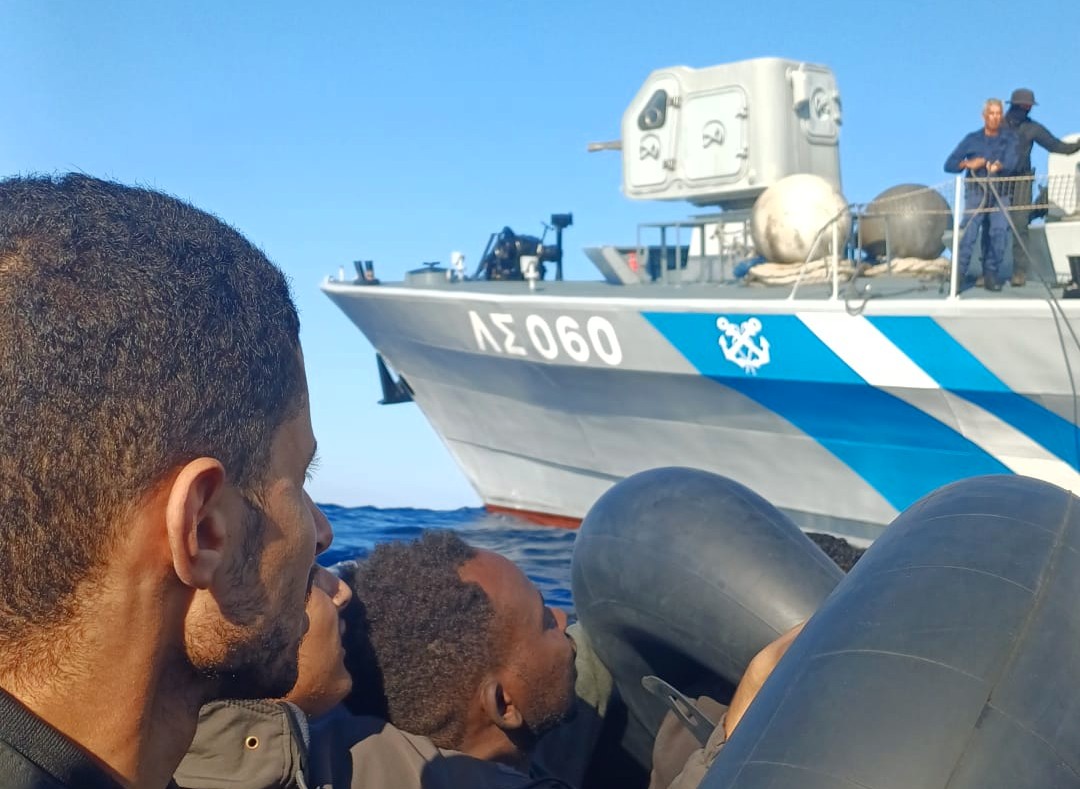
The people photographed the Greek Coast Guard vessel that reached them.
Its identification number is clearly visible:
ΛΣ 060 – LS-060
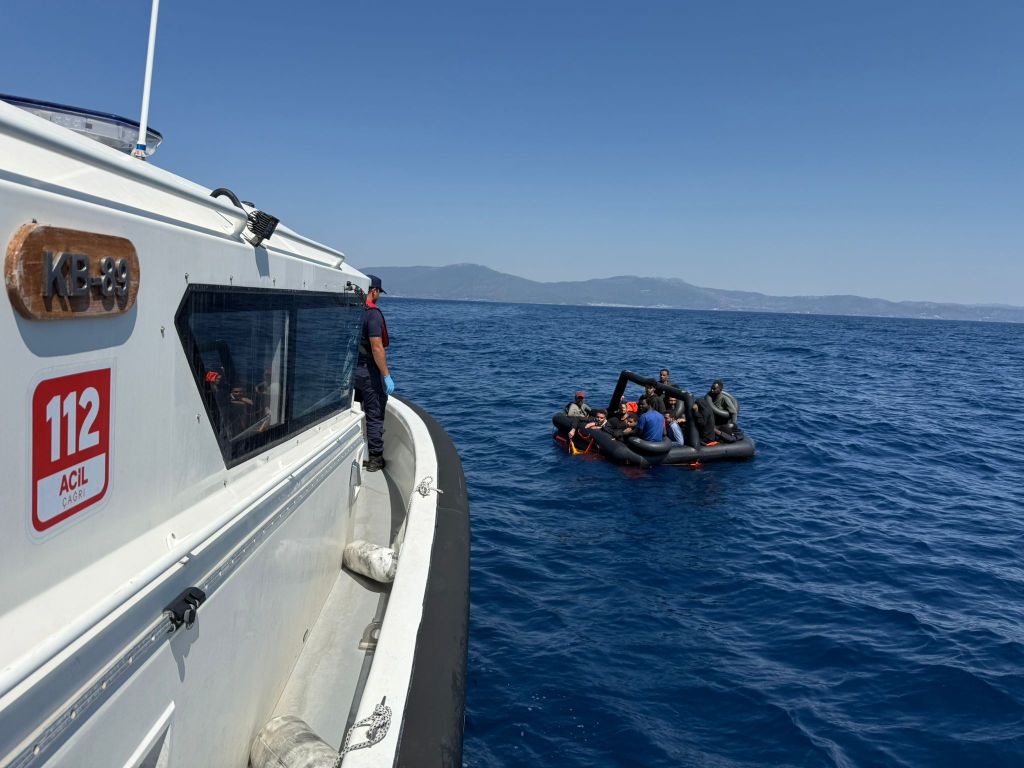
Hours later, Turkish authorities recorded the rescue of 27 people from a life raft in the Menderes area and stated that they had been pushed back into Turkish territorial waters by Greek assets. The Turkish Coast Guard records the rescue at 13:05 on 4 September, involving Coast Guard boat KB-89 and ship TCSG-311.
The question Greece must answer is therefore not whether Greek authorities encountered these people.
The photographs show that they did.
The question is:
What happened to these 27 people after LS-060 reached them?
Greek Coast Guard vessel LS-060 photographed from the group’s craft on the morning of 4 September 2026. The photograph was sent directly to Aegean Boat Report while the group was still at sea.
A Call for Help
At approximately 06:40, Aegean Boat Report was in contact with the group.
They reported that there were 27 people on board.
Their engine had stopped and they were in distress at sea.
At 06:40, the group sent their location:
37.752712, 26.368059
They wrote:
“We are stuck at sea.”
Seconds later:
“In need of urgent help.”
At 06:44, they told ABR they were:
“Near the island of Ikaria.”
When asked what had happened to their boat, they replied:
“Motor is not working.”
Shortly afterwards:
“The boat is taking water and waves are very high.”
And:
“We have women with us.”
The group reported 27 people on board, including 11 women.
They also expressed another fear:
“We are afraid of pushback.”
Aegean Boat Report advised them to call the European emergency number 112 and request immediate assistance.
They did.
At 06:57, they wrote:
“We dialed 112.”
Shortly afterwards:
“The Greece response was there are going to send help.”
For the people on the boat, this should have meant rescue.
Location sent by the group at approximately 06:40 on 4 September 2026 while they were requesting assistance near Ikaria.
The boat was 7km northeast of Ikaria, Greece.
Photographs sent by the group shortly after contacting Aegean Boat Report and reporting that their engine had stopped and their craft was taking on water.
Video sent by the group shortly after contacting Aegean Boat Report on the morning of 4 September.
“Greek Coast Guard Is Coming Our Way”
For more than 40 minutes there was no further communication.
Then, at 07:43, the group sent another photograph.
At 07:44, they wrote:
“Greek coast guard is coming our way.”
The approaching vessel was Greek.
As it came closer, members of the group began photographing it.
The Hellenic Coast Guard vessel approaching the group after they had requested emergency assistance. The photographs were sent between approximately 07:43 and 07:47.
LS-060 Comes Alongside
The Coast Guard vessel eventually came close enough for its identification to become unmistakable.
A photograph taken directly from the group’s craft clearly shows:
ΛΣ 060
The vessel was LS-060 Fournoi of the Hellenic Coast Guard.
At this point, identification does not depend on comparing silhouettes, radar equipment, vessel shape or paintwork.
Its number is visible in the original photograph.
The identification ΛΣ 060 is clearly visible on the Hellenic Coast Guard vessel alongside the group. The photograph provides direct visual identification of LS-060 Fournoi at the scene on 4 September 2026.
What the Video Shows
At approximately 07:50, the group sent Aegean Boat Report video recorded from only metres away from LS-060.
The footage is particularly important.
It does more than identify the vessel.
It provides a close visual record of personnel aboard LS-060 while the Coast Guard vessel was alongside the group.
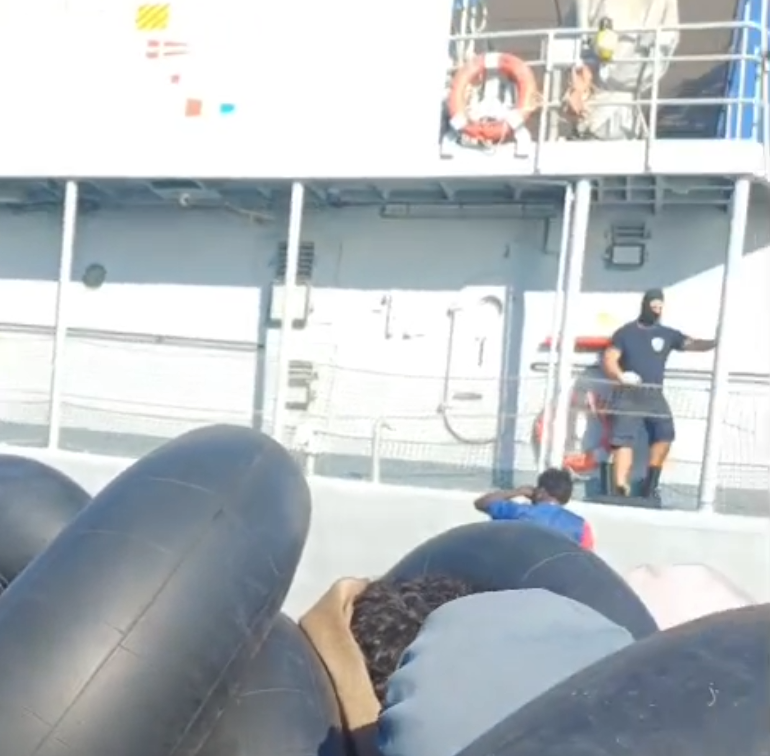
Video sent to Aegean Boat Report by the group at approximately 07:50 on 4 September 2026. Greek Coast Guard vessel LS-060 is alongside their craft. Several personnel can be seen aboard the vessel, including individuals who appear to have their faces covered.
Masked Men on Board LS-060
Several people can be seen aboard the Greek Coast Guard vessel.
At least two appear to have their faces covered.
For Aegean Boat Report, this is a disturbingly familiar sight.
For more than six years, ABR has documented and received testimony concerning masked or unidentified men involved in reported pushback operations across the Aegean — both aboard Greek Coast Guard vessels at sea and during operations on Greek islands after which people seeking protection have disappeared.
Masked personnel involved in alleged Greek pushback operations have also been independently documented.
And there is an especially relevant historical connection to 060 itself.
In June 2020, Bellingcat investigated footage showing masked men operating a Hellenic Coast Guard RHIB during a pushback near Lesvos.
Investigators compared distinctive characteristics of the RHIB and concluded that the craft was likely ΛΣ-060. They also established that, at the relevant time, the RHIB carrying the 060 designation had been embarked on HCG patrol vessel ΛΣ-080.
More than six years later, footage sent directly to Aegean Boat Report again appears to show masked personnel aboard LS-060 during an operation involving people seeking protection at sea.
Still from video recorded by the group showing personnel aboard LS-060. At least two individuals appear to have their faces covered. Masked personnel have repeatedly appeared in documented allegations concerning pushback operations in the Aegean.
A Man in Green
Another detail visible in the footage deserves scrutiny.
One person aboard LS-060 is dressed noticeably differently from personnel wearing the dark-blue clothing associated with the Hellenic Coast Guard.
He appears to be wearing green military-style clothing.
That raises an obvious question:
Was personnel from another Greek security or military unit participating in the operation?
Green military-style clothing can be associated with military or specialised personnel, but clothing alone is not sufficient to establish a person’s unit or role.
Aegean Boat Report therefore cannot identify this person as a special-operations operator from the video alone.
What the footage does establish is that a person wearing clothing distinctly different from the other visible personnel was aboard LS-060 during the operation.
Greek authorities can explain who he was and which service or unit he represented.
Still from the video showing a person aboard LS-060 wearing green military-style clothing distinct from the dark-blue clothing visible on other personnel. The footage does not allow ABR to establish his identity, unit or role.
Who Was Watching From the Bridge?
There is another potentially important detail in the footage.
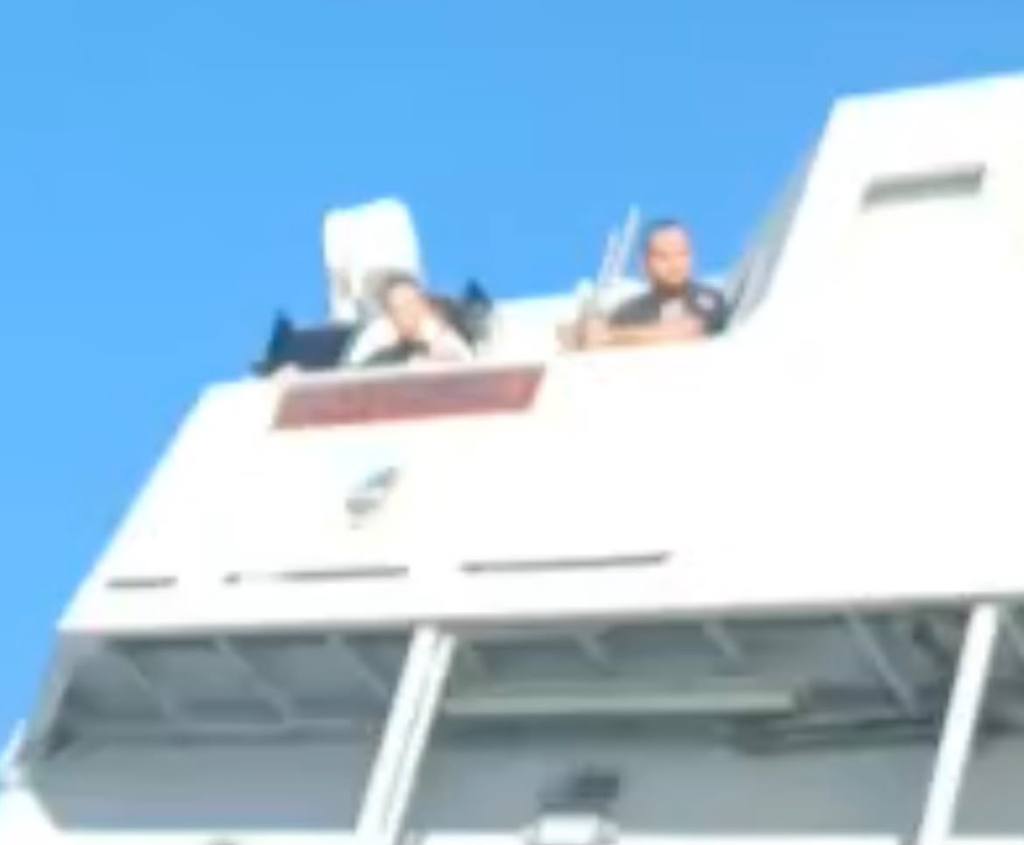
While the operation is taking place alongside LS-060, a person can be seen on or immediately around the vessel’s bridge, apparently observing what is happening below.
Because of his position, this person could be a senior crew member or the vessel’s commanding officer.
The footage does not allow Aegean Boat Report to establish his identity or rank, and we therefore cannot state that he is the captain.
But what the footage does show is important:
The operation alongside the group’s craft was taking place in view of personnel aboard the Coast Guard vessel itself.
This raises obvious questions concerning supervision and command responsibility.
What happened alongside LS-060 cannot simply be attributed, without further explanation, to unidentified masked individuals operating beyond the knowledge of the vessel’s regular crew.
Greek authorities should disclose who commanded LS-060 that morning, who was aboard, which units they belonged to and who authorised and supervised the operation.
A person is visible on or immediately around the bridge of LS-060 while the operation is taking place alongside the vessel. ABR cannot establish the person’s identity or rank from the footage.
Then Contact Was Lost
After LS-060 reached the group, communication eventually stopped.
The people who had called Greece for help did not subsequently appear in a Greek reception facility.
Instead, hours later, information emerged from the other side of the Aegean.
The Turkish Coast Guard’s official account states that at 13:05 on 4 September, 27 people were rescued from a life raft off the coast of Menderes, İzmir, by Turkish Coast Guard boat KB-89 and ship TCSG-311.
Crucially, the Turkish Coast Guard states that the life raft had been:
“pushed back into Turkish territorial waters by Greek assets.”
Official Turkish Coast Guard record concerning the 4 September rescue. Turkish authorities state that 27 people were rescued at 13:05 off Menderes after being pushed back into Turkish territorial waters by Greek assets.
The Turkish Rescue
Photographs from the subsequent Turkish operation document the rescue.
Turkish Coast Guard boat KB-89 during the rescue operation. KB-89 is also specifically identified in the official Turkish Coast Guard report concerning the 27 people.
People during the subsequent Turkish Coast Guard operation. Turkish authorities officially recorded the rescue of 27 people in the Menderes area that afternoon.
The Chain of Evidence
Taken together, the available material provides a remarkably detailed chronology.
Twenty-seven people contacted Aegean Boat Report while in distress at sea.
They reported that their engine had stopped, that their craft was taking on water and that there were high waves.
They called 112 and requested rescue.
According to their contemporaneous messages, Greek emergency services told them that help was coming.
A Hellenic Coast Guard vessel approached.
They photographed it.
Its number was clearly visible:
ΛΣ 060
They filmed personnel aboard LS-060, including individuals who appear to have their faces covered.
Communication with the group was subsequently lost.
Hours later, Turkish authorities recorded the rescue of 27 people from a life raft in the Menderes area and stated that they had been pushed back by Greek assets.
This leaves one central question requiring an answer from Greece:
What happened between LS-060 reaching these 27 people and those 27 people subsequently being recovered at sea by Turkey?
Why This Raises Serious Legal Questions
A pushback is not simply another term for preventing irregular migration.
States are entitled to control their borders. They are not entitled to do so outside the law.
If people were forcibly returned without access to the procedures and safeguards required by law, several separate legal obligations are engaged.
People seeking international protection cannot simply be removed as a group without procedures capable of examining their individual circumstances and protection claims.
Article 19 of the EU Charter of Fundamental Rights expressly states:
“Collective expulsions are prohibited.”
It also protects against removal to a state where there is a serious risk of specified forms of grave harm.
The principle of non-refoulement similarly prevents states from simply forcing people back without considering whether protected risks exist.
A maritime border does not make these protections disappear.
And this case contains another crucial element.
These people had requested rescue.
Their engine had stopped.
They reported that their craft was taking on water.
They called 112.
According to their contemporaneous communications with ABR, they were told that help was coming.
The vessel that came was LS-060.
If a rescue response instead resulted in people being forcibly returned and left at sea, this raises additional serious questions concerning Greece’s obligations towards people in distress at sea.
The distinction is fundamental:
Border control does not cancel rescue obligations or fundamental rights.
LS-060 Fournoi Has Been Here Before
The significance of identifying LS-060 does not end with this incident.
The designation 060 has previously appeared in reporting and investigations concerning serious allegations involving operations against refugee boats in the Aegean.
2015 — 58 Syrians near Didim
On 12 November 2015, LS-060 was identified in contemporary reporting concerning an incident involving 58 Syrian refugees near Didim.
Video footage was reported to show Greek Coast Guard personnel using a pointed implement against the inflatable craft before the people were subsequently rescued by the Turkish Coast Guard.
A later investigation by Bellingcat, Lighthouse Reports and European media organisations documented another pushback on 8 June 2020, during which HCG RHIB 060 approached a boat carrying 47 people at least twice. A Romanian Frontex vessel was also involved during the operation.
On 2 April 2021, the Turkish Coast Guard reported rescuing 85 people from two inflatable boats off Denizköy/Dikili.
According to the official Turkish account, their fuel tanks had been removed and the boats pushed towards Turkish territorial waters by Greek Coast Guard asset LS-060 and another Greek Coast Guard vessel.
Previous cases do not by themselves prove what happened on 4 September 2026.
The evidence from this case must stand on its own.
But the history makes the identification of LS-060 particularly significant.
The same vessel designation has appeared in allegations concerning pushback operations spanning more than a decade.
And in this case, its presence is not based on witness recollection.
It was photographed and filmed by the people themselves.
Frontex Has Been Informed
Aegean Boat Report has submitted the case and supporting material to Frontex and asked the Agency to establish whether LS-060 Fournoi was participating in, supporting, or otherwise connected to Frontex Joint Operation Poseidon at the relevant time.
ABR is not claiming that Frontex participated in the illegal pushback. That is a question for investigation. Frontex should establish which operational and surveillance assets were present, what records exist, and whether the incident has been referred to its fundamental-rights mechanisms.
Questions Frontex must answer
Was LS-060 Fournoi participating in, supporting, or otherwise connected to Frontex Joint Operation Poseidon at the time of the incident?
Did Frontex have any personnel, vessels, aircraft or surveillance assets monitoring the area?
What operational records exist, and has the incident been referred to the Frontex Fundamental Rights Office?
Questions Greece and Frontex Must Answer
Was LS-060 dispatched following the group’s emergency call to 112?
Who commanded LS-060 on the morning of 4 September 2026?
Which personnel and units were aboard LS-060?
Why do some personnel visible in the footage appear to have their faces covered?
Who is the person wearing green military-style clothing, and which service or unit did he represent?
What happened to the 27 people after LS-060 reached them?
Were any members of the group transferred aboard a Greek vessel at any stage?
Were their phones, engine, fuel, money or other belongings taken, damaged or destroyed?
Were the 27 people given an opportunity to request international protection?
How did 27 people encountered by LS-060 subsequently come to be recorded at sea by the Turkish Coast Guard?
What GPS/AIS data, bridge logs, radio communications, operational reports and video recordings exist from LS-060 and other participating assets for this operation?
These are not abstract questions.
The vessel is known.
The date is known.
The approximate times are known.
The number of people is known.
And the presence of the Greek Coast Guard is documented photographically.
27 People Called for Help
At its core, this case is remarkably simple.
Twenty-seven people were in trouble at sea.
They called Europe for help.
They called 112.
They were told help was coming.
A Greek Coast Guard vessel came.
They photographed it.
They filmed the people aboard it.
Its number was:
LS-060
Hours later, Turkish authorities recorded the rescue of 27 people from a life raft in the Menderes area and stated that they had been pushed back by Greek assets.
Greece now needs to explain what happened in between!
The 27 people at the centre of this case. They called for help on the morning of 4 September 2026. What happened after Greek Coast Guard vessel LS-060 reached them requires an independent and credible investigation.
Aegean Boat Report is an independent organisation relying entirely on donations to document human rights violations in the Aegean and assist people seeking protection.
Please support our work if you can:
Every contribution helps us continue this work.
Thank you for your continued support and solidarity ❤️
Something significant has changed in the way people are reaching Greece.
For years, the eastern Aegean was the country’s main maritime gateway. Boats crossed the narrow stretches of water separating Turkey from Lesvos, Chios, Samos, Kos and other Greek islands.
Today, the picture is very different.
Nearly 12,000 people have reached Greece from Libya so far this year, compared with around 5,000 who have arrived on the eastern Aegean islands from Turkey.
A route that barely registered in Greece’s arrival statistics only three years ago has developed into the country’s largest individual maritime arrival route.
The obvious question is not only how quickly this happened.
It is why.
Why are increasing numbers of people travelling hundreds of kilometres across open Mediterranean Sea from Libya when Greece can be reached from Turkey across some of the narrowest stretches of the Aegean?
There is no single answer.
War and displacement, changing movements through North Africa, increasingly established smuggling networks in eastern Libya and intensified border enforcement in the Aegean all appear to be part of a much larger change in the geography of people trying to reach Europe.
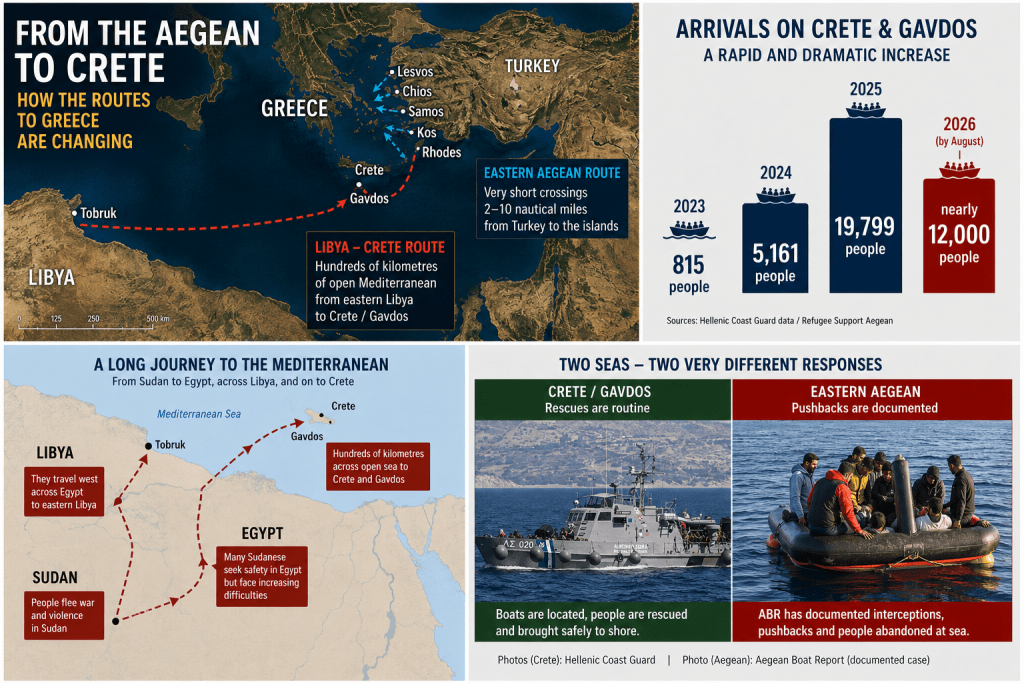
From the Aegean to Crete: the rapid growth of the Libya–Crete route, the journeys behind it and the contrasting realities at Greece’s maritime borders. Graphic: Aegean Boat Report.
From 815 arrivals to almost 20,000
The speed at which the Libya–Crete route has developed is remarkable.
In 2023, only 815 people were recorded arriving on Crete and Gavdos. The following year, more than 5,000 arrived.
By the end of 2025, the Hellenic Coast Guard had recorded almost 20,000.
The increase has continued this year.
According to figures provided directly by the Hellenic Coast Guard to Refugee Support Aegean, 8,552 people arrived on Crete and Gavdos during the first six months of 2026.
Greek authorities now report that the number arriving from Libya is approaching 12,000.
Those figures are necessary to understand what is happening, but they represent people, not simply a changing line on a graph.
At least 780 children were among those arriving during the first six months of this year.
More than 3,000 were Sudanese. Hundreds came from South Sudan and Eritrea. Others came from Bangladesh, Egypt and elsewhere.
For many, reaching Libya came only after an extraordinarily long and difficult journey. Crossing the Mediterranean was simply the next stage.
People after arriving on Crete following the crossing from Libya. Photo: ekathimerini.com
Sudan, Egypt and a changing route through North Africa
One important part of the explanation can be found much further south.
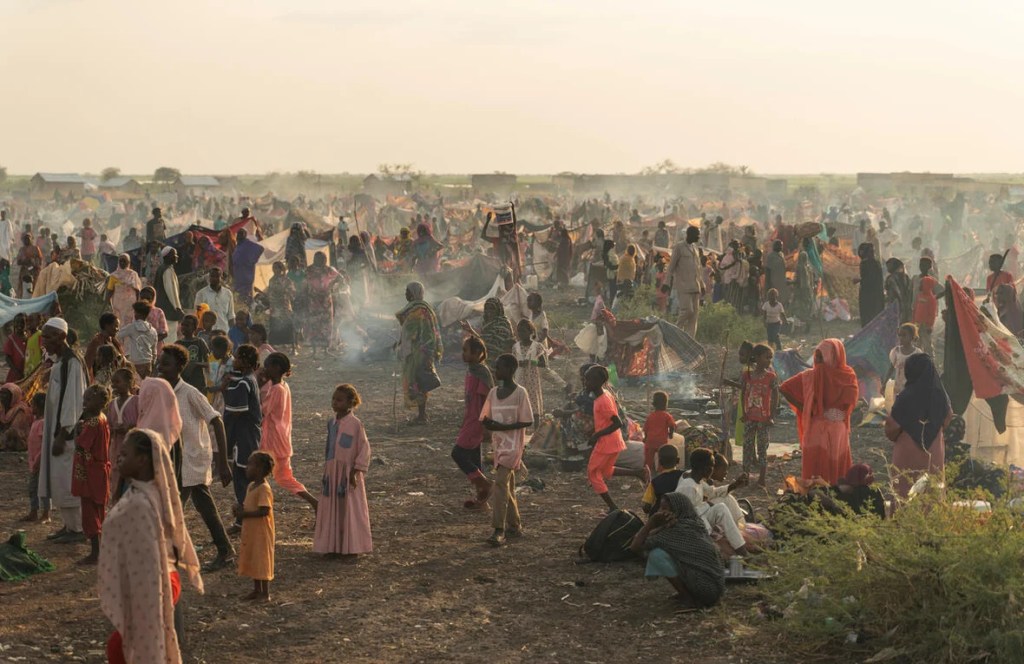
The war in Sudan, which began in April 2023, has created one of the world’s largest displacement crises.
South Sudanese returnees and Sudanese refugees entering South Sudan through the Joda crossing point in November 2023. Photo: UNHCR/Ala Kheir
Millions have fled their homes, many initially seeking protection in neighbouring Egypt.
But life in Egypt has become increasingly difficult for many Sudanese refugees.
Rising living costs, difficulties obtaining or maintaining legal residency, arrests and deportations have been documented, while humanitarian assistance has struggled to meet enormous needs.
Increasing numbers have subsequently travelled west towards Libya.
For someone already in Egypt, eastern Libya is geographically close.
And on the coast around Tobruk, another development has been taking place.
Why Tobruk?
Smuggling activity from eastern Libya has changed considerably during the last few years.
Tobruk and surrounding areas have developed into important departure points for boats heading north across the Mediterranean.
The overwhelming majority of people reaching Crete and Gavdos depart from Libya. Hellenic Coast Guard data show that 99.4% of those arriving there during 2025 had departed from the Libyan coast, most from eastern Libya.
Smuggling networks have adapted to demand and opportunity.
Crete and particularly Gavdos now lie at the northern end of an established route.
But it is nothing like crossing the Aegean.
A much longer and more dangerous crossing
At its narrowest points, only a very small stretch of sea separates Turkey from some of the eastern Aegean islands.
From eastern Libya to Crete or Gavdos, people instead face hundreds of kilometres of open Mediterranean.
Journeys can last many hours or days.
Boats are frequently overcrowded and unsuitable for open-sea crossings. People may have little food or water and almost no protection from the weather.
Engine failure far from land can quickly become a life-threatening emergency.
People arriving are regularly reported suffering from exhaustion, dehydration and exposure. Others never arrive.
As the route has grown, so have reports of shipwrecks, deaths and disappearances.
And yet there is another striking difference between these two routes.
It concerns what happens when Greek authorities encounter the boats.
Two seas — two very different responses
Anyone following the daily announcements of the Hellenic Coast Guard will notice something remarkable.
Around Crete and Gavdos, reports of rescue operations are routine.
Greek Coast Guard vessels, Frontex assets and merchant ships locate boats south of the islands. People are taken aboard and transported to Greek ports.
Sometimes hundreds are rescued within only a few days.
People aboard a Hellenic Coast Guard vessel following an operation at sea. Photo: Hellenic Coast Guard.
This week alone, more than 300 people reached southern Crete or were rescued at sea within approximately 24 hours.
The picture in the eastern Aegean is very different.
Genuine search-and-rescue operations certainly take place there, particularly when boats capsize or people are in immediate danger.
But ABR’s daily monitoring of the Aegean also documents a very different pattern: boats intercepted before reaching the islands, people hiding after reaching Greek territory because they fear being returned, and cases in which people who had already reached Greek islands disappeared before later being found in Turkish waters.
We have documented people being taken from Greek territory, placed into inflatable life rafts without engines and abandoned at sea.
People in an engineless life raft after a documented pushback from Greece. Aegean Boat Report had documented their presence on Greek territory before they were subsequently found in Turkish waters. Photo: TCG
These practices are no longer based merely on allegations from Aegean Boat Report.
Illegal pushbacks by Greek authorities have been extensively documented by international organisations, journalists, human rights groups and European institutions. The European Court of Human Rights has also found Greece responsible for unlawful summary returns.
So why do we see such a different response south of Crete?
Part of the answer may simply be geography.
There is no Turkey opposite Crete
The geography of the eastern Aegean makes the pushback system documented there possible.
In places, Turkey is only a few kilometres away, and Turkish Coast Guard vessels operate immediately across the maritime boundary.
People pushed towards Turkish waters — or abandoned in engineless life rafts near the boundary — are frequently recovered by Turkish authorities.
Whatever the political relationship between Greece and Turkey, the practical reality is that there is another coast guard nearby to retrieve them.
South of Crete, that geography does not exist.
A boat encountered 30 or 40 nautical miles south of Gavdos may already have travelled hundreds of kilometres from Libya.
There is no neighbouring coastline a few kilometres away. There is no “Libyan Coast Guard” waiting immediately across a narrow maritime boundary.
Attempting to reproduce the Aegean model there would therefore be something entirely different.
Abandoning people without propulsion hundreds of kilometres from Libya, or attempting to force an unsuitable and overcrowded vessel back across such a distance, would create an obvious and potentially lethal risk.
The daily Coast Guard reports around Crete reflect a very different operational reality.
People are located.
They are rescued.
They are brought ashore.
Has deterrence changed the route?
This raises a difficult question.
For years, Greece and the European Union have invested enormous resources in preventing crossings through the eastern Aegean.
The region is heavily surveilled. Turkey intercepts large numbers of boats before they reach Greece. Frontex operates throughout the region.
And Greek authorities have repeatedly been documented illegally returning people who reached or attempted to reach Greek territory.
Meanwhile, another route has grown extraordinarily quickly.
It would be wrong to claim that Greek pushbacks in the Aegean caused the Libya–Crete route.
There is no evidence that the thousands now travelling from Libya are simply the same people who would otherwise have attempted the Aegean route. The changing pattern is far more complex than that.
The war in Sudan, displacement through Egypt, conditions in Libya, changing smuggling networks and border enforcement all appear to be contributing. Many people travelling through Libya may never have considered travelling through Turkey at all.
But the broader question remains legitimate:
Has increasingly aggressive deterrence along the shorter Aegean route contributed to displacement towards longer and more dangerous journeys?
If making one route increasingly difficult does not stop people from moving, but contributes to movement through other routes, what has actually been achieved?
A strange paradox
There is now a striking paradox at Greece’s maritime borders.
Someone attempting to reach Samos from Turkey may have only a very short distance of sea to cross.
Yet they face Turkish interception, extensive surveillance and the documented risk of illegal return even after reaching Greek territory.
Someone leaving Tobruk faces hundreds of kilometres of open Mediterranean Sea.
The journey itself is vastly longer and potentially far more dangerous.
Yet the daily reports from south of Crete routinely describe boats being located, their passengers rescued and brought ashore — a striking contrast with what ABR has documented for years in the eastern Aegean.
We cannot quantify the difference in the likelihood of reaching Greece safely without reliable data on all attempted departures from Libya.
But the contrast visible in daily Coast Guard reports — and in years of ABR monitoring in the Aegean — is difficult to ignore.
A shorter route has become extremely difficult to complete.
A vastly longer route has become increasingly established.
That should make European policymakers ask uncomfortable questions about what deterrence actually accomplishes.
Crete became a gateway before it became prepared
There is another consequence of the rapid change.
Crete has become one of Greece’s principal points of arrival without developing an adequate permanent reception system.
And this did not happen overnight.
The number of people arriving has increased dramatically for three consecutive years.
Nevertheless, people rescued after spending hours or days at sea continue to be accommodated in temporary facilities never designed to receive hundreds of newly arrived people.
Refugee Support Aegean has documented inadequate sanitation, overcrowding and people sleeping on floors and makeshift bedding.
Temporary shelter at the former Skouloudi warehouses near Heraklion, Crete. Photo: tovima.com
This can no longer reasonably be described as an unforeseen emergency.
Authorities have watched this route develop since 2023.
The infrastructure simply has not developed with it.
From Libya to Crete — and then to the Aegean
There is another consequence of this changing geography.
People who cross from Africa to Crete are subsequently transported to reception facilities elsewhere in Greece — including on the eastern Aegean islands.
People arriving in Greece through the Libya–Crete route have subsequently been transferred to Closed Controlled Access Centres on the eastern Aegean islands, this is the CCAC on Kos. Photo: Ministry of Migration
During the first half of this year, around 450 people were transferred from Heraklion to Kos, with further transfers to Kos and Leros following.
These are islands where Greece and the European Union spent enormous sums constructing Closed Controlled Access Centres largely in response to arrivals from Turkey.
Today, some of those facilities accommodate people who reached Greece by travelling from Africa across an entirely different sea.
It is a striking illustration of how quickly migration routes can change — and how slowly migration policy often changes with them.
The Aegean has not disappeared
None of this means that crossings from Turkey have stopped.
Boats continue to arrive on Lesvos, Chios, Samos, Kos, Rhodes and smaller islands.
Aegean Boat Report continues to receive calls from people hiding after reaching Greek territory because they fear being found and illegally returned.
We continue to document interceptions, disappearances and pushbacks.
But the relative scale has changed.
So far this year, roughly 5,000 people have reached the eastern Aegean islands from Turkey.
Nearly 12,000 have reached Greece from Libya.
The numbers tell us that something fundamental has changed.
Understanding why matters far more than simply counting the boats.
Closing a route does not stop the reasons people move
Migration policy often speaks about “closing routes”.
But routes are not the reason people move.
War, persecution, violence, instability and the absence of protection do not disappear because a border becomes harder to cross.
People and the networks facilitating their journeys adapt, and routes change.
Sometimes the result may be displacement towards other routes — including journeys across hundreds of kilometres of open Mediterranean.
We cannot say that Europe’s deterrence policies created the Libya–Crete route. There are too many other forces shaping what is happening.
But neither should Europe assume that reducing arrivals at one particular border means that fewer people need protection or that fewer people will try to move.
The extraordinary growth of the Libya–Crete route should force a more difficult question:
Are Europe’s border policies actually stopping migration — or are they helping change where, and how dangerously, people travel?