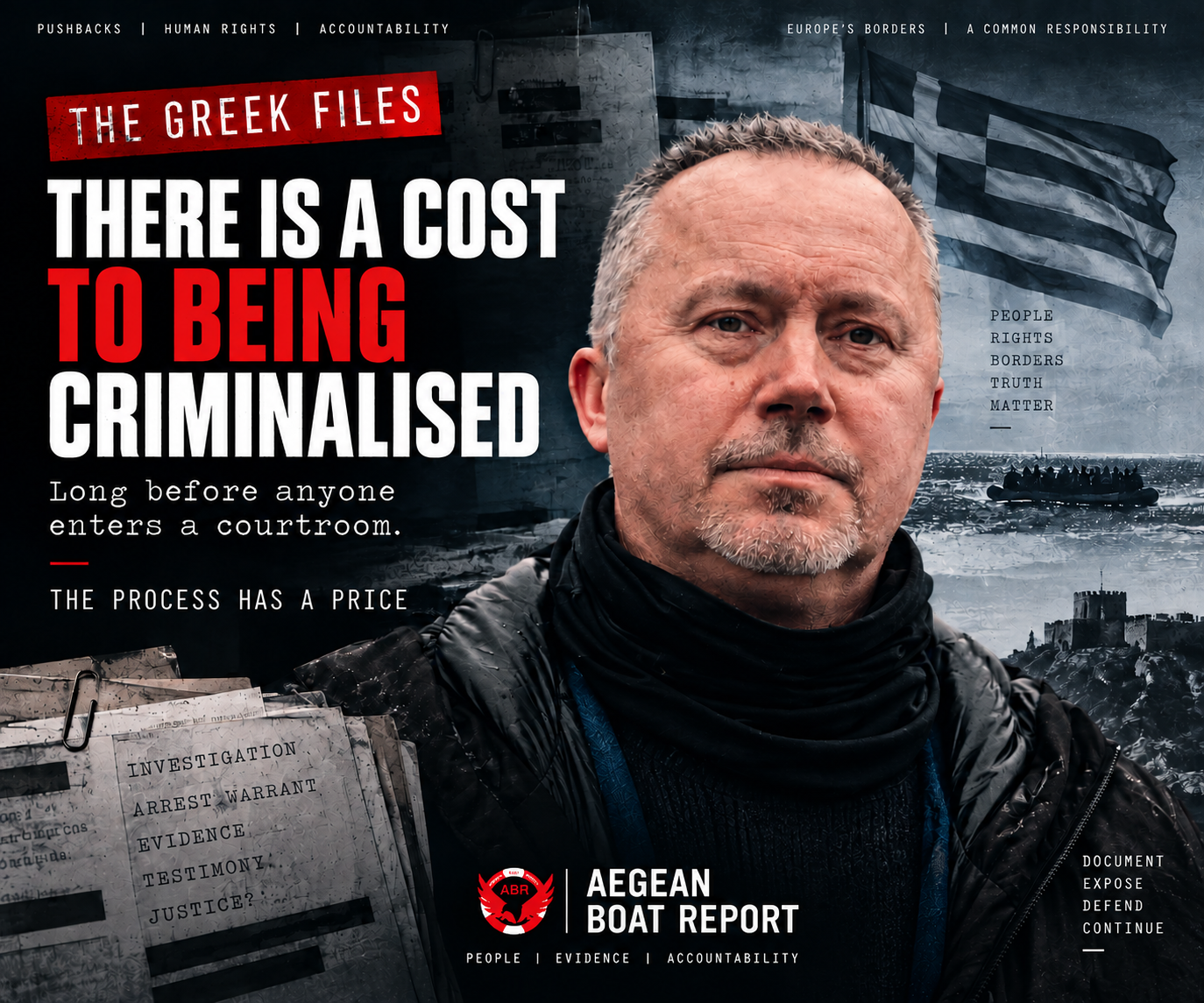
When we talk about the criminalisation of human-rights defenders, attention naturally tends to focus on the most visible parts: investigations, criminal charges, arrest warrants, arrests and eventually court proceedings.
These are the things that make headlines, and understandably so, but they are only part of what it means to live for years under the weight of a criminal case connected to the work you do.
What receives far less attention is everything that happens in between, and how slowly it accumulates.
There is always another document that needs to be read, another conversation with a lawyer, another accusation that needs to be dealt with, another question that needs an answer, another decision that has to be made.
There are periods when very little seems to happen, but the case never actually goes away. It remains there in the background, requiring attention, time and resources, while normal life and work are somehow expected to continue alongside it.
I have experienced this for years now.
There have been numerous serious investigations against me in Greece, accusations repeatedly published in the Greek press, coverage I regard as part of smear campaigns against me and my work, online hatred and attacks, a Greek arrest warrant and eventually a European Arrest Warrant that resulted in me being arrested at my home in Norway.
Norway refused to surrender me to Greece, but even that did not bring the process to an end. The criminal proceedings in Greece continue, and so does everything that comes with them.
Perhaps this is one of the things I understood least when all of this started: you don’t simply defend yourself when you eventually enter a courtroom.
You have to defend yourself throughout the entire process, and when that process stretches over years it gradually becomes something that occupies a significant part of your life whether you want it to or not.
When the case follows you into your work
For me there is another dimension to this, because Aegean Boat Report is not a large organisation with a legal department, administrative staff and people who can simply take over when I have to focus on my own case.
I am the same person who has to deal with lawyers, criminal files, warrants and court proceedings, while at the same time monitoring the Aegean, responding to people asking for assistance, documenting pushbacks and disappearances, investigating human-rights violations, speaking with journalists and lawyers, and keeping the organisation functioning every day.
That means the cost of criminalisation is not limited to what happens to me personally.
Every hour and every resource that has to be diverted into defending myself is something that cannot be used elsewhere, and over years that begins to matter.
It is impossible to calculate how much time has been taken away from the work, how many investigations could have received more attention, or what else Aegean Boat Report could have done with the resources that instead had to go towards dealing with criminal proceedings.
A cost that cannot be put on an invoice
There is also a cost that is much harder to measure.
When something like this continues for years, it does not affect only the person whose name appears on the criminal file.
The people closest to you are forced to live with parts of it as well – the uncertainty, the pressure, the worry about what happens next, and the time and attention that the case constantly takes away.
They didn’t choose any of this, but they carry part of it nevertheless.
That is not something that appears on an invoice or in a court document, but it is still part of the price that is paid.
Then there is the financial reality
And then there is the financial reality, which is perhaps the most straightforward consequence of all.
If you are prosecuted, you need a lawyer. If the proceedings continue, you continue needing that lawyer.
One thing is certain: for as long as you need legal representation, the bills will keep coming. It is inevitable.
They do not stop because the case against you has already lasted for years, because you run a small organisation, or because you simply do not have the money to pay them.
Over the years I have been fortunate to receive financial support towards my legal defence from a number of organisations.
Without that support, I simply could not have defended myself through everything that has happened. It has covered substantial legal costs at different stages and has made it possible for me to have the legal representation I needed when I needed it.
But that also illustrates the problem.
The need for legal representation does not end when one bill has been covered or one stage of a case has been dealt with.
As long as the proceedings continue, so does the need to defend yourself, and inevitably there will be another bill that needs to be paid.
The fact that others have helped carry those costs in the past does not make the underlying financial burden disappear.
Sometimes the process becomes the punishment
This is something I think deserves more attention when we talk about the criminalisation of human-rights defenders.
A case does not need to end with someone being convicted or imprisoned before it has caused damage.
If convicted, the verdict may bring its own punishment, but sometimes the process becomes the punishment.
Years of investigations and criminal proceedings can consume time, capacity and resources, affecting not only the person targeted but also their family, their work and the organisation around them, long before any court reaches a final decision.
And there is a particularly difficult reality behind all of this: you can reach a point where you simply cannot afford the legal defence that you nevertheless cannot afford to be without.
The proceedings do not stop because you have run out of money.
The need for a lawyer does not disappear because you cannot pay the next bill.
You still have to defend yourself, and somehow the money has to be found.
For a large organisation there may be structures capable of absorbing some of that pressure. For Aegean Boat Report there are not.
Eventually you reach a point where determination is no longer enough, because lawyers and legal proceedings have to be paid for regardless of how strongly you believe in continuing the work.
That is the point I have reached.
Asking for help
I have been extremely fortunate that organisations have helped carry parts of this burden over the years, and without that support I honestly don’t know how I could have managed it.
But proceedings that continue also continue to generate costs, and there are limits to what organisations can cover and certainly limits to what I can cover myself.
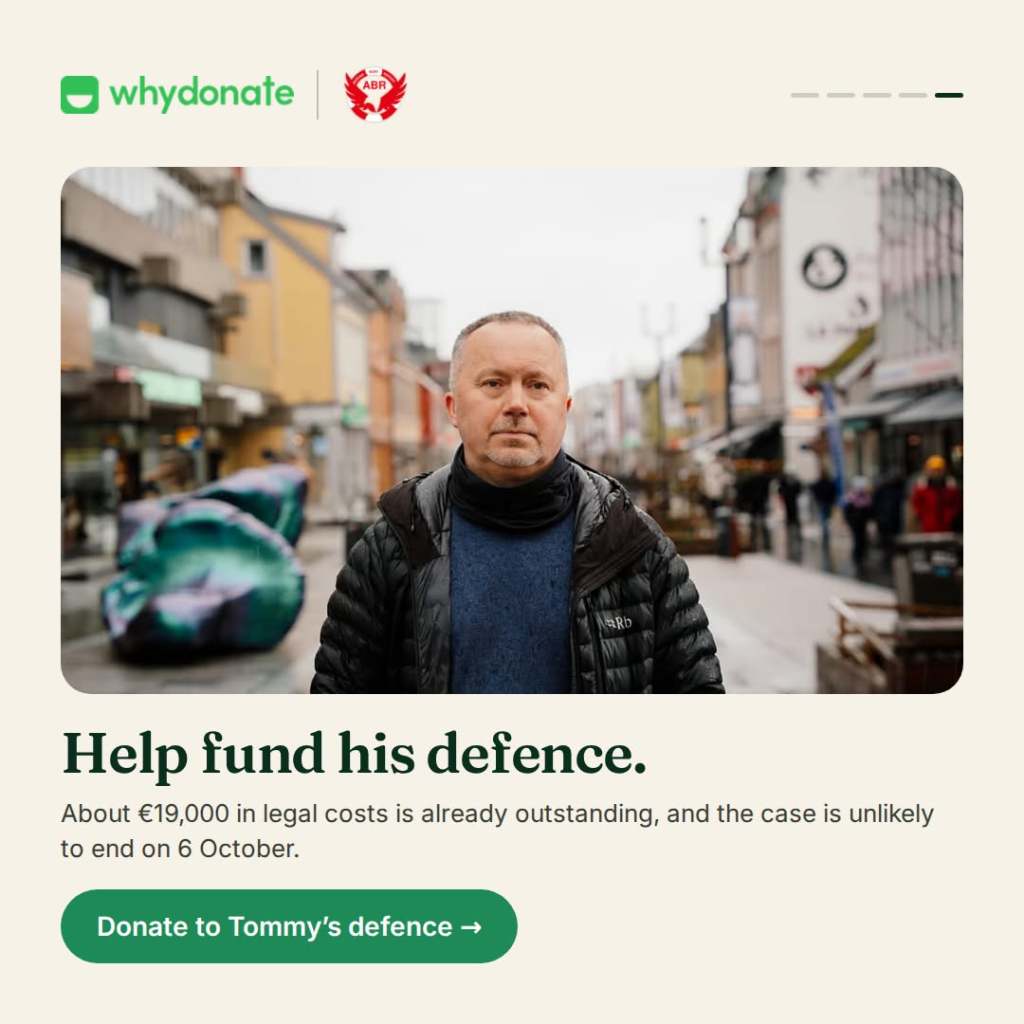
A legal-defence fundraiser has therefore been opened.
Not because this is suddenly about money, and not because the financial cost is more important than everything else this process has taken, but because money is one of the very practical things required if you are going to continue defending yourself.
I don’t know how long the proceedings in Greece will continue, and I don’t know what they will demand from me or from the people around me before they eventually end.
What I do know is that I intend to continue the work I have been doing, documenting what happens at Europe’s borders and speaking about the human-rights violations I witness, regardless of how uncomfortable that may be for those responsible.
Because frankly, it is the right thing to do.
But continuing that work while defending myself has a cost.
Some of that cost can never be measured in money, while another part quite literally arrives as an invoice that has to be paid.
After carrying this for years, with the help of many others along the way, I have reached the point where I have to ask for help again.
If you want to support my legal defence, if you want to help me carry some of this burden, or if you simply want to make sure that I can continue defending myself without taking even more resources away from the work of Aegean Boat Report, I would be deeply grateful for your support.
And if you are not in a position to contribute financially, sharing the fundraiser can be just as important.
I have carried this for a long time, with invaluable help from others along the way.
I will continue to defend myself, and I will continue the work of Aegean Boat Report, because it is the right thing to do.
But I have reached a point where I cannot carry the financial burden that comes with it.
Support my legal defence