Help us keep the Aegean Boat Report running! Please donate

EU Border Agency Frontex Continues to Cover up Pushbacks From Greece

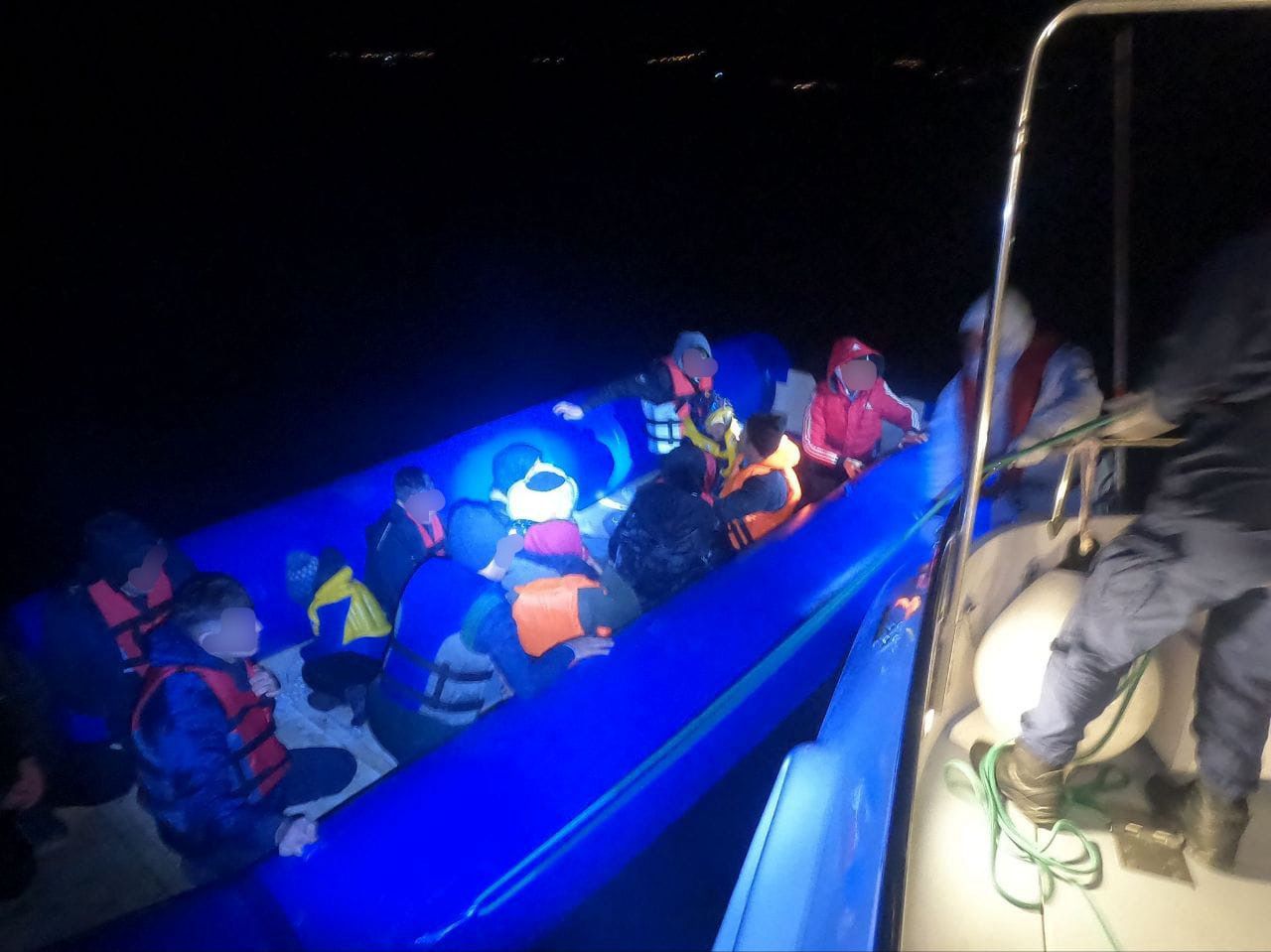
In the afternoon of 25 January, a boat carrying 38 people, all Afghans, had almost reached land in the north of Lesvos, when they were stopped by two vessels from the Greek Coast guard, and illegally pushed back to Turkey.

This happened while a Latvian Frontex vessel was present, seemingly only observing. It did nothing to intervene while these violations were performed by Greek authorities in front of them.

After a short chase, the officer on the Greek coast guard RIB managed to destroy the engine of the vessel carrying the Afghan people by beating it with a stick. This left the rubber boat immobilized, dead in the water.

In the videos taken by the refugees and presented to Aegean Boat Report, three vessels can be seen, two from the Greek coastguard – a white two-engine speedboat and a Lambro 57 coastal patrol vessel – and a Latvian registered OPS vessel, ID number RK-30, currently a part of Frontex’ Operation Poseidon, stationed on Lesvos.

The Greek coast guard towed the rubber boat back towards Turkey, and sat it adrift inside Turkish waters, leaving 38 people helplessly drifting in the middle of the sea.

A few hours later, they were found by the Turkish coast guard and taken back to Turkey.

The Latvian Frontex vessel, clearly present while this was happening, should have filed a report after the incident, as the agency’s rules state its operatives must report any incident in which there are suspicions or indications that violations of international laws or human rights have been committed; this time by Greek authorities.

In this case, since the rubber boat carrying 38 people had been stopped and towed back, and this had happened while a Frontex vessel had been present, there shouldn’t be much doubt that the Greek coast guard had performed an illegal pushback.

Strangely enough, no report was filed by the captain of the Latvian Frontex vessel. We can only speculate about why this wasn’t done.

According to EBCG Regulation and the Frontex Codes of Conduct, every participant in Frontex operational activities, must immediately report in the form of a Serious Incident Report (SIR), any situation of possible violations of fundamental rights.

Despite this clear ruling, we have investigated several cases – many of which we will publish the coming month – in which Frontex vessels have been involved in, or at least present during, pushbacks.

One common factor in all these cases is that Frontex vessels involved have not filed any reports. This means they are deliberately covering up Greek authorities’ human rights violations.

In the last four years we have registered 3.000 pushback cases, involving 82.000 people, carried out in the Aegean Sea by Greek authorities.

Throughout this four-year period, Frontex has had a heavy presence in the area: thousands of officers, hundreds of vessels, surveillance aircraft and high-tech equipment that have cost European taxpayers billions.

We would expect, with this kind of heavy investment in border surveillance, that they not only see and report on the people trying to reach Europe, but also those who have been “transported” illegally out of Europe.

Frontex informs, on a daily basis, Greek authorities about boats trying to cross into Europe in the Aegean Sea, which indicates that it has at least some control over or at least awareness of what is happening at sea in this area.

What is strange and difficult to understand is that they don’t report on pushbacks performed by Greek authorities in the same sea area, as if they are deliberately covering up these human rights violations to protect and ensure that Frontex can continue to operate in Greece.

As mentioned earlier, 3.000 pushback cases have been registered in the Aegean Sea in the last four years. What percentage of these cases would it be reasonable to believe that Frontex, because of their heavy presence in the area, have been witness to? And if they have not seen them, what are they doing? Why are they wasting our money on people and equipment which cannot see events taking place in the precise place they are working?

If I told you that in these four years, only 3 (that’s three) SIRs have been filed by Frontex officers on duty in Operation Poseidon, would you find it strange, a bit too good – or in fact bad – to be true? The EU’s border agency saw just 0.1 per cent of even the pushbacks we know have been carried out by the Greek Authorities? It seems astonishing.

We of course understand that Frontex, even with all their resources in the area, can’t see everything, but it would be reasonable to expect that they would have the same possibility to see traffic leaving the area they are surveiling, as their reports to alert the Greek Coastguard indicate they have to see that arriving.

How can Frontex explain that their officers have only filed reports on possible human rights violations – remember that they are not told to report when they are certain of such a violation, but when there is any possibility one has been committed – in just 0.1 per cent of the registered pushbacks performed by Greek authorities in the area in the last four years. It’s nothing short of remarkable. Astonishing, in fact.

It’s evident that Frontex, the EU Border and Coast Guard Agency, is systematically, not only covering up Greek human rights violations, but also is directly involved in pushback activities in Greece.

After the OLAF report – the report by the EU’s watchdog OLAF, which revealed Frontex had systematically ignored pushbacks carried out by the Greek Coastguard – was published, forcing the resignation of Frontex executive director Fabrice Leggeri in 2022, we expected (or at least were entitled to expect) to see drastic changes in how Frontex operates.

When the new head of Frontex, Hans Leijtens, took office in 2023, he promised to “restore trust” in the agency whose officers, the OLAF report proved, had turned a blind eye to the illegal pushbacks of men, women and children at several EU borders.

Leijtens said he wanted to make sure all his staff worked within “the boundaries of the legal framework” and emphasized that he was “responsible for the fact that my people don’t participate in anything called a pushback.”

He said the agency would be unable to carry out their jobs without that trust.

Leijtens promised to govern the future work of the agency with three principles, accountability, respect for fundamental rights and transparency, in which he has failed miserably.

We wonder if Hans Leijtens will, since he said he was responsible, take full responsibility for the illegal activities performed by Frontex officers under Operation Poseidon, and resign as head of Frontex?

Leijtens hasn’t made any significant changes in Frontex. At best he’s nothing more than a puppet doing the Commissions bidding, a bad reflection of his predecessor Leggeri, new wrapping, perhaps, but the same content.

Speaking of Frontex’ leadership, however, we must also ask when the European Commission will take seriously its responsibility for the rule of law and fundamental rights in Europe?

The Commission refused to publish the OLAF report – the reason the people of Europe have learnt anything at all about the report and the actions of an agency the EU Commission has direct control over, and which it uses our money to pay for, is because it was leaked to a newspaper.

A little while before that, the EU Commission’s vice president for ‘promoting {previously ‘protecting’} our European way of life’, Margaritis Schinas – a Greek politician formerly of Nea Dimokratia, the party which has ordered the thousands of pushbacks carried out by the Greek Coastguard in the last four years, and with overall responsibility for the actions and behaviour of Frontex – boasted that ‘I have not read’ the OLAF report: it had been available to him and his colleagues for six months.

What does K. Schinas think his job is, if not to read investigative reports carried out and composed by the EU’s watchdog agency into a body he is responsible for? He didn’t deny that the OLAF report was true – this would have been impossible to stand up, but would at least have shown he was engaged in some way – but said he hadn’t even read it. How is a man happy to not just admit but boast about such neglect of his post allowed to retain it? Has the Commission lost control even of itself?

Not only that, when Leggeri was – correctly – forced to resign, he stated in a letter made public that he had been instructed on taking over at Frontex that it was to be a uniformed border control force, charged with preventing people seeking safety from entering the EU. This is not what Frontex is supposed to be, by the Commission’s own definition. It is certainly not what members of the EU Parliament are asked to approve Frontex’ budget for – at least in public.

Perhaps more importantly, there are only three people in the Commission with any power to make demands of Frontex’ Chief Executive. We are happy to name them, as the information is in the public arena:

  • the EU Commissioner for Home Affairs, Ylva Johansson (who has at least had the decency on occasion to accept pushbacks are taking place and to criticise them)
  • the previously named Margaritis Schinas (who denies any pushbacks have ever taken place and was until taking his EU post a member of the party carrying them out), and
  • EU Commission President Ursula von der Leyen, who has been a prominent opponent of people entering the EU, and in March 2020 told Nea Dimokratia members that Greece was ‘the EU’s shield’ in the immediate aftermath of the party illegally sending soldiers and armed police to open fire (with rubber bullets) on, and teargas, men, women and children attempting to enter the EU from Türkiye.

Despite this, there has been absolutely no investigation by the EU Commission or any other EU body into what would have been an absolute violation of European law, and, by misleading the elected members of the European Parliament, also of the rule of law at EU level, and the European public.

Why is this? What does the Commission stand for, if not the upholding and implementation of European law?   

We cannot sit back and simply allow this horrendous violation of the law, of Frontex regulations, and of simple human decency, to continue.

The Commission must investigate how Frontex has been so twisted from its stated purpose, and why its officers see fit to break even the agency’s own rules. It must also launch infringement proceedings against the Greek authorities for systematic and widespread violations of international law and human rights.

Finally, given all the above, it’s time for Frontex to pull out of Greece.

Illegal Pushbacks Funded By EU Continues In Greece, Unhindered And Unchallenged

In the morning of Sunday, April 7, a group of 72 people – 52 adults and 20 children – was adrift in a sailboat five kilometres south east of the Greek island of Leros, in the Dodecanese in the southern Aegean Sea.

The 72 people were a mix of Syrian (52), and Palestinian (20) nationals.

None of the passengers were wearing life jackets, and there was no rescue equipment onboard. If, for some reason people ended up in the sea, many would drown, most of them couldn’t even swim.

The sailboat had set out from the Turkish shore the previous night, and people onboard had hoped that the cover of darkness would help them reach Leros undetected. They almost succeeded.

But a few kilometres from land, the engine broke down, just as the sun started to rise from the sea. They tried to fix the engine, but to no avail: it wouldn’t start again.

The boat had sails, but nobody onboard knew how to use them. They were helplessly drifting, and in desperate need of rescue.

At 10.07am, the group reached out to Aegean Boat Report on our Emergency Hotline, and it was obvious the boat needed immediate rescue.

The appropriate body for the SAR area, the Greek authorities, was informed about the situation.

The passengers onboard the boat had also called the international emergency number, 112: everyone was informed. The group were told that boats were on their way to their location.

Shortly after, a vessel arrived. From videos taken by the passengers of the sailboat, we can clearly see that it’s a Lambro 57 Coastal Patrol vessel, ID number ΛΣ-608.

The boat belongs to the Greek Hellenic Coast Guard, and is stationed in the port of Leros.

The drifting passengers were relieved at first, but the coast guard vessels stayed at a distance from the sailboat, slowly circling around it, not making no obvious effort to approach or communicate with anyone onboard.

The group tried to signal to get them to come close, waving their arms, shouting, but there was no response. They could clearly see people on deck, all in dark uniforms, all wearing masks. This last detail, the masks they wore, worried them: they had not only seen these masked men before, many had experienced their brutality first hand in the past.

Aegean Boat Report was in continuous contact with the drifting passengers while this was going on, on multiple phones onboard. Those onboard raised their concerns, and when receiving the videos, we were concerned as well. It didn’t seem that the Coastguard was making any effort to initiate a rescue, so what were they waiting for?

We told the passengers to try to document as much as they could, for as long as they could, by taking pictures and videos, and immediately sending them to us. This was to be able to prove what happened, in case something went wrong. In this case, this evidence is the only proof that exists of what happened to them. Without this footage we have had no way to publish this case, and prove without any doubt what the Greek authorities did.

After one hour, the group saw a second, larger vessel heading towards them. The group again got their hopes up: finally someone came to actually rescue them.

Unfortunately, when the vessel came closer, their hopes turned to despair. On the deck of the vessel, they could clearly see men in dark uniforms, also wearing black masks.

It started to dawn on the group that they might not be rescued, that these vessels were not there to take them to the nearest port of safety, but to illegally push them back to Turkey.

The larger vessel was one of four P355GR coastal patrol vessels in the Greek coast guard, this one marked ΛΣ-930, an identical vessel to that involved in the Pylos shipwreck, the ΛΣ-920, which was responsible for the killing of more than 650 men, women and children on 14 June last year, when the Greek authorities tried to push back a overcrowded fishing vessel adrift inside Greek SAR zone.

These vessels were 90% funded through the ISF (Internal Security Fund), within the context of ‘Special Action for Frontex equipment’, total price €55.56 million – €50 million of European taxpayers money, used to finance violations of international laws and human rights in the Aegean Sea.

By EU and state regulations and laws, EU funds are to be used according to EU law in accordance with fundamental rights. On both counts, the European Commission has drastically failed, neglecting its duty to the people. Not only that, they continue to pour money into Greece, refusing to take any responsibility for their actions, looking the other way while the Greek authorities are systematically violating fundamental rights, all in the name of “border protection” and the “European way of life”.

Shortly after the second coast guard vessel arrived at the drifting sailboat, all contact was lost with the passengers onboard: all their phones went offline simultaneously and we could not regain contact.

At this point, we decided to go public with what we knew at the time, and posted about the drifting boat outside Leros on our social media platforms, to inform the public in an effort to try to protect the people onboard.

On this we unfortunately failed miserably, and we apologise for not being able to do more for these vulnerable people.

At the time, even though we had our suspicions, we had no tangible evidence that would confirm that the 72 people on the sailboat would be pushed back, and we hoped that the Greek authorities would follow international law.

In this case, as in hundreds of others, they didn’t, but this was at the time impossible to prove.

Today we can, and we are, by publishing overwhelming amount of evidence that clearly proves the crime committed by Greek authorities. There is absolutely no doubt what happened.

At the time, however, we had to follow protocol, and not publish anything we couldn’t back up with hard evidence.

We looked for information on Leros, to see if by any chance the group arrived there. We also looked at Samos and Kos, but the 72 people were nowhere to be found.

Official information published by the Greek authorities confirmed that no group of this size was registered on the Greek islands that day, nor the following one.

We did find that a smaller group of 25 people had been registered on Leros this day, but this group was too small, and had arrived in Xirokampos by their own means, rather than being taken in by the coast guard.

This was later confirmed both by local press and the Greek coast guard.

On Sunday 7 April at 3.25pm, the Turkish coast guard found and rescued 72 people, 52 adults and 20 children, 52 Syrian and 20 Palestinian nationals, from three life rafts drifting outside Bodrum, Turkey, north east of the Greek island of Kos.

When comparing pictures and videos of the people onboard the sailboat outside Leros, with the footage taken by the Turkish coast guard, when picking them up outside Bodrum, there is absolutely no doubt: it is the same group, no question.

So the natural questions would be “how did this happen?” and “who is responsible?”,

We can in this case, as in many previous documented cases, answer both questions. It was quite clear, since this group didn’t arrive on any of the Greek islands, that they had been pushed back. How this was done, and how these people had been treated, we had no information on. Until now.

What we have been told by the victims after we reconnected with them in Turkey, may come as a shock for many. We have unfortunately heard testimonies very similar to these – especially in terms of the extreme and ilegal violence used by the Greek Coastguard – many times before.

The coast guard vessel P355GR placed two officers onboard the sailboat, armed with guns, batons and rifles, while officers standing by the railing above on the coast guard vessels were aiming at them with shotguns.

Illustration Images

Everyone onboard was ordered to turn off their phones, which the officers onboard then stole, along with other valuables.

The officers immediately threw the phones into the sea, while valuables like money and jewellery were collected in a bag.

Before taking them onboard the coast guard vessel one by one, they thoroughly searched everyone, looking for hidden objects. Nobody was allowed to take any of their belongings, not even food and water for the children onboard.

While people were searched, the officers began beating them. Their colleagues on the coast guard vessel were shouting, everyone was terrified, especially the children, watching these masked men attack their parents, while angry men – also in masks – pointed guns at them from above.

Everyone was crying, begging for them to stop, nobody listened. Not everyone was at first willing to obey all orders, but those who refused were attacked by the Coastguard officers.

The officers broke one woman’s arm because she refused to take off her clothes in front of everyone. Her three children were watching. The officers forced her clothes off.

This Woman`s arm was broken

When everyone was taken onboard the coast guard vessels, the abuse continued. Some of the officers weren’t satisfied with the search done onboard the sailboat, and began to search passengers again, but this time, for some reason, mostly ‘searched’ only the women.

The officers forced the women to undress in front of them: no area of the body was left untouched in the search for valuables and other hidden objects.

Some loudly protested. They were beaten with batons and a buttstock.

One of the victims said “these monsters were familiar with the use of violence, some even seemed to enjoy it”.

The people were placed on deck, most in the front of the coast guard vessel, and forced to sit and look down. They were not allowed to talk.

This lasted for several hours, while the boat was heading back out to sea. They had no idea where they were heading, because the rairailing was to high, so they could not see.

After several hours, the boat stopped, and people were taken in groups to the side of the vessel, where life rafts had been placed in the sea.

Again, people tried to protest, and again it was resolved by force. Those who refused to enter the rafts were pushed or kicked down the stairs towards them.

Once everyone was in the rafts, the coast guard vessel quickly moved away.

The 72 people, amongst them 20 children, were left helplessly drifting in the Aegean Sea by officers of the Greek coast guard, on direct orders from Greek authorities, financed and blessed by the European Commission.

The Turkish coast guard received notification by email from the Greek coast guard, as they normally do after people have been pushed back by Greek authorities, that a group of people were drifting inside Turkish territorial waters.

The Turkish coast guard went to the area and found three life rafts packed with people.

The Greek coast guard vessel had transported the group of 72 people, men, women and children almost 50 miles, to illegally push them back to Turkey.

There is not much doubt about who is responsible, and this is hardly an isolated incident.

In the last four years, 81,000 people have been pushed back by Greek authorities in the Aegean Sea, 25,000 of them in over 1,400 Greek manufactured life rafts.

Everyone knows what is going on, it’s even paid for by European taxpayers money, and blessed by the European Commission.

The vessel used in this brutal pushback is, as already mentioned, the same type of vessel used in the pushback attempt of the overcrowded fishing vessel “Adriana”, in which over 650 people were killed last year.

The Adriana

In that shipwreck, close to Pylos in Greek waters, no video material was provided to the investigation from the high-tech surveillance system onboard the Greek Coastguard vessel, with the excuse that it was “turned off”.

We wonder if this time the surveillance system was on, and the Greek authorities can provide footage that contradicts our evidence and the statements from the victims, or perhaps it was also this time conveniently turned off or “under maintenance”.

The main mast with the sensors, Close-up photo of the advanced
ELOP electro-optical payloads

In March 2021, Frontex calls for the Coast Guard vessels funded by the organization to video record their operations.

To be crystal clear, in scope og EU regulation 656/2014, “all actions taken by Frontex assets or Frontex co-financed assets, should be documented by video consistently”.

According to Solomon, `Frontex had recommended the visual recording of operations, during a meeting where representatives from Greece were present as well as from other European countries, following complaints of human rights violations by the Coast Guard.`

We have, as we routinely do in cases like this, where Frontex vessels or Frontex assets are seemingly involved in, or witness to, human rights violations, turned all evidence over to Frontex’ Fundamental Rights Office.

The Fundamental Rights Officer (FRO), and the staff of the Fundamental Rights Office, have an independent role within Frontex to support its work from a human rights perspective, and to reinforce the respect, protection and promotion of fundamental rights.

The FRO has the mandate to initiate investigations, called Serious Incident Reports (SIRs), if there is an indication that Frontex vessels, or Frontex funded assets, have been violating laws and/or fundamental rights.

Example report, this from a SIR report from Lesvos in 2023

Unfortunately in this case, even though the vessel involved in this brutal pushback was 90% financed through the Internal Security Fund (ISF) within the context of ‘Special Action for Frontex equipment’, (we can read even in official Frontex documents that the vessel is listed as “Frontex funded assets“), they are, according to Frontex not listed as financed by Frontex, but by the EU.

So the FRO cannot start an investigation since the vessel at the time of the incident was not on “Frontex duty”.

Even harder to believe, since they were financed through the ISF, each of the four vessels must spend 4 months every year on Frontex operations, including outside of Greece: they are “Frontex assets”.

But no investigation can be launched by the FRO as long as the “Frontex asset” is not on Frontex operations paid for by Frontex, as in this case it was not.

It’s hard not to conclude that these regulations and protocols were designed specifically to ensure that  nobody could be held accountable for anything done by these vessels and their crews, but in this case someone is accountable: The European Commission.

But the Commission is totally unable and/or unwilling, to take any responsibility.

In the case of these vessels funded through the Internal Security Fund, or any other funding to member countries, EU money can only be used according to EU law in accordance with fundamental rights.

These rules are clear, and set out in the Common Provisions Regulation. But there is no monitoring mechanism or enforcement of any kind to ensure this regulation is adhered to.

It’s clear that Ursula Von Der Leyen and the European Commission has failed in its duty, not only a little but miserably, and not only once but over and over again, in its commitment to ensuring EU cash is not handed over to fund criminal activity.

In the last four years, the rights of over 81.000 people have been brutally violated in the Aegean Sea, where Greek authorities have used EU funded or co-funded vessels to “protect” the European Border.

Not one infringement procedure or independent investigation has been launched by the European Commission into these well-documented human rights violations. Nobody is held accountable, and funding continues to be hurled at Greece in the name of “border protection”.

Artwork by Yorgos Konstantinou

At what point will the European Commission start to follow its own laws? When will it demand accountability from EU member states? And when will it start infringement procedures against those who systematically undermine the rule of law in Europe?

It’s about time the European Commission stops acting like an ostrich, putting its head in the sand believing that nobody can see him.

Another Europe is Possible: Time To Change Our Failing, Immoral Border Policies

Over the last month we have registered a shift in routes used by people seeking international protection in the Aegean Sea.

Normally, people crossing from Turkey towards the Greek islands have had Lesvos, Chios, Samos and Kos as their main destination. Now, smaller islands seem to get more arrivals.

Why this is happening now could have severe explanations, but we believe more focus and surveillance by Greek authorities and the European Border and Coast Guard Agency Frontex, around the bigger islands is the main reason.

This, together with a more active approach by the Turkish authorities to actually try to stop boats from crossing into Greek waters, and the fact that they are moving Afghans away from coastal areas in the North Aegean, has drastically reduced crossings.

We are now in almost daily contact with people arriving on islands like Ikaria, Fournoi, Patmos, Leipsoi, Nisyros, Tilos, Pserimos and Kalimnos, previously this was the exception, now it’s starting to move towards the rule.

This might seem like a strange change, since people arriving on the main islands don’t face the risk of being pushed back as they previously did. The “hunt” for new arrivals by masked men suddenly stopped after the Pylos shipwreck, and as far as we have been able to document, all arrivals on these main islands, are now taken to camps and given the opportunity to apply for international protection.

But this is many times not the case on these smaller islands: especially the less populated ones. So why would people take the chance of going there, if the risk of being pushed back is higher?

The problem isn’t that they fear being pushed back after they arrive on a Greek island, they fear more being pushed back at sea before they arrive. The risk of being pushed back from smaller islands, especially deserted ones, is a genuine risk that we have documented, but it seems they are willing to take this risk, because the risk of being pushed back at sea around the main islands is much higher.

On and around the main islands the surveillance has drastically increased over the last years, more eyes are watching the sea area, not only those of Greek authorities, but also of Frontex, from land, air and sea. The chance of getting across the sea border in these areas was previously very low. Now, after Turkish authorities have intensified their efforts to stop boats in these areas, it’s almost impossible to get across undetected. The chance of getting across in these main areas has gone from 70% to under 30% in just a month. We believe this is no coincidence, and is suspected to be firmly linked to a deal made between Greece and Turkey, supported by the EU Commission. What Turkey has been offered is so far unknown, but it’s highly unlikely that Turkey would settle for nickels and dimes.

To understand this shift in movement, you need to have some understanding of how smugglers operate in Turkey. It’s not as if the people in the boats have much say in the decision on whether they are sent towards a big island or a small one: they basically do as they are told and hope for the best.

Smugglers only get paid if they successfully manage to get their “product” transported from point A to point B. If for some reason the transport is stopped and returned, the smugglers don’t receive payment, and are given a new opportunity to successfully deliver their services. If they are unsuccessful several times, the customer can take their money to another smuggler, leaving the previous smuggler with the costs of boats, engines, petrol etc. without getting paid. This is of course not good for business, and if too many obstacles are hindering their work, they change strategy. This is what we believe has happened.

Crossing attempts in the Aegean Sea the last month has gone down by more than 50%, from 246 cases in February, to 119 in March. We normally would have expected that pushback cases, and especially cases where people are pushed back in life rafts, would follow a similar pattern. On the contrary, despite the fact that crossing attempts have gone down by more than 50%, cases in which people have been forced into life rafts and left helplessly drifting in the Aegean Sea have not decreased, but instead increased 8% compared to February.

It’s a worrying development worth noting. It’s that smugglers in Turkey are now targeting these smaller islands as their transport destinations, not out of the kindness of their hearts and a genuine concern for their customers wellbeing, but out of necessity to make money off the back of vulnerable people, whose routes towards safety in Europe have been firmly closed by European authorities.

People are now arriving on islands which are not equipped or prepared to handle increased arrivals, nor have the necessary infrastructure and resources to quickly initiate rescue operations, if boats are in distress.

None of the main humanitarian organizations have staff on these smaller islands. There is basically no ground support in place to support them with shelter, food, clothes and medical attention. Also, the routes towards these islands are longer: any crossing in a rubber boat towards any island is very dangerous, and the more time people must stay in these fragile boats, the higher the risk of something going terribly wrong.

We fear – in fact, we are certain – that more lives will be unnecessarily lost if smugglers continue to use these longer routes.

The only solution to this problem, and the only way to put smugglers in Turkey out of business, is not to put in place more obstacles, but to open legal safe pathways into Europe for people seeking international protection.

The smuggling industry in Turkey making billions from people’s suffering, is a product of our time, it was not created in a vacuum. Smugglers have existed as long as people and states have tried to hinder the movement of goods and people: for better or for worse, they are serving a purpose, responding to and providing for, a demand in the market,  not from kindness, but necessity. Any market is driven by a very simple principle, supply and demand, one will not exist without the other. We can in this case ask who or what created the demand, and the answer isn’t rocket science.

When we put up walls and fences, we at the same time create an opportunity for people to make money. We might try to say “we are not responsible”, and directly this is in many cases true, but indirectly we are very much responsible: anyone denying this fact is delusional.

Throughout history people have, for various reasons, wandered this Earth, and over time moved from one area to the next, following mainly resources and climate change.

Nothing has changed, people are still in need of finding new places to live, mostly out of necessity, as a result of war and climate change, but now we have put up fences and walls to try to hinder people from finding safety, with the excuse of self-preservation and protection.

In the short term, it might seem to be “working”, but in the long run nothing can stop people from moving. If determined or desperate enough, they will always find a way, a more dangerous and deadly way, but in the end it will not matter, because they have no other alternative if they want to live.

It is well beyond time that the Greek government, and all governments, including the EU, recognised this.

Not only are the policies of ‘deterrence’ incredibly expensive, they are absolutely failing. Of course they are: by increasing the risk and reality of mass death on the sea, they are efforts to force the entire flow of human history to change.

They are doomed to always fail. For the good of our moral health, for the good of our economic health, and for the welfare of men, women and children like ourselves, we have to change.

In place of our litany of failure, at the cost of tens of thousands of deaths, we must set up safe routes, in affordable or free transport, for those who need it, to save lives, save enormous amounts of money, and put smugglers out of business.

Kudos to all those who, on a daily basis, do their utmost to fend for the rights of people at our borders!

To support our work and help us continue saving lives in the Aegean, please donate through LeaveNoOneBehind fundraiser by clicking on the link below 👇👍

What is Happening to Afghans in Turkey?

We have previously published about large groups of people, Afgan families, who have been taken from camps in coastal areas and transported across Turkey to the border to Iran.

Now they are also rounded up in large numbers and transported to the Harran container camp in Şanlurfa province, close to the Syrian border. Previously this camp has been hosting Syrian refugees, all Syrians have been removed and the camp is now used to host Afghan families.

People in the camp have all had Turkish papers and ID cards for years, now their papers have been cancelled, their ID card no longer valid, and they fear that this is done so that Turkish authorities can legally deport them. Question is why is this happening to only Afghans, and why now?

People from the camp is complaining about living conditions inside the camp, unfortunately we have so far not been able to get much documentation from the people in the camp, they say it’s illegal to take pictures and videos, perhaps they have a good reason for not wanting this to come out.

How many people are currently living in the camp is difficult to say, we are told that 2-3 buses arrives every day, the camp is rapidly filling up, all new arrivals are Afgan families, all have had their papers revoked.

People in these buses are mostly coming from the North Aegean area, Ayvacik, Ayvalık, Dikili and İzmir, and from what Turkish authorities call “Removal Centres”.

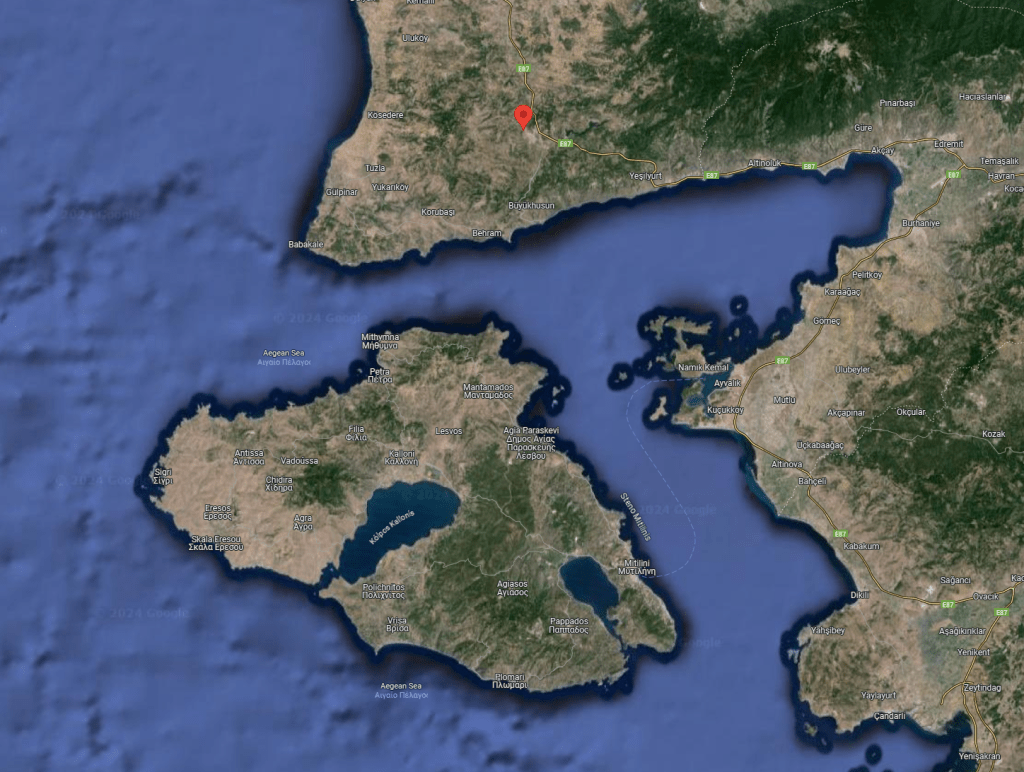
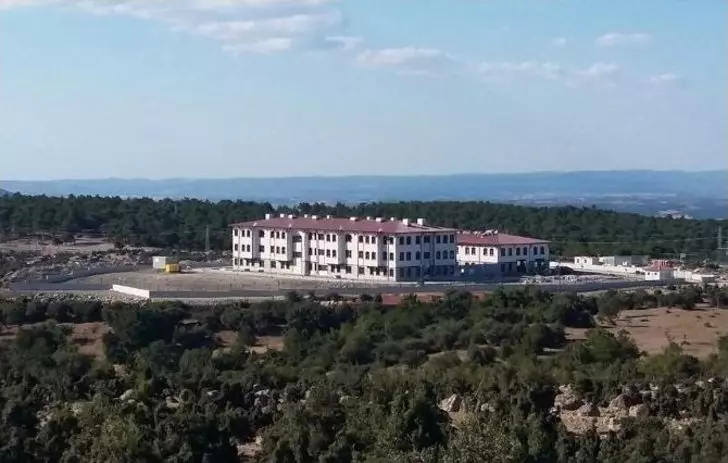
One of these centers is located in the outskirts of Ayvacik, Çanakkale, north of the Greek island of Lesvos, one of the main entry points for Afghans entering into Europe.

We have had contact with several groups in this facility over the last weeks, they are all Afghan nationals, families with large number of children, and they have all tried to cross into Europe, but been stopped by Turkish coast guard or pushed back by Greek coast guard.

Previously, people being stopped or picked up at sea, have been taken into provincial holding facilities, registered, and let out again after a few days. Now, people are being transported to these “removal centers”, but only Afghan nationals, they are kept locked up under bad conditions, many times for days, before being shipped across Turkey in buses to camps close to the Iranian and Syrian border.

We have so far been alerted to people, Afgan families, being moved to two camps, one at the border to Iran, and one at the Syrian border. These are the camps we know about, question is how many more are there, these are most likely not the only ones.

Why this is happening now, and why only to Afghans living in Turkey, can potentially be related to a deal made with Greece, financed by the European Union, to try to reduce the number of Afghans crossing from From Turkey to Greece through the North Aegean.

In the last five months of 2023 there was a steady increase in arrivals on the Greek Aegean islands, a large portion of which were Afghans nationals. This increase continued into this year, and in the two first months of 2024, arrivals increased a staggering 240% compared to the same months in 2023. A large percentage of this increase happened on Lesvos, where large numbers of Afghan families continued to arrive, Greek authorities needed to do something, and we believed they found a solution, by making a deal with Turkey.

Over the last weeks, arrivals on the North Aegean region, especially on Lesvos, witch is the main entry point into Europe for Afghans, have plummeted, crossings in this area have been drastically reduced, and very few Afghan nationals have been registered as new arrivals on the island, this is not a coincidence.

Meetings between Turkey and Greece on the topic of “migration flow” has been ongoing since the end of last year, and we believe that a deal has been struck, a deal that most likely won’t be officially announced, because it can’t stand the light of day, not only illegal by Turkish law, but European law as well.

We read in the Greek press a few weeks ago that the Greek Aegean islands will launch fast-track visas for Turkish nationals from April 1. The announcement followed an agreement by Athens and Ankara, approved by the EU, to revive a previous scheme the special Schengen Express Visa program for Turkish citizens wishing to visit certain eastern Aegean islands.

We know that this wouldn’t be enough to by off Turkey to do Europes dirty work, so the question is, what are they not telling us?, what was put on the table to sweeten the deal, and how much of European taxpayers money will be used this time to lure Turkey to tighten their grip at the border?

This sounds all too familiar, “paying” Turkey to do our dirty work, as we tried with the EU-Turkey Deal, all in the name of “protecting” the borders of Europe, without any concern for the pain and suffering we inflict on those in the receiving end.

We are deeply concerned for the safety and wellbeing of the Afghan families who have been transported to camps close to the Iranian and Syrian border, and believe that they will be illegally deported, if not already, then soon, if nothing is done to try to prevent it.

Kudos to all of those who, on a daily basis, do their utmost to fend for the rights of people at our borders!

To support our work and help us continue saving lives in the Aegean, please donate through LeaveNoOneBehind fundraiser by clicking on the link below 👇👍

Afghan Families In Turkey Face Deportation To Iran

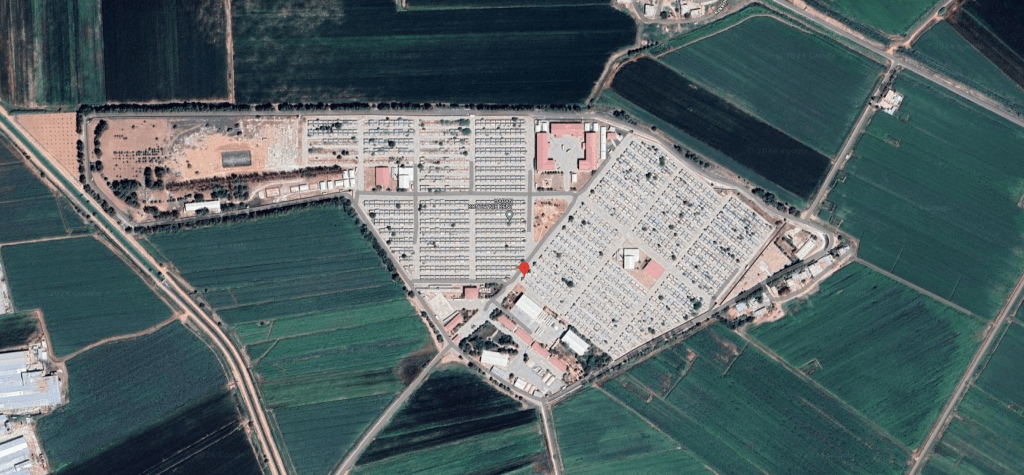
For the last two weeks Aegean Boat Report have been contacted by numerous groups of Afghan families, all with one thing in common, they have all been transported from Turkish coastal cities in the North Aegean, to a camp in the outskirts of Iğdir, eastern Turkey, a few kilometers from the border to Iran.

The families contacted us and expressed deep concern of being deported, first to Iran, and then back to Taliban in Afghanistan. They told us there was between 6 and 8 buses that drove together in each group, and the people onboard were all Afghan Families, they estimated over 1.000 people total.

We have previously heard of single unregistered men without any papers being deported to Iran, but this is different. This time they removed large groups of registered Afghan families, men, women and a large number of children, many who have been living in Turkey for years. People even provided pictures of their Turkish papers.

According to the people who contacted us they were given very short notice, some under one hour, to pack up their things, only one bag each, and be ready to be transported. No information was given on why they suddenly was moved, and to where.

Last week we followed three different large groups of Afghan families, one group from Ayvacik camp, Çanakkale, and two groups from Izmir, they all were transported almost 2000km, across Turkey, to the Iğdır Göçmen Camp, eastern Turkey, question is why?

Under their transport to the camp, and after their arrival, they shared location data, pictures and videos, and we can clearly see that we are not talking about only single men, quite the opposite.

We had contact with several people from the camp in Iğdır, and they told us that they would be deported to Iran. We of course have no official information from Turkish authorities, that they will be deported, and they most likely wouldn’t tell us if they did, because if this is in fact the case, this would be a violation of international law, and even Turkish law, to deport people with papers registered in Turkey, to Iran.

From all the phones we previously had contact with from the camp in eastern Turkey, connection has now been lost. The reason for this is of course unknown, but before we lost contact with them, they told us that groups of single men had been rounded up, all phones taken away from them, before transported out of the camp, location unknown.

We are concerned that Afghan families are being illegally deported from Turkey to Iran, and from there to Afghanistan, that for many would mean certain death.

The North Aegean region is the main entry point into Europe for Afghans, we especially see this on the Greek Aegean island of Lesvos, where thousands of Afghans have arrived in the last months, and are by far the largest group registered on the island. After this mass transport from these coastal areas in Turkey, arrivals of Afghans on the Greek Aegean islands, especially Lesvos, have been drastically reduced.

We have had contact with many people from Afganistan arriving on the Greek islands lately, and we have seen a steep increase in Afghans crossing the Aegean Sea into Europe that started several months ago. We have many times asked these groups why they take the risk on this very dangerous journey, especially traveling with large numbers of small children. Every time they have replied, “we are no longer safe in Turkey, they will deport us back to Afghanistan”, and “we fear Taliban more than the sea”.

Meetings between Turkey and Greece on the topic of “migration flow” has been ongoing since the end of last year, perhaps this is what is beginning to bear fruit.

We read in the press last week that the Greek Aegean islands will launch fast-track visas for Turkish tourists from April 1. The announcement followed an agreement by Athens and Ankara, approved by the EU, to revive a previous scheme the special Schengen Express Visa program for Turkish citizens wishing to visit certain eastern Aegean islands.

This sounds all too familiar, “paying” Turkey to do our dirty work, as we tried with the EU-Turkey Deal, all in the name of “protecting” the borders of Europe, without any concern for the pain and suffering we inflict on those in the receiving end.

We are deeply concerned for the safety and the fate of the Afghan families who have been transported to a camp close to the Iranian border, and believe that they will be illegally deported, if not already, then soon, if nothing is done to try to prevent it.

————————————————————————————————————–

To support our work and help us continue saving lives in the Aegean, please donate through LeaveNoOneBehind fundraiser by clicking on the link below 👇👍

26 Children Left Helplessly Drifting In Life Rafts By The Greek Coast Guard

In the morning of March 4, the Turkish coast guard found and rescued 87 people drifting in 4 life rafts outside Datça, Turkey. 26 of the people in the life rafts were small children.

I’m sorry to say this, and yes, it’s totally crazy, but people being left drifting in life rafts in the Aegean Sea by Greek authorities, has become so normal that nobody even bats an eyelid anymore. It’s just how it is. Something so outrageous has become normalized.

I don’t know what anyone finds “normal” about kidnapping groups of people, stealing all their belongings, beating parents up in front of their screaming children, kidnapping people and forcing them, many times at gunpoint, into life rafts and leaving them drifting at sea. If small children can’t climb down into the rafts they are thrown down by masked men. This isn’t normal behaviour, there is absolutely nothing normal about any of this: it’s totally and utterly disgusting. But nobody lifts a finger to even try to stop this madness. Have we gone totally off the reservation?

In the last four years, 24.000 people have been left drifting in 1.400 life rafts in the Aegean Sea by Greek authorities, amongst them almost 5.000 small children. The number of children alone is equivalent to over 450 football teams or 160 school classes. Does any of this affect us?

The problem is that nobody really sees these people for what they are. To many people, they are just statistics, numbers on a sheet, nothing anyone can relate to: no faces, no eyes, everything is blurred to protect their identity, their right to privacy. But the question is, by blurring their faces, are we protecting “them” or “us”? By not seeing, maybe we protect ourselves. What we can’t relate to is easy to just overlook. We don’t get involved because it’s not about us, it’s about “them”, and “them” isn’t real people, just statistics, a number on a sheet, nothing more.

Very few of us get emotional over statistics, but a picture can move the entire world. We saw clearly how a picture of a little lifeless body of Alan Kurdi, a child in a red t-shirt and blue shorts, touched our hearts a few years ago, made people stand up and get involved. Would that have happened if we had blurred it? Highly unlikely.

Why? because we saw that this could have been our child, our neighbours child, the child of our relatives or friends. So we got emotional, we reacted and we acted. Those two are usually firmly connected, cause and effect.

Most of the pictures posted in this post came from the case we reported in which 87 people, human beings, just like you and me, were left drifting in four life rafts in the middle of the sea a few days ago. None of these pictures have been pixelated, a decision we made to try to underline the fact that these are actually real people. They are not merely statistics on a sheet, they are in fact you and me, nothing more, nothing less.

I usually pixelate pictures before I publish them. It means I am sometimes the only one who sees the real people behind the blur: their faces, their eyes, sometimes eyes filled with life and hope, others just like a black hole. I see kids smiling, adults crying, despair, relief, anger, even happiness, though the latter not as often as I would like. By pixelating everyone I remove all of it, and it’s as if I’m removing their humanity, their being. Many times I find this very difficult. Necessary, but difficult.

This time I just couldn’t. I saw their faces, especially of the children, and I couldn’t cover them up. I have done it thousands of times before, but this time it just felt tremendously wrong, as if I erased them by doing so.

I’m sorry to dose who feel offended by this post. I feel you. My intention isn’t to offend anyone, but to try to give something back of the things I have “taken” from “you” and “them” over the years by removing what makes “them” human. “They” deserve so much more, “they” deserve to be seen as the human beings they are, and “we” deserve to be given the opportunity to react.

Real life, “theirs” and “ours”, isn’t pixelated, and we very much need to see the fruits of “our” creation, perhaps now more than ever.

Please take your time, look closely at these pictures, their faces, and ask yourself: would you have had the heart to throw them into life rafts in the middle of the sea? If not, ask yourself why? Because this is what’s being done on a daily basis in the Aegean Sea, it’s done in your name, on your watch. You are even paying for it.

By not reacting, and not acting, we are ALL complicit in crimes against humanity. They need to be stopped before it’s too late.

Pushbacks Continues Unhindered And Unchallenged In Greece

On Thursday February 29, at 18.30, Aegean Boat Report were contacted by a group of 18 people, 15 adults and 3 children, from Afghanistan and Palestine, who had arrived on the Greek island of Farmakonisi.

The group was scared, and asked for assistance so that they could be taken to the nearest port of safety, provided with food, water and medicine attention, and given the opportunity to apply for asylum in accordance with international law.

The problem was that they had by accident or deliberately, it’s difficult to say, arrived on a desert island, and the only people present were military personnel from the base on the island, and the only way off this island was to inform Greek authorities.

Farmakonisi is a small uninhabited Greek island in the Dodecanese, present only a Greek military garrison.

The group provided us with pictures, videos and geolocation data, it shows without a doubt that they are on Farmakonisi.

We advised that people from the group should to go to the military station and make their presence known, not because it’s a safe solution, it’s definitely not, but because it’s the only solution on this island, and that they first contacted 112 and informed that they were on the island.

As far as they informed us, they refused to go to the military base on the island, and that they instead had contacted 112 and informed of their situation.

At 04.20 a.m. on Friday morning, we lost all contact with the group, we assumed that the group had been found by the military personnel on the island, and that they had been ordered to turn off their phones.

We hoped that the group had been found and transported to the camp on Leros, as the group who arrived the day before them. Unfortunately no people from Farmakonisi had been registered in the camp on Leros on Friday.

On Friday at 11.55 a.m. Turkish coast guard reported to have found 18 people, 3 of them small children, adrift in a life raft outside the Menderes district, north east of Samos, almost 50 miles from Farmakonisi.

When we compare pictures and videos taken on Farmakonisi, with footage taken by the Turkish coast guard when they were found, there is absolutely no doubt, it’s the same group.

The group had been arrested by military personnel on Farmakonisi, and incarcerated in a shed surrounded by a barb wire fence close to the pier on the island. The group was thoroughly searched, all their belongings were taken away from them, phones, money, papers and bags.

They stayed locked up until sunrise, when a boat from the Greek Coast Guard arrived, onboard masked men carrying guns and batons. The boat was described as gray and white, with blue stripes in the front.

After another thorough search they were taken onboard the coast guard vessel, and covered by a big plastic tarpaulin. They were ordered to sit under the tarpaulin and under no circumstances tru to look out. If they moved or spoke, the masked men would hit them with a stick, shouting “shut the fuck up” and “get your ass down”, people were terrified.

After several hours the boat stopped and everyone was forced into what they described as a “rubber ring”, what they refer to is a life raft, where the orange protective cover has been removed, only the black rubber tubes left.

The cover has been removed because the Greek manufacturer of these life rafts, Lalizas from Piraeus, don’t want their logo to be visible in connection with these criminal activities, not all PR is good PR, especially when you are marketing your products as “life saving equipment”, and not tools of illegal deportation that could potentially kill you.

The cover of the life rafts are now always removed, to protect the commercial interests of a Greek multimillion company, without any regard to the safety of people placed in these life rafts. Without the orang cover, the life saving capability of these rafts are drastically reduced, one wave is enough to fill it up and capsize it, drowning everyone inside. It’s quite clear the Greek commercial interests are more important than saving people lives, even for Lalizas.

The group was transported almost 50 miles on a Greek Coast Guard vessel, in brought daylight, so that they could illegally deport them.

This shows the determination and willingness of the Greek authorities, to do almost anything to stop people from applying for international protection in Greece, violating international laws and human rights seems to be of no concern for the Greek authorities.

This isn’t something new, these illegal pushbacks have been going on for years in the Aegean Sea, it’s extremely well documented by international human rights organizations, NGO’s, international media and EU bodies, everyone knows what is going on and who is responsible.

In a normal decent world this would not have been allowed to continue, but in today’s Europe it seems that we are willing to sacrifice our values, laws and principles in the name of border protection. Not only is the European Commission, who are there to protect the rule of law in Europe, looking the other way, they are actively supporting and encouraging countries like Greece to continue, by financing their operations and deploying more Frontex resources.

If a EU citizen rounded up a group of random people at gunpoint, strip searched and beat them up, stole all their belongings, handcuffed them with plastic ties, took them on a boat out to sea, forced them into a life raft and left them helplessly drifting. This person would be facing decades behind bars if caught, most likely also had to go through a long psychological evaluation, a person capable of such atrocities is most likely not in the right place mentally.

What Greek authorities are doing in the Aegean Sea is most definitely illegal, no question about it. Instead of putting those responsible behind bars and question their sanity, we are applauding them, paying them handsomely for their efforts, and giving them medals for a job well done, I don’t know who is the most insane, them or us..

To support our work and help us continue saving lives in the Aegean, please donate through LeaveNoOneBehind fundraiser by clicking on the link below 👇👍

The first documented pushback from the Greek islands since the Pylos shipwreck, amongst them 10 Palestinians, the madnes continue in Greece.

On Friday February 23, a group of 30 people arrived on the militarized desert island of Farmakonisi.

The group contacted Aegean Boat Report and asked for assistance, they begged to be taken to a camp, and given the opportunity to apply for international protection, but the Greek authorities had other plans.

The people on Farmakonisi provided pictures, videos and location data, that proved without a doubt that they were on the island.

Farmakonisi is a militarized desert island, where only Greek military and coast guard are allowed to go. Anyone arriving on this island is at the mercy of the Greek authorities, that many times means being robbed of all belongings, beaten, and forced back out to sea, left helplessly drifting in life rafts.

From the video we can see a Lambro 57 close to shore on the island, the people also told us that a drone was flying over them, so it’s quite clear that Greek authorities knew they were there.

Several soldiers from the military base on the island approached the group, they were quickly rounded up and taken to a shed surrounded by barbed wire next to the piere on the island.

The Lambro 57 seen in the video, was already in port. The group was handed over to masked men from the coast guard vessel in dark uniforms. One by one they were stripped of all belongings, bags, money, papers and phones, before taken onboard the coast guard vessel, after 30 minutes the vessel was heading back out to sea.

Under normal circumstances, people who arrive in this area would be taken to Leros, but on this day, nor the following day, nobody was registered in the camp on Leros from Farmakonisi. A group of 30 people, six of them small children, had just magically disappeared into thin air, again.

At 14.55 Turkish coast guard reported to have found 30 people, amongst them six children, drifting in two life rafts outside Bodrum, north east of Kos.

From pictures and videos published by the Turkish coast guard, it’s clear that these people are the same as the once contacting Aegean Boat Report from the desert militarized island of Farmakonisi.

The Greek Coast Guard transported the group 40 miles before they forced them into two life rafts and left them helplessly drifting in the Aegean Sea.

Since the tragic Pylos shipwreck in June last year, where Greek authorities killed over 650 people in an effort to push the boat towards Italian waters, there has been a mutual understanding that Greek authorities have stopped pushing back people that have arrived on Greek soil.

This is not entirely accurate, Greek authorities stopped pushing back people who arrived on the larger islands, like Lesvos, Chios, Samos and Kos, but arrivals on the smaller islands, like Farmakonisi, Simi, Agathonisi and Kalolimnos continued to magically evaporate into thin air.

We have several times been close to revealing the truth, but the lack of 100% clear evidence has stopped us going public. In the meantime more and more life rafts have been mysteriously popping up in the Aegean Sea, without any clear indication where they came from.

Last month, 9 of January, a group of 23 people had arrived on Inousses, north east of Chios, after informing authorities they miraculously disappeared.

After arriving the group walked to the village on the island to make their presence known. Locals informed police and coast guard arrived and told they would be taken to Chios, they never arrived.

The group was found drifting in a life raft by the Turkish coast guard outside Cesme, east of Chios.

Due to insufficient footage from the Turkish coast guard, we were unable to match pictures of the people from the raft to the people that had arrived on Inousses. We had testimonies from the victims on what had happened, footage from Inousses, but didn’t have sufficient footage to match the victims, therefore the case was not made public.

Pushbacks in the Aegean Sea continues unhindered and unchallenged by the European Commission. Since the Pylos shipwreck 14 June last year we have registered almost 700 pushbacks performed by Greek authorities in the Aegean Sea, where 20.000 people have been illegally pushed back from Greek territory.

In the months since the tragic shipwreck in June, 200 life rafts have been found drifting in the Aegean Sea carrying almost 4.000 people, it’s business as usual for the Greek authorities in the Aegean Sea, fully supported by Frontex and the European Commission, funded by European taxpayers money.

The Refuge Hunt In The Aegean Sea Continues

After dark on Monday November 20 a rubber boat carrying 17 Afghans, six of them small children, sat out from Turkey towards the Greek island of Lesvos.

They hoped that they would reach the island within a few hours, in the cover of darkness, that the Greek coast guard and Frontex, who are guarding the border, wouldn’t spot them, unfortunately they were mistaken.

Deep inside Greek territory waters, outside the north east side of Lesvos, a Greek coast guard vessel approached them. They knew what was installed for them, they had been pushed back several times before by the Greek coast guard.

They tried their best to outrun the coast guard vessel, but they didn’t stand a chance. Several times the coast guard vessel, a Lambro 57, ID number ΛΣ-614, belonging to the Hellenic coast guard, stationed on Lesvos, rammed the fragile rubber boat.

Anyone familiar with the sea knows that such maneuvering is extremely dangerous, and can easily result in damaging a small rubber boat, sending people onboard into the sea. We have numerous times seen this extremely dangerous and reckless behavior by the Greek coast guard.

In the last months there has been several shipwrecks in the Aegean Sea, where people have drowned after their rubber boats has gone down. Greek coast guard has claimed the these boats has gone down without their interference, and that they only have done their utmost to save lives, after seeing this we can only wonder what really happened. Survivors from these shipwreck has been conveniently “shielded” from the press, for their own “protection”, and not been allowed to speak to anyone.

The rubber boat was stopped, and masked officers demanded that they handed over their phones, in which they did, you do as you are told when someone is pointing a gun at you. Phones were thrown in the sea, other belongings and valuables were confiscated.

The Greek coast guard vessel towed the rubber boat back towards Turkish waters, and sat them adrift in the middle of the sea in the dark. The engine the masked officers had taken off the boat and thrown in the sea, they had no phones to call for help, all they could do was wait, hopefully someone would find them.

At 21.40 the Turkish coast guard found a rubber boat drifting outside Ayvacik, Turkey, onboard was 17 Afghans, six of them small children, everyone was taken back to Turkey and arrested for illegally leaving the country, also the small children.

These cases of illegal pushbacks in the Aegean Sea performed by the Greek coast guard, on direct orders from the Greek government and Kyriakos Mitsotakis, is a direct violation of not only Greek law, but also international laws, Maritime laws and international human rights.

These authorities are happening several times every single day in the Aegean Sea, for the last four years over 75.000 people have been illegally and brutally pushed back by Greek authorities in this area, nobody, not even the European Commission, seem to have any problems with it, all in the name of border protection, paid for by EU taxpayers money.

It’s time to put an end to this, it’s time to put these criminals where they belong, in jail, behind bars. We can no longer tolerate that these atrocities are performed in our names on our watch.

#StopBorderCrimes

23 Afghans Beaten, Tortured and Pushed Back Outside Lesvos

In the early morning of Monday November 13, at 07.30, a boat carrying 23 afghans, mostly families with children, was stopped 100 meters from land east of Korakas, Lesvos north by a vessel from the Greek coast guard.

In the video, that was taken by one of the passengers, we can clearly see the cliffs of Korakas on the right side. We can also see a little white building on the left in the first 10 seconds of the video, it’s the chapel “Agios Theodoras”. There is absolutely no question where this video was taken, any local can confirm that this is east of Korakas, Lesvos north.

Masked men used boat hooks with iron tips to destroy the engine, in the process hitting and injuring several people onboard, amongst them an old man and a child. The masked coast guard officers took no notice of this, and continued to hit down hard toward the fragile rubber boat until the engine was destroyed.

Everyone onboard was terrified, we can hear people screaming hysterically, it’s just unbelievable that members of a European coast guard agency, who have sworn an oath to protect human lives, can perform such atrocities, it’s just appalling.

The group of 23 men, women and children were taken onboard the coast guard vessel, the masked officers told them that they would take them to a “UN camp”, this was most definitely a lie.

When everyone was onboard the coast guard vessel, the masked men ordered everyone to hand over their phones, money and other valuables, those who refused were brutally beaten. All phones was immediately thrown into the sea, it was quite obvious that they didn’t want any evidence of their crimes.

In most cases people don’t hide their phones, in fear of what will happen to them if the phones are found. This time one of them kept his cool, and hid the phone under his child’s clothes, this phone was later used to call the international emergency number 112 that resulted in them being rescued.

The group was kept on the coast guard vessel for almost two hours, the vessel, a Lambro 57 coastal patrol vessel ΛΣ-144, belonging to the Hellenic coast guard, stationed on Lesvos. While onboard, the vessel moved slowly away from Lesvos towards the Turkish sea border, they had never any intention on taking anyone to a camp.

At the Turkish sea border outside Ayvacik, the Greek coast guard vessel forced the group back in the rubber boat, 23 people, men, women and children, those who couldn’t clime down into the boat was thrown down, everything was done at gunpoint, they had no choice.

The Greek coast guard vessel pulled away, and the group was left helplessly drifting in the middle of the sea, in a rubber boat with no engine, the Greek officers had taken it off and dropped it into the sea. Luckily they had managed to hide one phone, this was used to contact rescue services, and at 11.05 am they were found drifting outside Ayvacik by the Turkish coast guard.

Some might say this is an isolated incident, unfortunately it’s not, this is the normal routine happening every single day all over the Aegean Sea. In the last four years 75.000 people have been illegally pushed back in the Aegean Sea by Greek authorities, all in the name of border protection.

This was all done in brought daylight in an area heavily monitored by Frontex, strangely enough, nobody saw anything, no report was filed, all reported to be normal. And in many aspects it’s actually exactly what it is, normal, because this has now been going on for four years, night and day, everyone knows that these atrocities are taking place, but nobody is doing anything to stop it.

These men onboard the coast guard vessel isn’t coast guard officers, just criminals with a badge, they and so many other officers in the Greek coast guard should be put behind bars where they belong. To hide behind “just following orders” won’t save them, because they know that these orders are illegal, in direct violation of the law of the sea, international law and human rights law.

At some point, sooner or later, everyone will face judgment for their crimes, let’s hope, for the sake of humanity, that for these criminals it’s sooner than later.

#StopBorderCrimes