While media pressure is building up against Greek authorities systematic and widespread human rights violations in the Aegean, they continue to leave vulnerable men, women and children helpless drifting in life rafts in the middle of the sea.
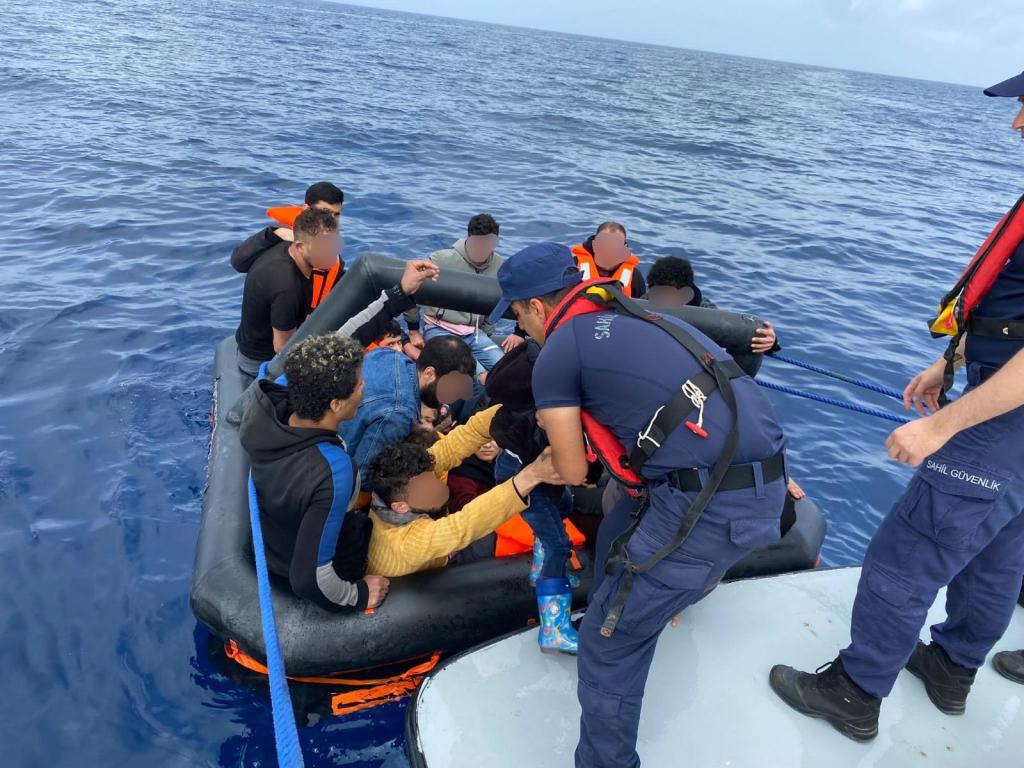
In the last days, 10 life rafts, carrying 180 people, mostly Afghan nationals, and 60 of them small children, have been found drifting by the Turkish coast guard.
We are in daily contact with people in distress after being illegally and brutally pushed back by the Greek coast guard in the Aegean Sea.
Some of them have documented their ordeal on video, most cannot, because their phones are usually robbed from them by their captors before they are forced into these motor-less rafts, or they don’t dare to out of fear of what would happen to them if caught.
In the early hours of Wednesday June 19, a boat carrying 33 people, 14 of them small children, was closing in on the north east shore of the Greek island of Leros. Those people had travelled more than 20 miles from the Turkish coast, under cover of darkness, in an overloaded flimsy rubber boat, and had only a few more miles left to reach land on Leros.
A few miles from Leros, they were detected by a vessel from the Greek coast guard, and brutally stopped.
Everyone was taken onboard the coast guard vessel. Some believed that they would be taken to safety. Others, especially those who had had experience with the Greek Coastguard before, were more sceptical about their fate.
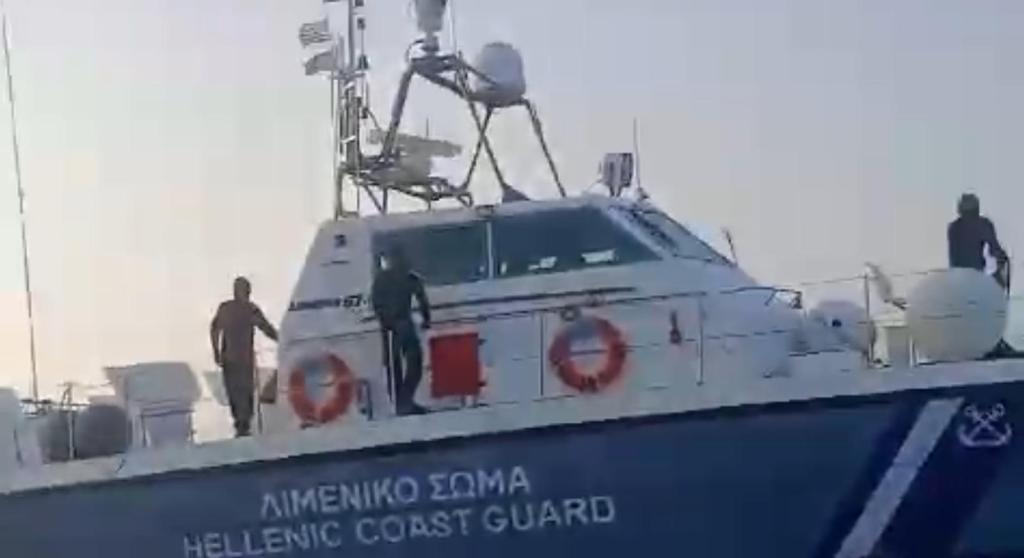
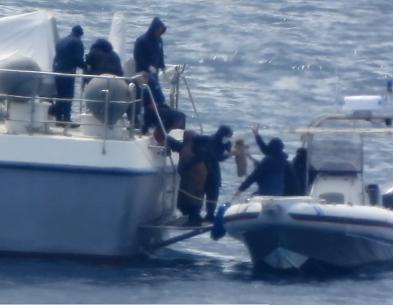
Archive image
Masked men onboard the Greek coast guard vessel, carrying guns and batons, started shouting, ordering them to hand over their phones, and brutally searching everyone.
At first light, the group was forced into two life rafts and left helplessly drifting in the middle of the sea, inside Turkish waters, by the Greek coast guard.
At 05.30am CEST, a woman from one of the life rafts contacted Aegean Boat Report and asked for assistance.
We did the only thing we could do: document their case and inform Turkish authorities, so the group could be rescued and taken to safety on land.
“Hi please help us, we have kids and called Turkey coast guard, they said we can’t come because you are in greek water, please save us!”
The life rafts were drifting in Turkish waters, but the group insisted that they didn’t want to be rescued by the Turkish coast guard and taken back to Turkey: they said they had not been and would not be safe in Turkey.
But because they had already been illegally pushed back by the Greek coast guard, their only immediate option was to be taken back to Turkey.
The group told us: “We are not safe in Turkey,” and we must agree. They are absolutely not safe in Turkey. Thousands of Afghans in Turkey have in the last months been rounded up and transported to camps close to the Iranian and Syrian border, from where they are almost always deported against their wishes back to Afghanistan, and an at best uncertain future under the Taliban regime.
At 07.30am, we were informed by the Turkish coast guard that two life rafts carrying 33 people, 14 of them small children, had been found drifting 20 miles north west of Bodrum.
Comparing pictures and videos taken and shared with Aegean Boat Report by the people onboard the life raft with pictures taken by the Turkish coast guard, we could confirm that it was the same group.
This week two strong documentaries have been published, by BBC in the UK and STRG_F in Germany. They both clearly, and without any doubt, show the systematic human rights violations in Greece, and the total failure of Frontex and the European Commission, to make sure that member states uphold fundamental rights of people seeking protection in Europe.
But even as pressure is mounting against the Greek authorities, Frontex and the European Commission, for supporting the widespread and systematic fundamental rights violations in Greece, this incident and many others beside prove that the Greek authorities continue to put lives at risk, killing vulnerable men, women and children at the European border in the name of border protection, blessed and funded by EU.
When small defenceless children are thrown into life rafts and abandoned in the middle of the sea by authorities, and we don’t raise our voice, there is something terribly wrong with us.
On March 23 2020, 31 people were found drifting in a life raft outside the Greek island of Simi, Dodecanese, Greece.
People onboard testified that they had been held captive for two days on the island by Greek authorities, before taken back out to sea and abandoned in a life raft.
This was the first case registered of such practice – using life-saving equipment to illegally remove asylum seekers from Greek territory, leaving them helplessly drifting in the middle of the sea.
It was extremely difficult to believe, at first, that anyone, especially a European country, could do such a thing towards other human beings.
In fact, it was only the beginning. In the coming days, months and years, thousands of men, women and small children have been found drifting in life rafts in the Aegean Sea by the Turkish coast guard, all reporting that they had been forced into these rafts by the Greek coast guard.
Greece has denied all and any involvement in these brutal and inhumane acts, claiming it’s only “fake news”, propaganda by NGOs that for some reason ‘want to undermine and discredit Greece’.
Hundreds of cases have been investigated and documented by organisations, EU bodies, independent researchers, international media, and even Frontex, all with the same conclusion: there is absolutely no doubt that Greek authorities are behind this. But still they continue to deny the obvious.
Even when their own coast guard and police are caught on camera, brutality and illegally removing people from Greek territory, and abandoning them in life rafts at sea, they continue to deny it.
The evidence is overwhelming, but still Greek ministers and even the Greek prime minister, Kyriakos Mitsotakis, lie to journalists on TV. Who do they think they are fooling?
The answer to that would be first the Greek people, who have been misled and lied to for several years by their government, and second, the European Commission.
We don’t believe for a second that the European Commission has been unaware of what has been going on in Greece, there is too much evidence available for that, even from the EU’s own investigation through the European Anti-Fraud Office (OLAF).
It became clear as day when the Commission desperately tried to keep the findings of this investigation away from the European public, by classifying the report secret. Fortunately, they didn’t succeed, and the report was published by investigative journalists in October 2022.
The European Commission, led by Ursula Gertrud von der Leyen, has been fully aware of the Greek government’s systematic human rights abuses, and not only that, they have supported their efforts and funded their operations, all in the name of ‘border protection’.
It seems that fundamental human rights in Europe are not for everyone, and are preserved only for the privileged.
Earlier this week, the BBC in the UK broadcast an investigation, Dead Calm: Killing in the Med about the Greek Coastguard’s illegal activities leading to people drowning while being pushed back. It did its job well, uncovering clear evidence of the Greek Coastguard and government breaking the law and effectively killing people in the process, but viewers should not believe it showed anything like the true magnitude of the violations against the law and human decency being committed by Greece’s Coastguard and government.
Since March 2020, 1,478 life rafts have been found drifting in the Aegean Sea by the Turkish coast guard, carrying almost 26,000 men, women and children. In total, 85,000 people have been illegally pushed back from Greece in the last four years.
The average cost of one life raft that can hold 15+ people, manufactured by Lalizas, is approximately €4.000.
That indicates that the Greek coast guard has spent around €6 million on life rafts in less than four years, to illegally deport men, women and children.
Who is picking up the bill? Like everything else related to border protection in Greece, the EU pays.
The European Commission is knowingly and deliberately funding violations of international law and human rights performed by Greek authorities. There are no questions asked.
As long as the job – preventing people from arriving in the EU, and removing those who do arrive – is being done, the cost in human lives doesn’t seem to be of any concern. Why would it? They are not European.
That may sound harsh, but the awful truth is that this is the modern EU.
The European Court of Human Rights will tomorrow, June 4, hear two cases against the Greek government for illegally forcing people back to Turkiye.
It is the first time the Court will hear cases against pushbacks carried out by the Greek government, and Aegean Boat Report has played a central role in helping to bring the first of them this far.
The first case, in which GRJ, an unaccompanied child, and one other unaccompanied child, were pushed back by the Greek government on 8 September 2020, was first and extensively documented by Aegean Boat Report.
We worked for months to highlight the case, bringing it to the attention of global media and legal practitioners, and persuaded international lawyer and lecturer in international law at Haifa University Itamar Yossef Mann-Kanowitz, to raise it across the legal community.
GRJ, whose case against the Greek government will be heard on Tuesday 4 June, arrived in Greece on 8 September 2020, along with 17 other people.
They arrived in Samos, and the two boys left the group to find help, as some members were injured and one was a pregnant woman, as well as to present themselves to Greek authorities and enter the asylum application process, as the law demands.
Both boys saw the 16 people with whom they had arrived taken on board a Greek Coastguard vessel. They assumed the group had been rescued – though in fact they were beaten and set adrift into Turkish waters, later being rescued by the Turkish Coastguard – and so travelled to Vathy camp to make themselves and their presence known, and apply for asylum.
Instead, having arrived at the camp, the two boys, aged 15 and 16, were taken to the camp police station, where they were told they would be held in isolation and then registered after a few days.
They were not.
In fact, Greek officials put them in a car, told them to hide below the level of the windows, then put them on a Greek Coastguard boat, stripped them of their money and possessions including mobile phones, handcuffed them, slapped them several times in the face, and set them adrift into Turkish waters on an inflatable lifeboat, without engines, and also without even life-jackets.
The boys had to paddle with their hands until they were rescued by the Turkish Coastguard.
We are delighted that GRJ has the opportunity to share his experience, and call for justice for his illegal and brutal treatment at the hands of the Greek government.
The case argues that Greece’s actions violated multiple rights under the European Convention on Human Rights, including the right to life, the prohibition of torture and the right to an effective remedy.
He will be represented in court by lawyers from Prakken d’Oliveira, Irish Centre for Human Rights and the Dutch Refugee Council.
To see our original report on this shocking and unacceptable violation of the law and human morality and decency, read the post her, link in picture.
You can also follow the case, and learn its outcome, by visiting the webcast after 2.30pm tomorrow, Tuesday 4 June 2024, link in picture.
We hope, as anyone with any interest in the law and our fellow men, women and children will do, that justice is done, and the Greek government will be held responsible for its despicable and illegal treatment of GRJ.
We also hope the case may set a precedent for the many, many thousands of other people treated similarly barbarically by the Greek government over the last five years, and may finally bring to an end this shameful chapter of Greek national history.
In the early hours of Thursday May 23, a boat carrying 25 people, amongst them 7 small children, was closing in on the northwestern shore of Samos, north west of Karlovasi.
6 kilometers from land a vessel from the Greek coast guard approached in high speed.
From videos we received from people onboard, we can clearly identify the boat as a Lambro 57 coastal patrol vessel, identification ΛΣ-604, belonging to the Hellenic Coast Guard on Samos.
The coast guard vessel first drove alongside the rubber boat, then started circling around it in high speed, creating waves to slow it down.
In videos taken from onboard the rubber boat, we can see three masked men, officers, on deck on the coast guard vessel.
The people in the rubber boat was eventually stopped, the masked officers on the coast guard vessel was standing above, pointing shotguns at them, they had no choice than to obey.
One by one they were taken onboard the coast guard vessel, thoroughly searched, before being placed sitting on deck in the front, face down and ordered not to talk or to look up.
All belongings were taken away from them, what little they had left in life they lost. While searching, the masked men continuously asked that they hand over their phones, nobody dared to resist, all phones was confiscated and thrown into the sea.
All communication with the boat was lost 06.58 (EEST), the phones went offline, we were unable to reconnect.
At the time we were unable to confirm what really happened to the group, but based on the systematic and widespread pushback practice by Greek authorities, we assumed that they had been illegally pushed back to Turkey.
When comparing pictures and videos we received from the rubber boat, with footage published by the Turkish coast guard from the life raft outside Menderes, there is absolutely no doubt, the two groups are the same.
Video TCG 23.05.2024
Greek coast guard illegally pushed back 25 people, 7 of them small children, forced them into a life raft and left them helplessly drifting in the middle of the sea, with no regard for their safety, international law or fundamental rights.
This systematic inhumane pushback practices by Greek authorities seems to be of no concern for the European Commission, the “guardian of the treaties”, who is not only turning a blind eye to widespread violations of fundamental rights in Europe, but also fully financing the illegal practice by Greek authorities.
For the last four years Greek authorities have, in cooperation with Frontex, and fully supported by the European Commission, pushed back 83.000 men, woman and children who have tried to find safety in Europe. 2000 rubber boats and 1.470 life rafts have been found helplessly drifting packed with people the Aegean Sea.
The European Commission has taken no legal actions, nor launched any infringement procedures against Greece, despite their blatant disregard for the rule of law in Europe.
The guardian of the treaties has failed, not a little, but miserably.
Almost a year ago, on June 26, we posted a video of a group of refugees handcuffed and duct-taped in the back of a van in Kos. The video immediately went viral on social media.
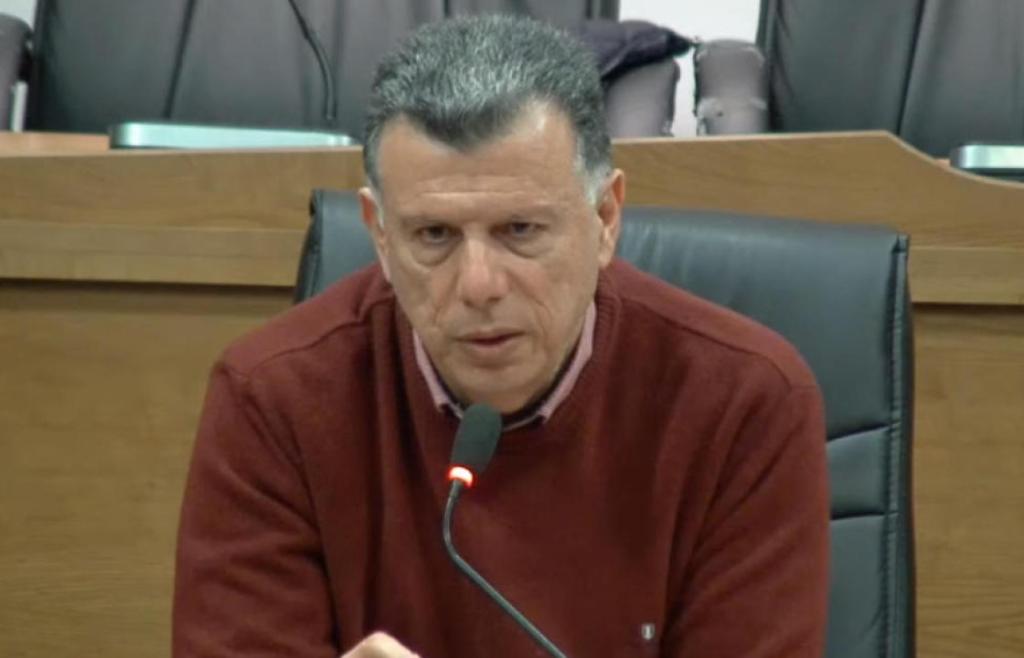
The Major of Kos, Theodosis Nikitaras, who is known to have a close connection to the police and coast guard on the island, went out immediately on a media spree to try to defend his “comrades”, claiming that it was fake news, made up by Aegean Boat Report.
He did not even bother to investigate the facts of the case, in a situation – we must remind you – in which video footage clearly showed people bound with tape, and blindfolded, in the back of a van.
The mayor’s astonishing response led to the headline in Kos’ local press: “I will sue the NGO that defames the island”.
Just to clarify, he never did file a lawsuit, even do he claimed to have done so. We cannot know for sure why he did not, especially having promised to the people of the island – to whom he owes his position and service – that he would. Perhaps he knew that we were in fact not lying, and was trying hard to shift focus from the facts.
We must note that this in itself, if it is the reason, would be a shocking dereliction of his duty: duties to the people of his island and to the wider community, which include ensuring that the uniformed officers of his region abide by their own rules, and national law, as well as not breaking international law and degrading the humanity of people within his territory.
An immediate and proper investigation was what any responsible mayor should have done. Theodosis Nikitaras did not carry one out.
Instead he tried to defend his friends in the coast guard, by attacking the messenger.
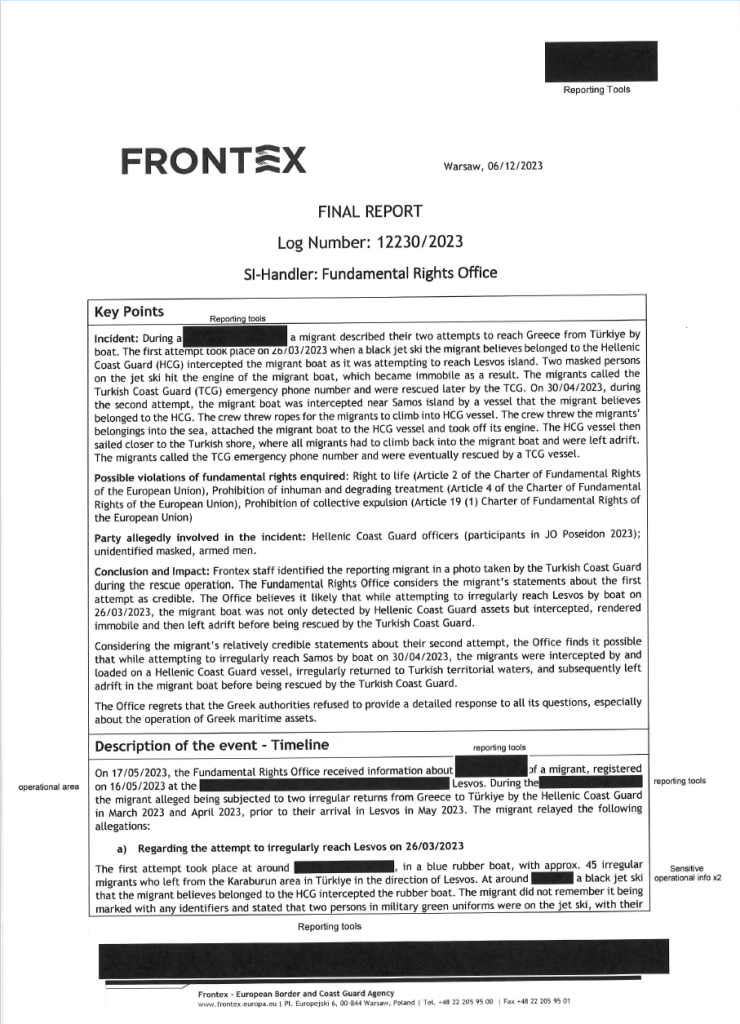
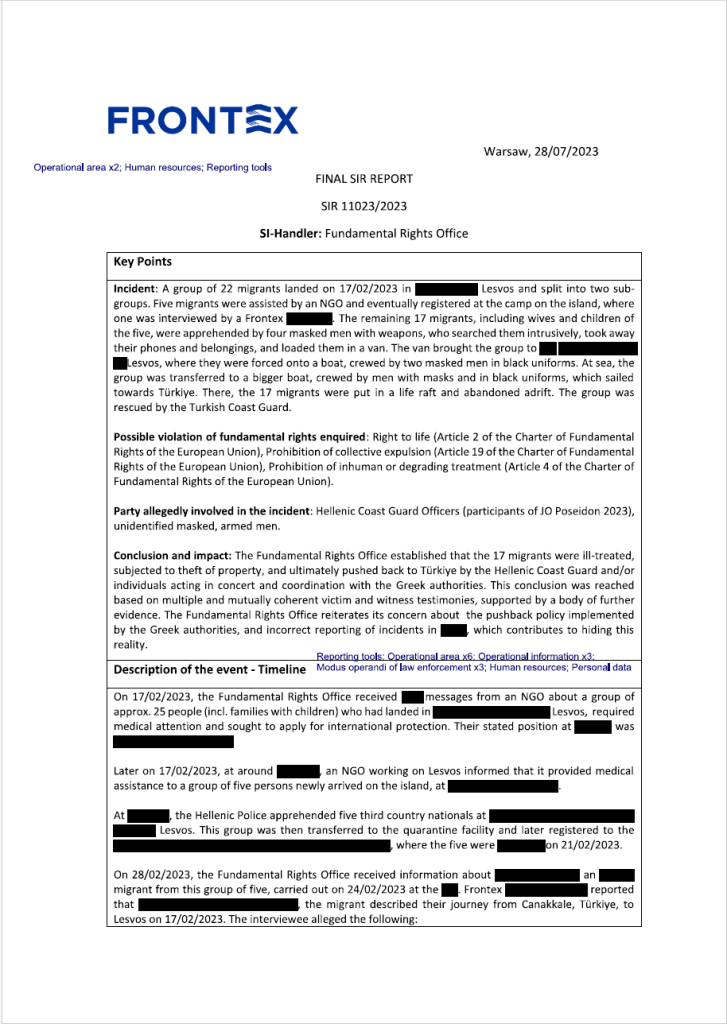
Fortunately, however, someone else did start an investigation into the incident: Frontex.
Oddly enough, when he became aware of this investigation, the mayor of Kos, Theodosis Nikitaras, stopped attacking Aegean Boat Report in the Greek press.
Once again, we stress that we can only speculate why Nikitaras decided to try to cover up this disturbing and serious incident, and why he saw no need to investigate acts his friends in the uniformed services were shown on video to be carrying out.
We firmly believe that the Mayor of Kos is fully aware of what is going on in his island, and that he deliberately tried to cover this up by attacking the organisation which published the video. We fear he did so because he wished to attempt to discredit and criminalize our organisation, and – perhaps most worrying from a Mayor – to mislead his constituency, the people of Kos.
Sadly, this seems to be the normal routine of any Greek officials whenever caught with their pants down. They deny, mislead and point the finger elsewhere. This has been the practice for years: taking responsibility and admitting any guilt seems never to be an option, even when they or those in their service are obviously guilty.
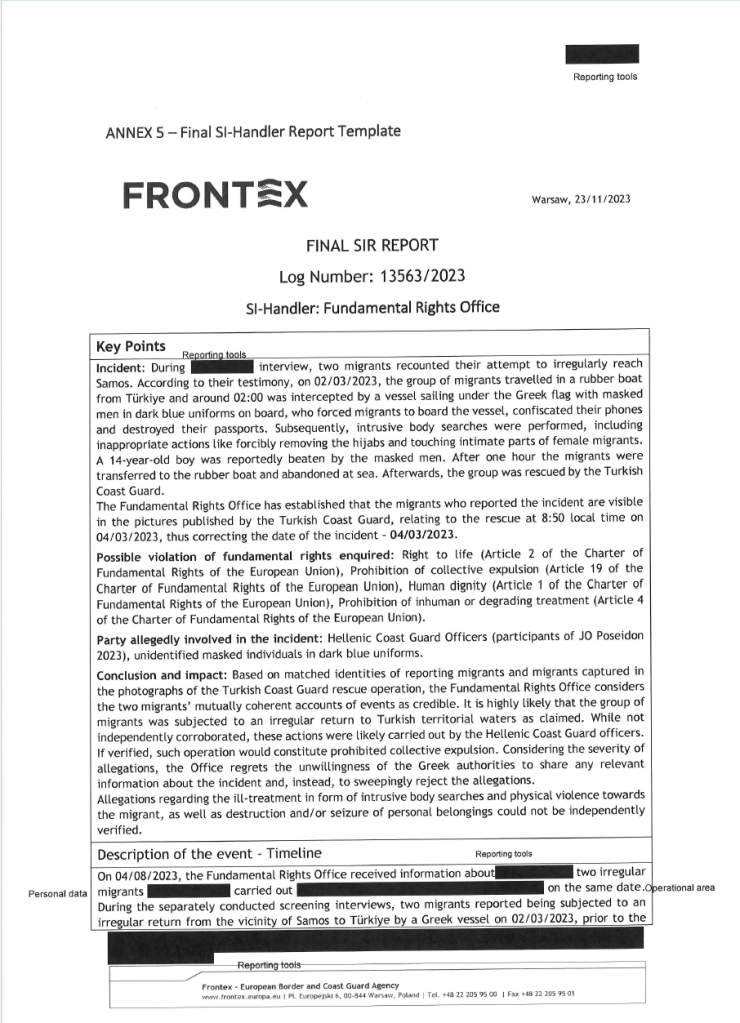
It is also important to note that the Frontex human rights office investigation (Serious Incident Report) into the incident, that we mentioned above, concluded by the end of last year, and was extremely clear in its findings:, is crystal clear:
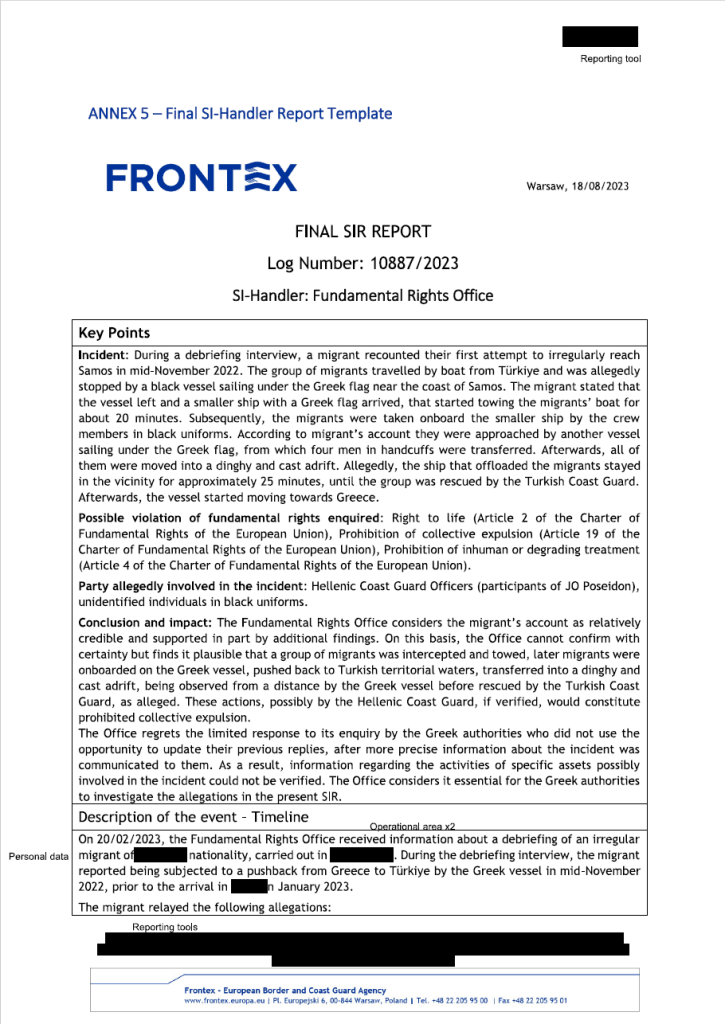
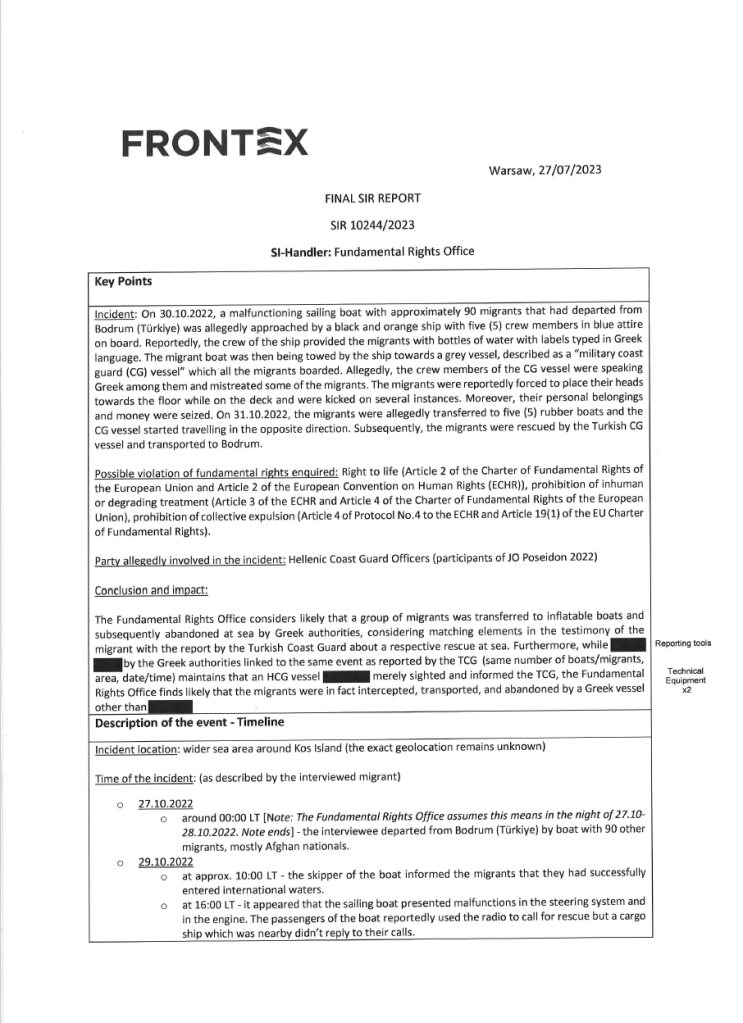
Final Report 12774/2023 Warsaw 29/11/2023
Aegean Boat Report published the truth, and the incident certainly and incontrovertibly happened on Kos.
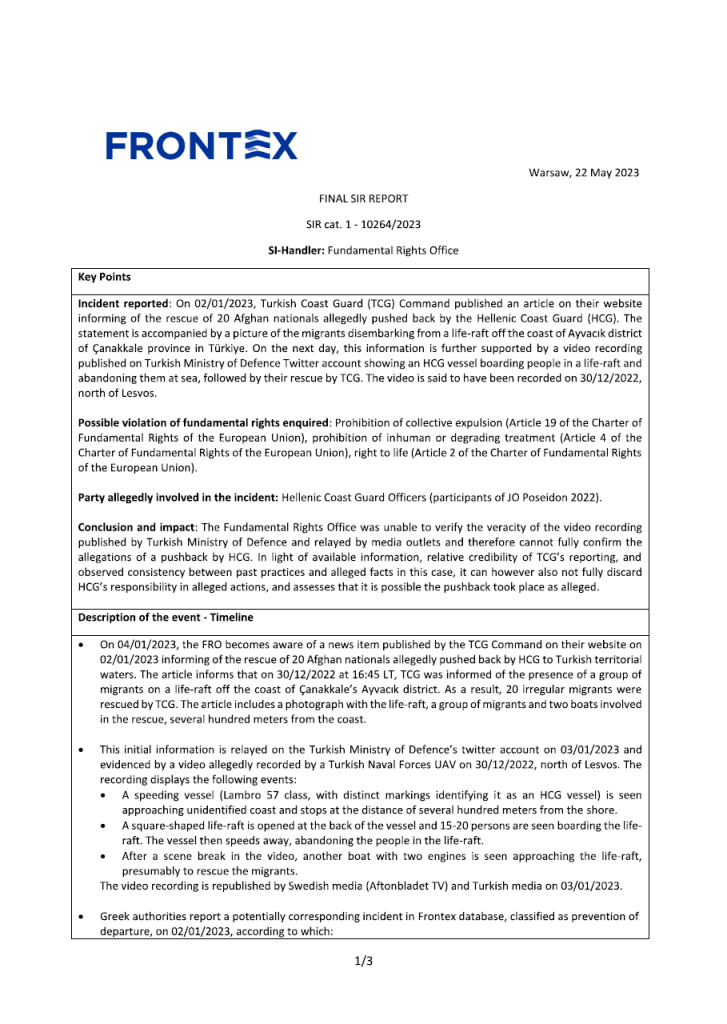
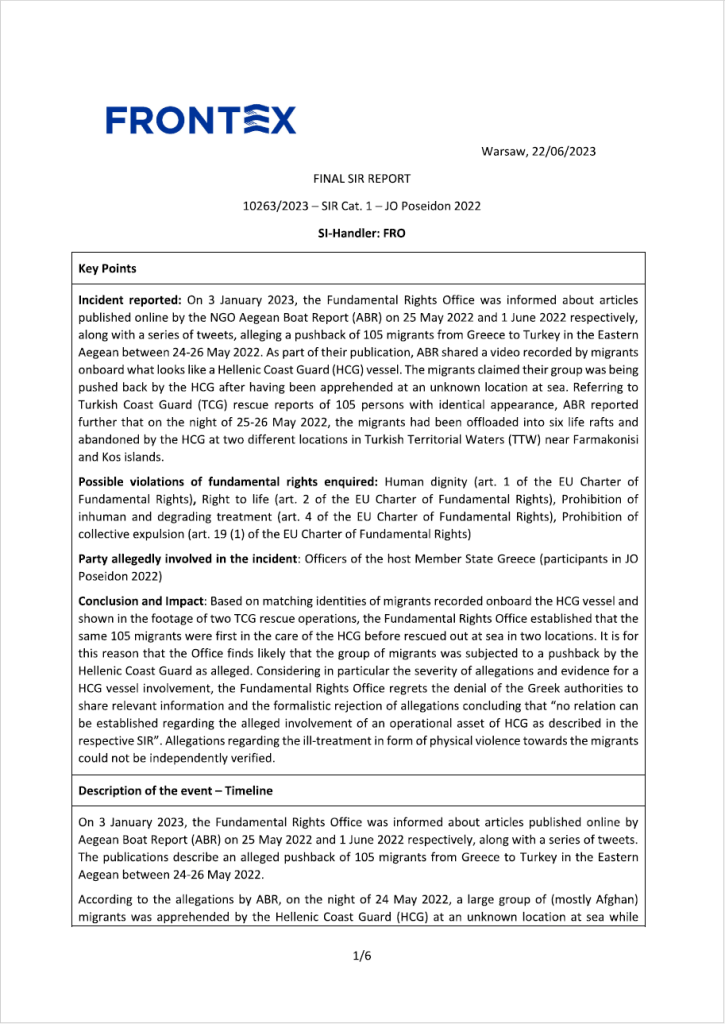
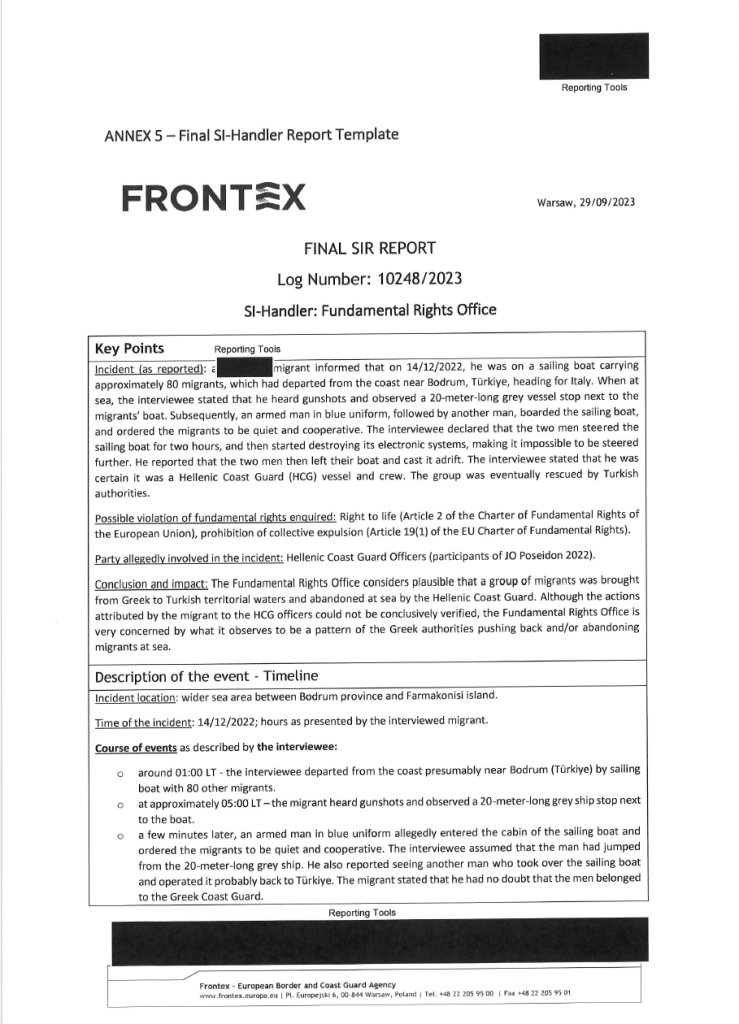
We believe it’s only fair that we try to shed as much light as we can on what has been the normal routine on Kos and the other Greek Aegean islands for years, by publishing in full the SIR from Frontex, so that people on Kos can make up their own minds, and see for themselves what a person their mayor really is. Link to full report in picture below.
Make no mistake, Theodosis Nikitaras knew that this was going on, but he deliberately lied and misled Kos’ and the wider Greek media, and Kos’ and the wider Greek public.
To Theodosis Nikitaras, Mayor of Kos, we say this:
We expect and demand that you finally issue an official apology to our organisation, Aegean Boat Report, for slandering and lying about us in the Greek press. You should make this public apology, in person and via the media you used to attack us, with the same enthusiasm as you delivered that unwarranted and attack.
The same apology should be given to the people of Kos, to whom you lied and tried to mislead.
The people of Kos know what has been going on in their island for many years, and Nikitaras, so do you.
Pushback Kos 10.06.2021
We are afraid that your pretence it is not, shows your total lack of integrity and moral backbone.
We hope that the people of Kos use their power to select a more suitable person to lead them in the next election, a person who puts the interests of all in front of the interests of a few.
Corrupt and deceitful people have no place as leaders in a true democracy, unfortunately in Greece, under the guidance on the ruling party New Democracy, corrupt leaders seem to have become the rule, and not the exception.
Only the Greek people have the power to change this, and we hope they shall. Even if they do not, we demand and await your open, public apology to us for your open defamation of us, and denial of facts caught on camera.
To the people who was kidnapped, gagged and beaten, we say this:
We apologize, because we are responsible! We published the video that resulted in the beating from your captives, for this we are truly sorry!
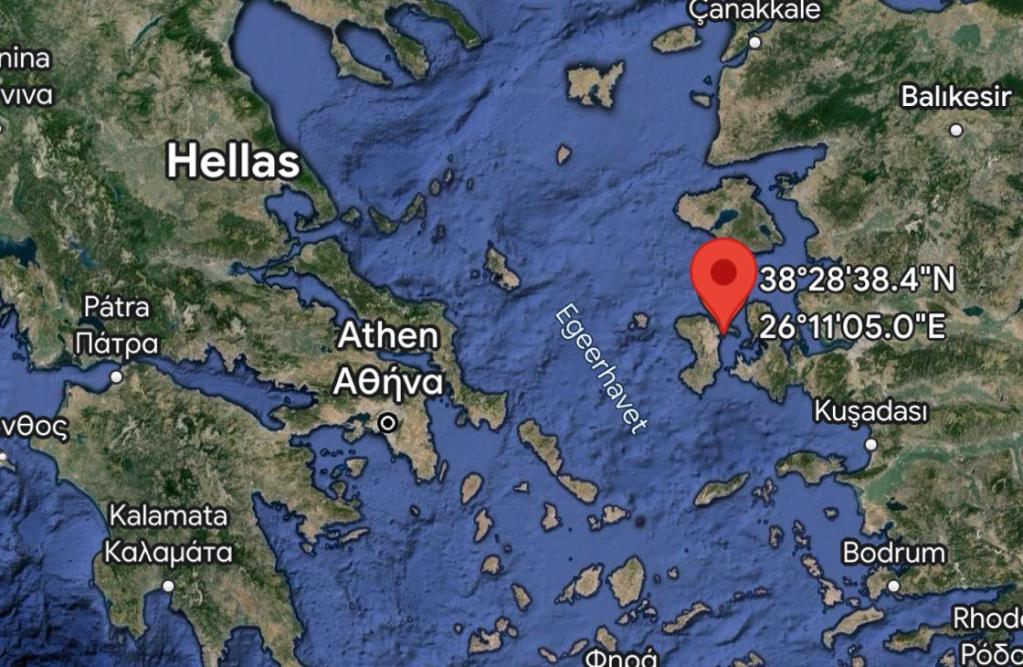
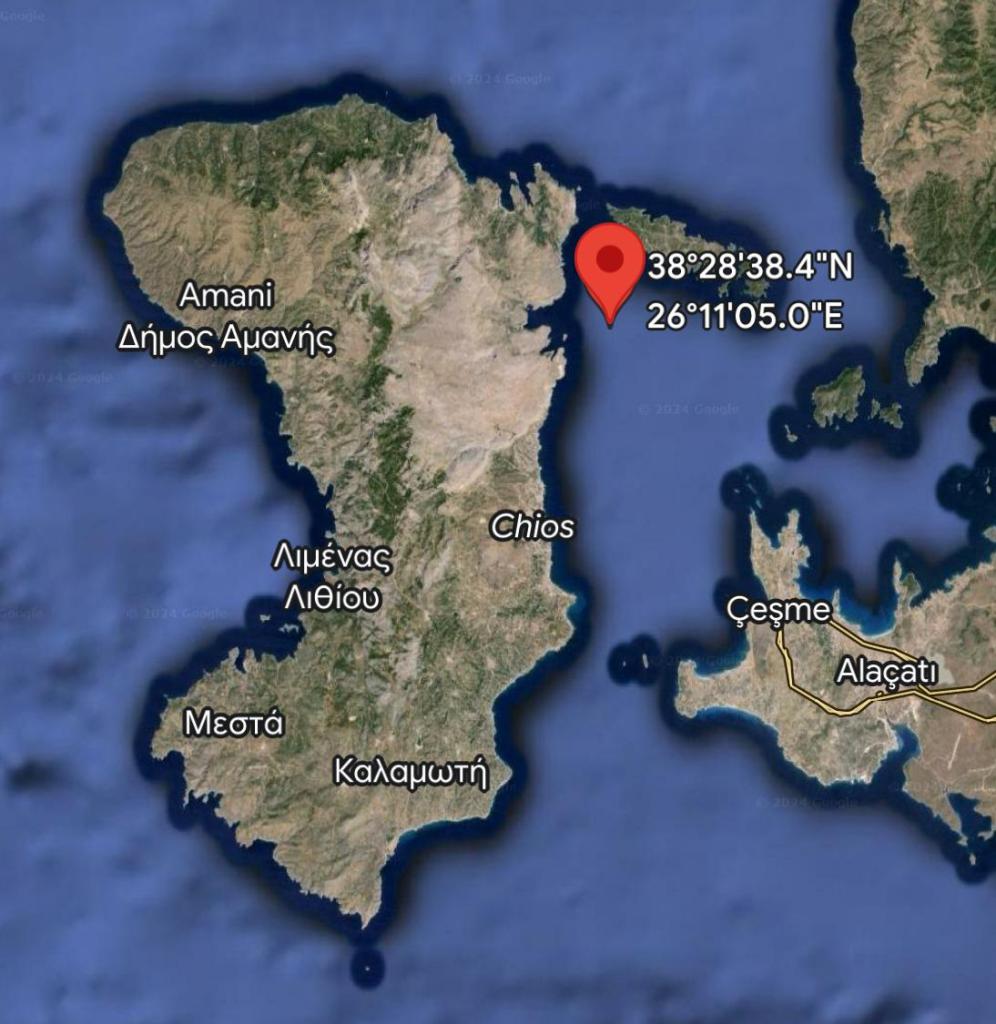
In the cover of darkness on March 2, a rubber boat tried to reach the northern shores of Chios, when it was brutally stopped and illegally pushed back by the Greek coast guard.
People onboard was robbed of their belongings, brutally beaten, thrown into two life rafts and left helplessly drifting in the middle of the sea.
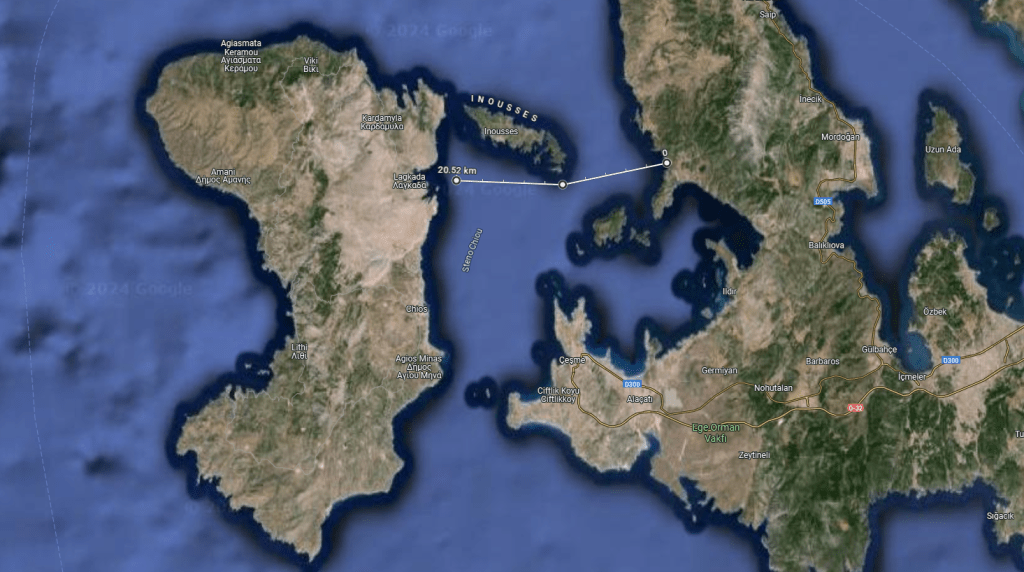
The boat carrying 35 people had sat out from the opposite Turkish coast at night, in the cover of darkness to avoid being detected. Onboard was 24 adults and 11 small children, mixed nationalities from Syria, Sudan, Afghanistan, Irak and Palestine.
The boat was closing in on the northern shore of Chios when they were spotted by a vessel from the Greek Coast Guard patrolling the area. They tried to escape, but the small engine on the flimsy overloaded rubber boat was no match for a coast guard vessel, and they were stopped within minutes.
A second black smaller vessel arrived shortly after, all officers onboard both coast guard vessels was wearing black masks to cover their faces.
The rubber boat was stopped a few kilometers from land east of the village of Lagkada, Chios north east. Everyone was taken onboard the largest coast guard vessel, nobody was allowed to take any of their belongings with them. As soon as the rubber boat was empty, the officers punctured several holes in it, and the boat and all their belongings disappeared down in the sea.
People were ordered to sit on the front deck and look down, no talking was allowed. One by one the officers searched the people in the group, many were ordered to undress, also the women, in the search for hidden valuables, money and especially phones.
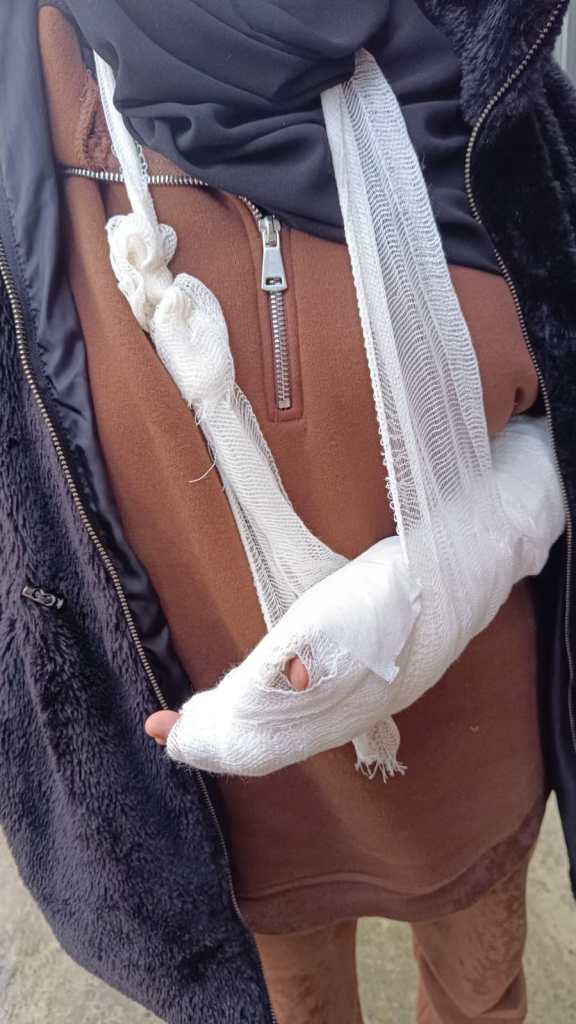
A woman refused to take of her clothes, the masked officers undressed her by force, and broke her arm in several places in the process, she was screaming in pain, her screams didn’t seem to bother the officers at all.
Those who refused were brutally beaten, one of the victims said “ they acted like wild animals, so brutal, they seemed to enjoy it, everyone was so scared”.
After everyone was thoroughly searched, the coast guard vessel headed out to sea towards Turkey, the group knew what was about to happen, “we begged them not to take us back to Turkey, but they just told us to shut up and laughed” one of the victims said.
What followed next we have seen so many times before in this area, people were forced into two life rafts, and left helplessly drifting in the middle of the sea in the dark.
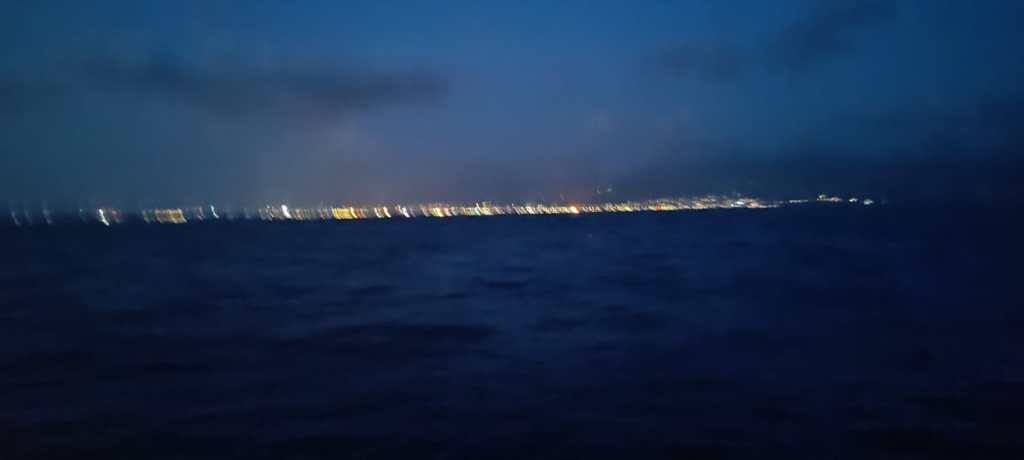
One of the victims, a woman, had managed to hid her phone, she tried to call for help but she had no reception. She took a picture towards Chios, time was 05.30, over three hours since they were stopped by the Greek Coast Guard.
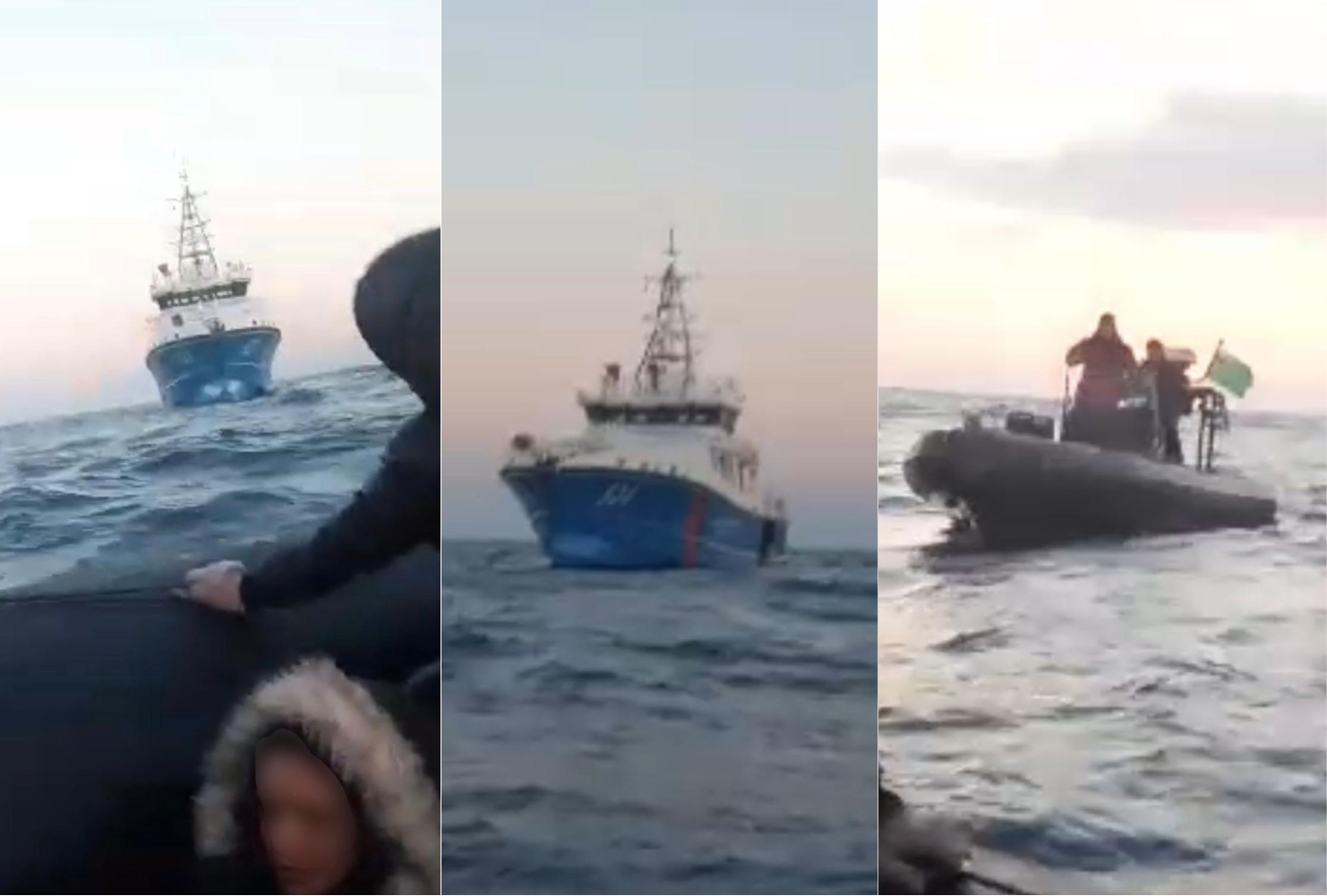
At first light they could see the Greek coast guard vessel in the distance, watching, the life rafts had drifted apart. They tried to call for help again, still no reception.
From a video taken from the raft and description from the victims, we have been able to identified the two coast guard vessels, the first was a Lambro 57 coastal patrol vessel.
The second vessel was a Rafner 1100 Tactical Patrol RIB, belonging to HCG special forces, a boat we have seen in action several times in the past in relation to pushbacks.
Video From a pushback outside Kos June 2021
A larger vessel approached the two drifting life rafts, at this point they believed they would be rescued, unfortunately this didn’t happen.
From a video we can see the vessel a short distance from the drifting life rafts, only watching, no effort was made to initiate rescue.
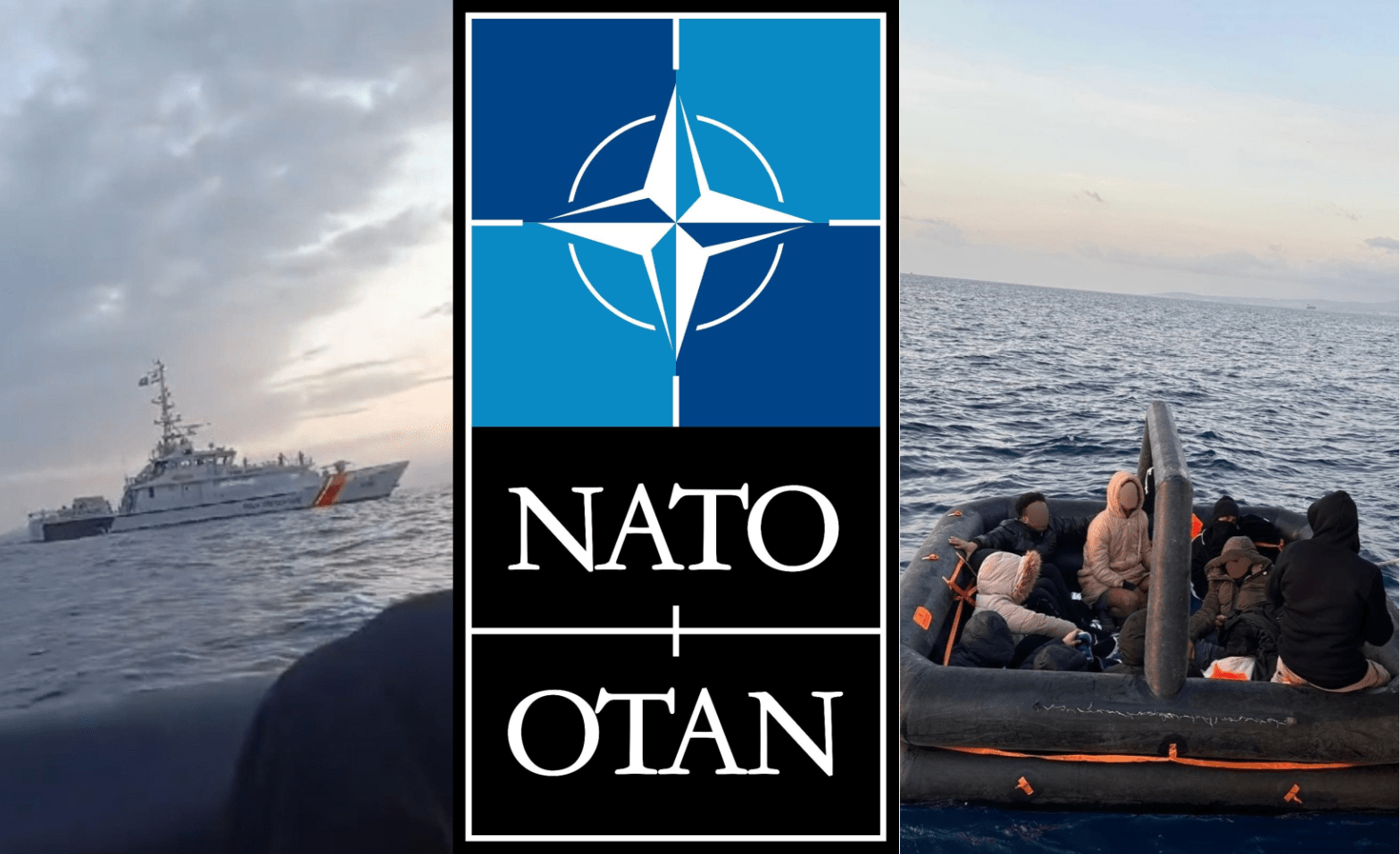
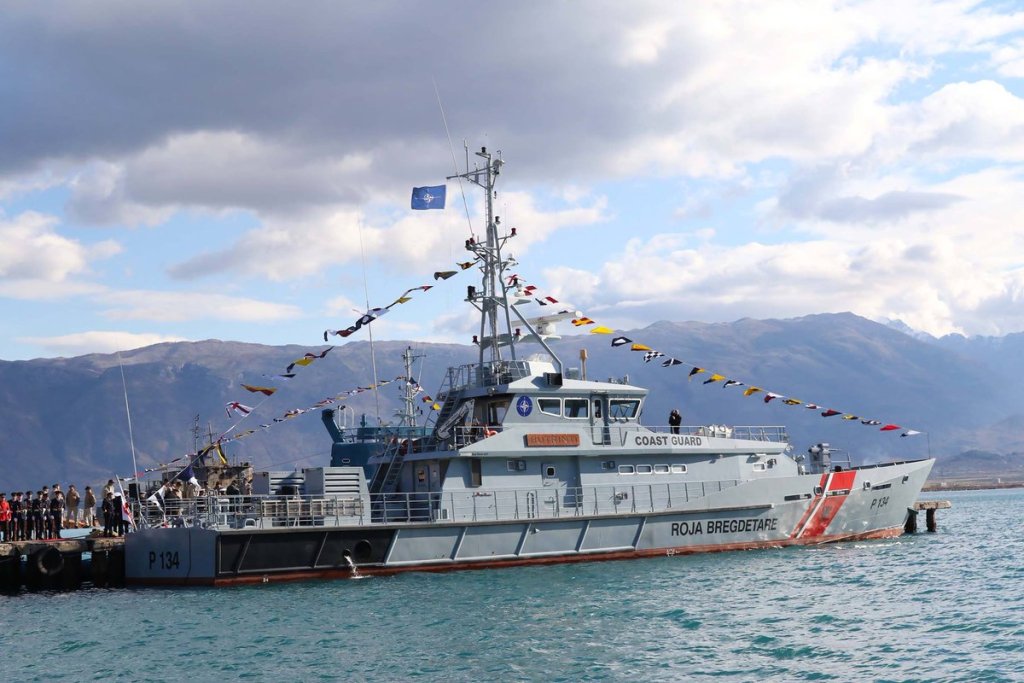
The vessel was the “Butrinti”, a Stan Patrol 4207 patrol vessel from the Albanian coast guard, ID number P 134, participating in operation “Sea Guard”, a NATO maritime security operation in the Mediterranean.
A NATO vessel on duty in the area only watched, while 35 people, 11 of them small children, were drifting in two life rafts in front of them, no rescue attempt, even do it was obvious that they desperately needed to be rescued.
The obligation to rescue people in distress at see seems to be different depending on your nationality and status. We firmly believe that, if these 35 had been Europeans drifting in life rafts from a yacht, rescue would have been initiated immediately and without question. This group was not Europeans, but refugees, and for that reason, no rescue attempt was made, it’s quite unbelievable.
If the decision not rescue the people from the life rafts was made solely by the captain of the Albanian NATO vessel Butrinti, or orders were given from operational command of Allied Maritime Command in Northwood, United Kingdom, only NATO can answer to.
It is such a tragic irony, considering how many Albanians have drowned trying to cross to Greece and Italy in late 1990, when communism in Albania started to fall.
“According to article 98 of the UNCLOS, it is the duty of the master of a ship to render assistance to any person found at sea in danger of being lost” and to carry out non-discriminatory rescue operations regardless of the nationality of the rescued person, “Parties shall ensure that assistance be provided to any person in distress at sea. They shall do so regardless of the nationality or status of such a person or the circumstances in which that person is found”.
In this case, and it other previous cases, it seems like international maritime laws do not apply for NATO, and that they do discriminate based on nationality, status and circumstances.
The German navy ship A1411 Berlin, on NATO missions in the Aegean Sea, has on several occasions, been a passive observer to pushbacks performed by Greek authorities.
In this new case involving an Albanian NATO vessel, they did not only observe a pushback, they watched while vulnerable people drifted helplessly in life rafts straight in front of them, neglecting to rescue them.
The group of 35 drifting in two life rafts east of Chios, was eventually rescued by the Turkish coast guard after helplessly drifting for hours at sea.
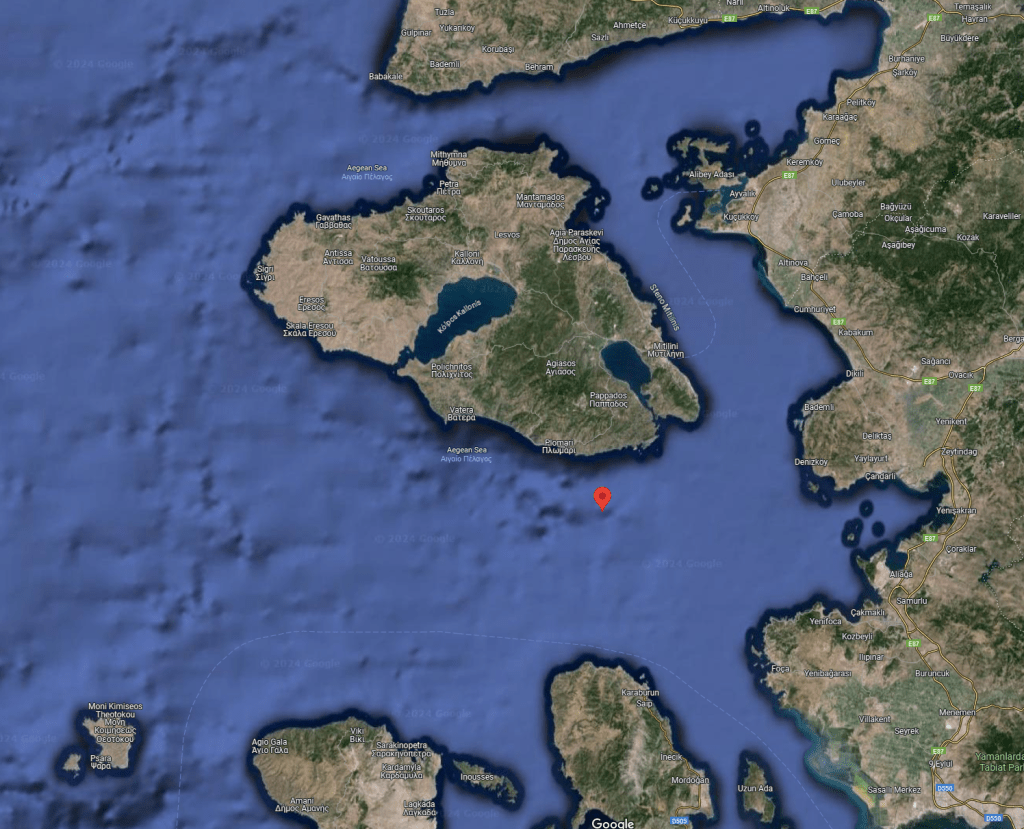
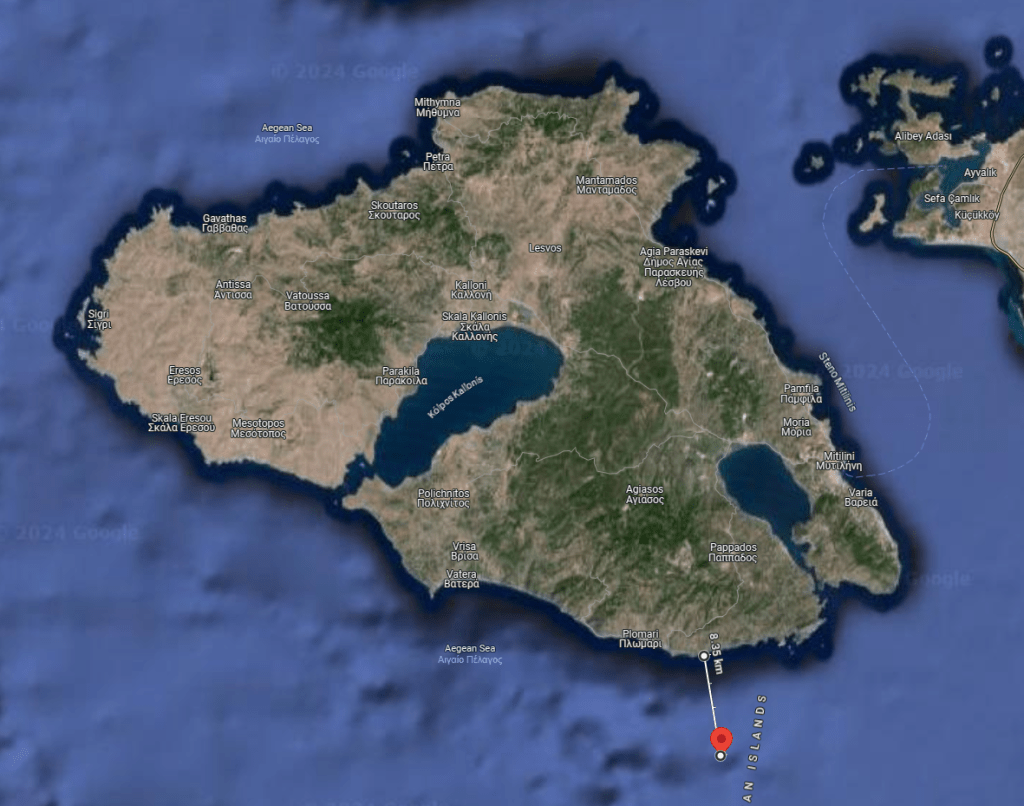
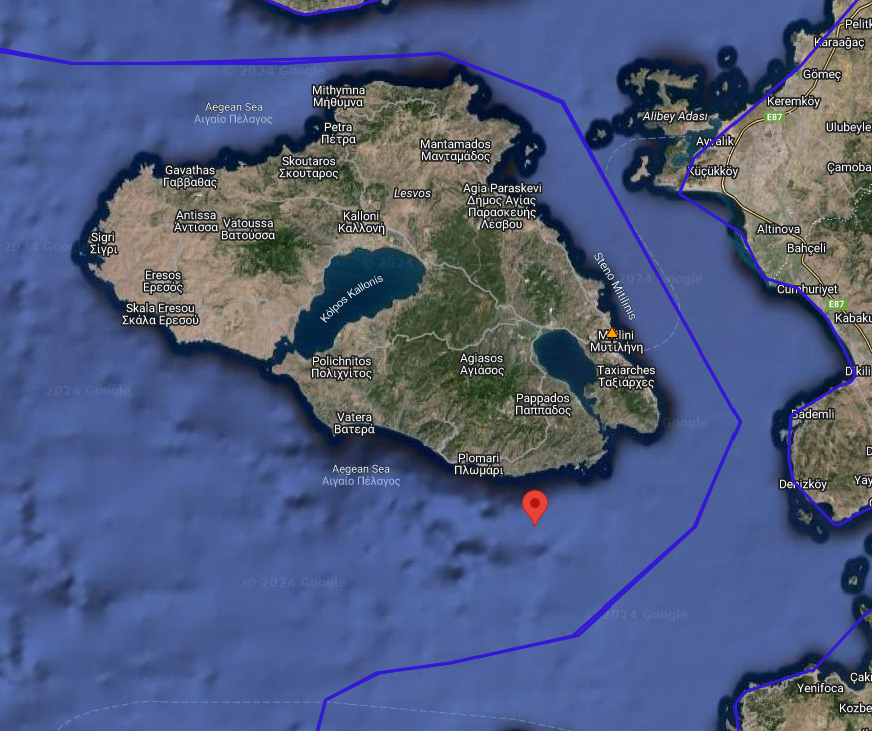
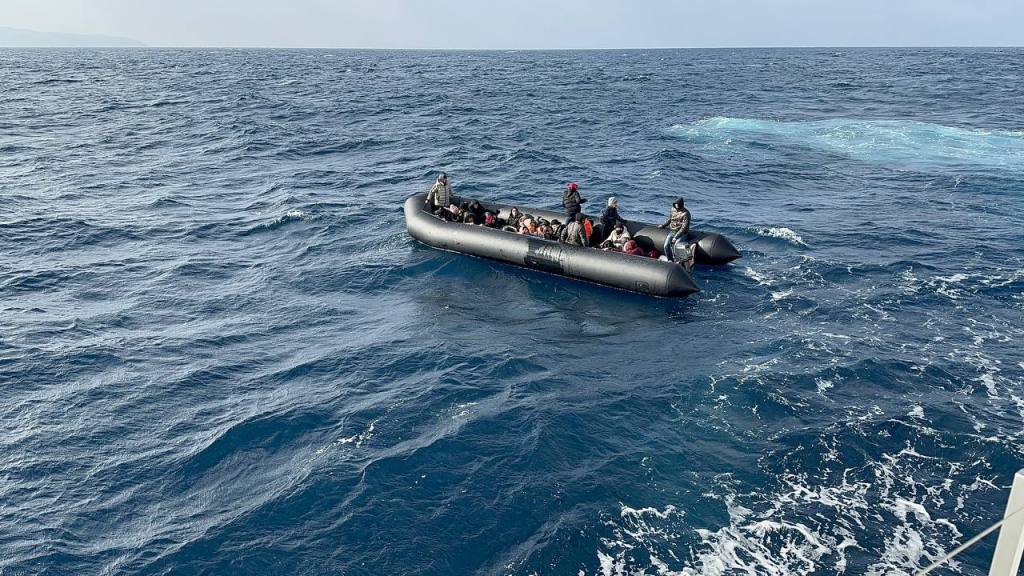
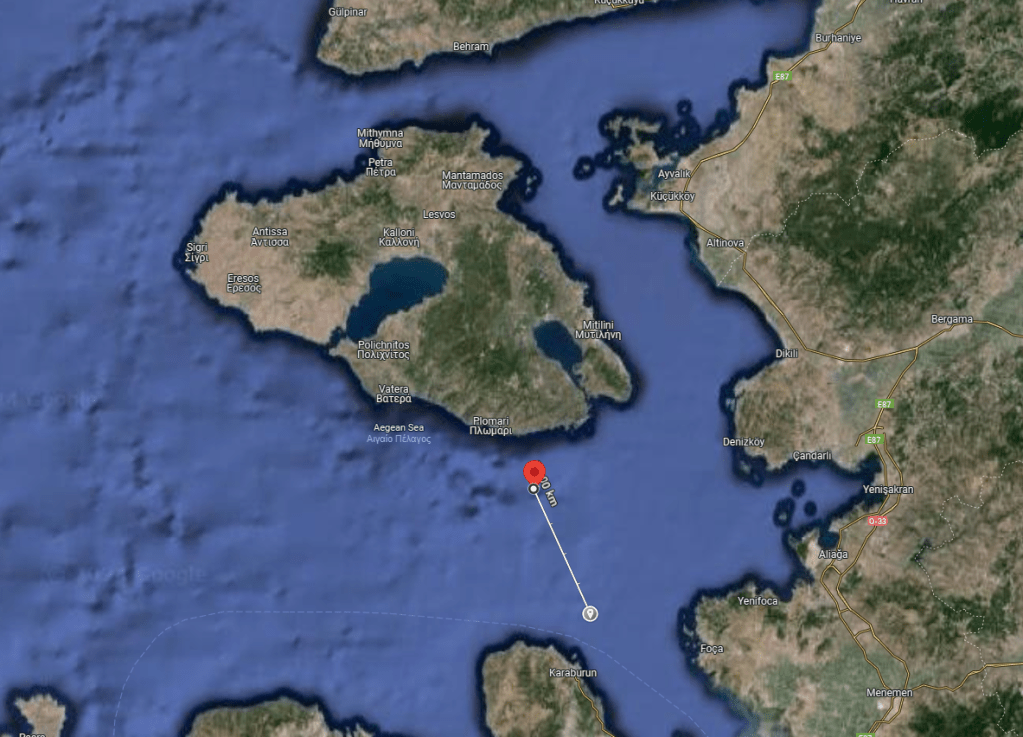
At first light on February 19, a boat carrying 37 people, amongst them 13 small children, ended up in distress deep inside Greek waters, south east of Plomari, Lesvos south.
First on scene was the Bulgarian coast guard vessel “Balchik”, which is stationed on Lesvos as part of the European Border and Coast Guard Agency Frontex operation, Poseidon.
Under normal circumstances, any coast guard vessel would immediately initiate rescue if they came across a boat in distress. Unfortunately for these 37 people, there is nothing “normal” about the situation in the Aegean Sea, where for some reason international law and fundamental rights don’t seem to apply.
The group was relieved that the boat coming to their rescue was a Frontex vessel, and not the Greek Coast Guard. They knew that the Greek coast guard would immediately push them back to Turkey, but surely this vessel wouldn’t, or so they believed.
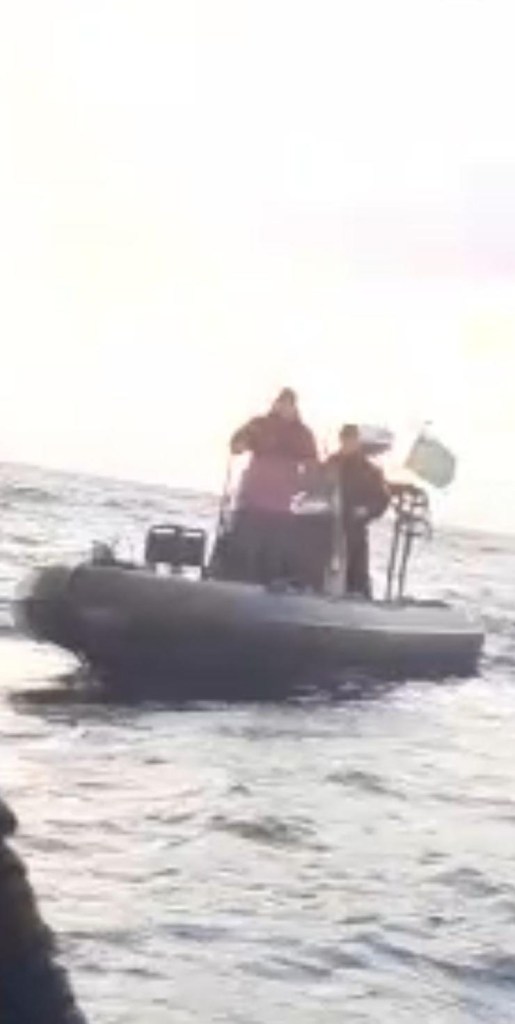
The Bulgarian Frontex vessel “Balchik” stopped at a safe distance, put a rescue RIB in the water, and approached the drifting overloaded rubber boat. The people onboard waved and shouted towards them, begging to be rescued, tried to explain that there was water coming into the boat, and they had many children onboard.
Again, under normal circumstances, the crew on the rescue RIB would first assess the situation, then start a rescue operation to transport people from the unseaworthy, fragile rubber boat, to the larger coast guard vessel.
For some reason, this didn’t happen.
The Bulgarian Frontex vessel and their rescue RIB, didn’t attempt to start any rescue operation, they only observed, while people in the rubber boat were begging them to help them. From video we have received, we can clearly see that none of the passengers in the rubber boat had life jackets. While observing from a distance, the crew of the Bulgarian Frontex vessel must also have seen the total lack of any rescue equipment onboard.
If something had suddenly happened to the rubber boat, that led to people ending up in the sea, the two officers in the rescue RIB wouldn’t have had any possibility of rescuing them all.
The RIB from the Bulgarian Frontex vessel didn’t even have life jackets with them to hand out to the people in distress, a clear indication that they had no intention whatsoever to rescue them.
After approximately 45 minutes, a Greek coast guard vessel arrived on location, and the Bulgarian Frontex vessel was ordered to leave the area. Why the Greek coast guard ordered Frontex to leave is quite obvious to the rest of us, but for the captain of the Bulgarian Frontex vessels, it didn’t seem to raise any concerns at all.
According to operational procedures, Greek authorities must, when ordering a Frontex asset to leave an incident, give a reason for this order, this reason should then be referenced in the report by the Frontex asset. Also, the Bulgarian Frontex vessel should have filed a report after the incident, as the agency’s rules state its operatives must report any incident in which there are suspicions or indications that violations of international laws or human rights have been committed.
Remember that they are not told to report when they are certain of such a violation, but when there is any possibility one has been or will be committed. We must assume that Frontex assets in the Aegean Sea under Operation Poseidon, are fully aware of the widespread and systematic pushback tactics by Greek authorities. For this reason, whenever a Frontex vessel is ordered to leave an incident involving refugees, it should be apparent to Frontex that there is a high probability that human rights violations will take place.
This should of course be reflected in the reports by Frontex, if such reports are written at all.
The procedures are crystal clear, any suspicion of human rights violations must at all times be reported, so why is this consistently “forgotten” by all Frontex assets in Greece under operation Poseidon?
Why are no such reports being filed by Frontex personnel in Greece? Over the last four years 3.000 pushback cases have been documented in the Aegean Sea, involving 82.000 people. These has been carried out by Greek authorities, heavily supported by Frontex and the EU Commission.
Perhaps this is why Frontex systematically ignores their duty to report on human rights violations in the Aegean Sea, covering up for Greek atrocities while protecting their own oppression?
In this incident, 37 people, 13 small children, were handed over to the Greek coast guard, who towed the fragile overloaded rubber boat back to Turkish waters, and set them adrift. They were left helplessly drifting in the middle of the sea. The Greek authorities didn’t even bother to provide them with life jackets or any other form of rescue equipment, they just left them.
Before leaving these vulnerable people adrift, they made sure to destroy the boat’s engine, removed the petrol, and took away all phones onboard, so that the people couldn’t document the crimes committed by Greek authorities, nor could they call for help if something went wrong.
At 11am, the Turkish coast guard found and rescued a group of 37 people, amongst them 13 small children, drifting in a fragile overloaded rubber boat off the coast of Karaburun, Turkey.
There isn’t much doubt on what happened here, nor who was responsible. Nevertheless, the Greek coast guard consequently denies pushing back boats, claiming that they turne around and head back towards Turkey by their own means.
The boat carrying 37 people had turned around and headed back to Turkey, travelled 20km with a destroyed engine without petrol, and while traveling back, they had thrown all their phones in the sea. This is the explanation Greek authorities want you to belive.
This case should have been immediately reported by the captain of the Bulgarian Frontex vessel “Balchik”. A Serious Incident Report (SIR) should have been filed based on the imminent danger of this group being pushed back to Turkey by Greek authorities.
No such report was filed, and the Bulgarian Frontex vessel deliberately covered up yet another illegal pushback in the Aegean Sea by Greek authorities. The cases we report on are only the tip of the iceberg. A very small percentage of these cases are ever documented to such an extent that it is possible to investigate.
In most cases there is no footage available. The criminals are getting away with the crimes, because Frontex are helping Greek authorities to cover up their crimes. Normal procedure in the Aegean Sea is that Frontex is assisting Greek authorities in stopping boats deep inside Greek territory waters, and is then ordered away, so that they won’t be a direct witness to the crimes and fundamental rights violations performed by Greek authorities.
They are basically told to look away, and are most happy and eager to comply, no questions asked, all in the name of EU border policy.
This particular case, and many similar cases, have been reported to the Fundamental Rights Officer of Frontex, not by Frontex assets involved as they definitely should, but by Aegean Boat Report.
This so that these cases can be investigated properly to see if Frontex is following its fundamental rights obligations in accordance with EU and international law.
In this case, as in many other similar cases, the conclusion is clear.
Frontex is not following its fundamental rights obligations in accordance with EU and international law, and Greek authorities are responsible for systematic illegal deportation of people from their territory.
Frontex fundamental rights officer, Jonas Grimheden, has repeatedly recommended Frontex suspends operations in Greece, based on years of systematic fundamental rights violations by Greek authorities.
So far, Frontex’s Executive Director, Hans Leijtens, Frontex management board, nor the EU Commission, has taken any notice of his recommendations.
Instead of suspending operations, they have significantly increased support and funding to Greek authorities, sending a strange message regarding the rule of law in Europe.
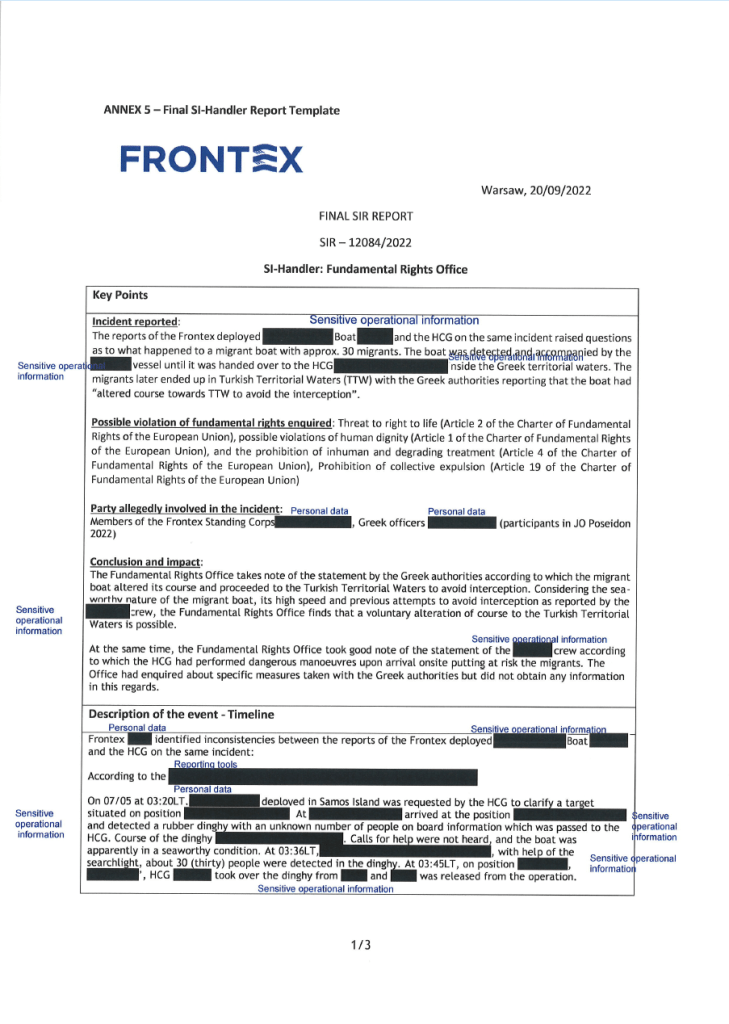
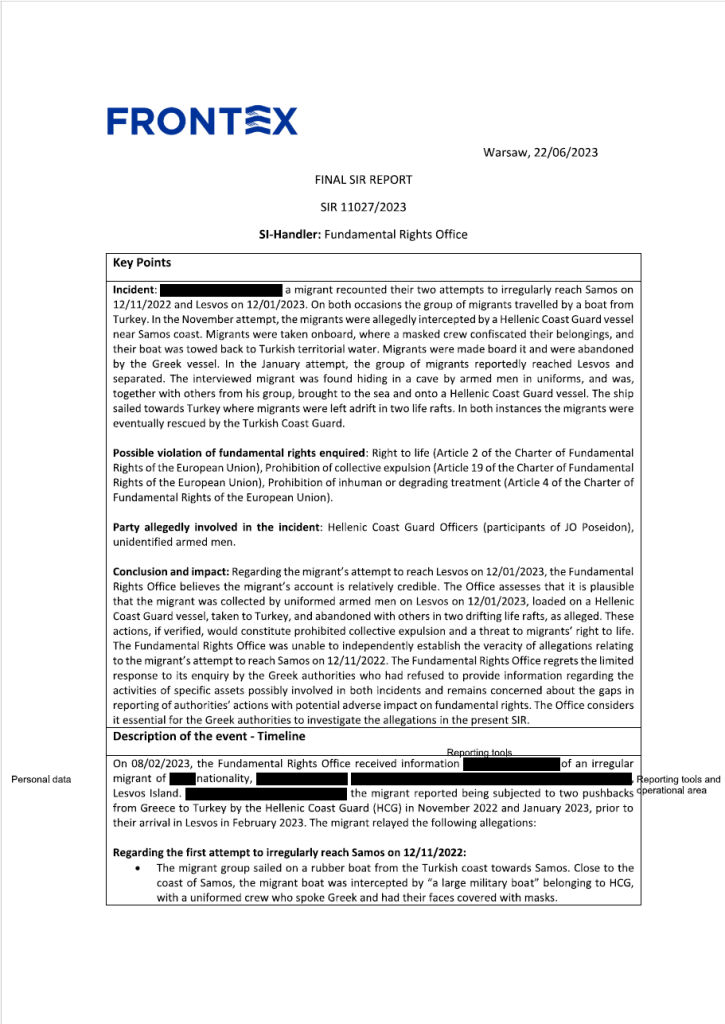
Last year many investigations were undertaken by the Fundamental Rights Office in Frontex. The two highest-profile cases were the Pylos shipwreck, where over 650 people were killed by Greek authorities in a fatal pushback attempt June 14 last year, and the Lesvos pushback on April 11, filmed by Fayad Mulla, and brought to light by the New York Times.
These two Serious Incident Reports had high public interest. The question is, did they actually have any impact, lead to any significant changes, or have any consequences for the Greek authorities?
The answer is unfortunately no, in both cases. None of these reports had any impact as far as we can see, no changes to the better have been made, and there are no consequences for the Greek authorities, nobody has been held accountable, and most likely nobody will.
This is not an acceptable situation. Whatever the reasons people have for wishing to escape their homelands, nobody deserves to be stripped of their possessions and set adrift to risk their lives at sea, and there is no excuse for anyone – let alone the world’s wealthiest political bloc and its members states – to do so.
EU taxpayer’s money is being spent on this outrageous crime, even as the EU itself demands to be regarded and respected as a promoter and protector of international law and fundamental human rights.
At what point do we the people of the EU and elsewhere demand that the EU lives up to its self-declared standards, and that Frontex stops aiding and abetting crimes in European waters?
Even if we cannot expect the current Greek government to behave like anything other than a vicious criminal cabal, such an expectation should be the least we can demand of the European Union and its agencies.
In the afternoon of 25 January, a boat carrying 38 people, all Afghans, had almost reached land in the north of Lesvos, when they were stopped by two vessels from the Greek Coast guard, and illegally pushed back to Turkey.
This happened while a Latvian Frontex vessel was present, seemingly only observing. It did nothing to intervene while these violations were performed by Greek authorities in front of them.
After a short chase, the officer on the Greek coast guard RIB managed to destroy the engine of the vessel carrying the Afghan people by beating it with a stick. This left the rubber boat immobilized, dead in the water.
In the videos taken by the refugees and presented to Aegean Boat Report, three vessels can be seen, two from the Greek coastguard – a white two-engine speedboat and a Lambro 57 coastal patrol vessel – and a Latvian registered OPS vessel, ID number RK-30, currently a part of Frontex’ Operation Poseidon, stationed on Lesvos.
The Greek coast guard towed the rubber boat back towards Turkey, and sat it adrift inside Turkish waters, leaving 38 people helplessly drifting in the middle of the sea.
A few hours later, they were found by the Turkish coast guard and taken back to Turkey.
The Latvian Frontex vessel, clearly present while this was happening, should have filed a report after the incident, as the agency’s rules state its operatives must report any incident in which there are suspicions or indications that violations of international laws or human rights have been committed; this time by Greek authorities.
In this case, since the rubber boat carrying 38 people had been stopped and towed back, and this had happened while a Frontex vessel had been present, there shouldn’t be much doubt that the Greek coast guard had performed an illegal pushback.
Strangely enough, no report was filed by the captain of the Latvian Frontex vessel. We can only speculate about why this wasn’t done.
According to EBCG Regulation and the Frontex Codes of Conduct, every participant in Frontex operational activities, must immediately report in the form of a Serious Incident Report (SIR), any situation of possible violations of fundamental rights.
Despite this clear ruling, we have investigated several cases – many of which we will publish the coming month – in which Frontex vessels have been involved in, or at least present during, pushbacks.
One common factor in all these cases is that Frontex vessels involved have not filed any reports. This means they are deliberately covering up Greek authorities’ human rights violations.
In the last four years we have registered 3.000 pushback cases, involving 82.000 people, carried out in the Aegean Sea by Greek authorities.
Throughout this four-year period, Frontex has had a heavy presence in the area: thousands of officers, hundreds of vessels, surveillance aircraft and high-tech equipment that have cost European taxpayers billions.
We would expect, with this kind of heavy investment in border surveillance, that they not only see and report on the people trying to reach Europe, but also those who have been “transported” illegally out of Europe.
Frontex informs, on a daily basis, Greek authorities about boats trying to cross into Europe in the Aegean Sea, which indicates that it has at least some control over or at least awareness of what is happening at sea in this area.
What is strange and difficult to understand is that they don’t report on pushbacks performed by Greek authorities in the same sea area, as if they are deliberately covering up these human rights violations to protect and ensure that Frontex can continue to operate in Greece.
As mentioned earlier, 3.000 pushback cases have been registered in the Aegean Sea in the last four years. What percentage of these cases would it be reasonable to believe that Frontex, because of their heavy presence in the area, have been witness to? And if they have not seen them, what are they doing? Why are they wasting our money on people and equipment which cannot see events taking place in the precise place they are working?
If I told you that in these four years, only 3 (that’s three) SIRs have been filed by Frontex officers on duty in Operation Poseidon, would you find it strange, a bit too good – or in fact bad – to be true? The EU’s border agency saw just 0.1 per cent of even the pushbacks we know have been carried out by the Greek Authorities? It seems astonishing.
We of course understand that Frontex, even with all their resources in the area, can’t see everything, but it would be reasonable to expect that they would have the same possibility to see traffic leaving the area they are surveiling, as their reports to alert the Greek Coastguard indicate they have to see that arriving.
How can Frontex explain that their officers have only filed reports on possible human rights violations – remember that they are not told to report when they are certain of such a violation, but when there is any possibility one has been committed – in just 0.1 per cent of the registered pushbacks performed by Greek authorities in the area in the last four years. It’s nothing short of remarkable. Astonishing, in fact.
It’s evident that Frontex, the EU Border and Coast Guard Agency, is systematically, not only covering up Greek human rights violations, but also is directly involved in pushback activities in Greece.
After the OLAF report – the report by the EU’s watchdog OLAF, which revealed Frontex had systematically ignored pushbacks carried out by the Greek Coastguard – was published, forcing the resignation of Frontex executive director Fabrice Leggeri in 2022, we expected (or at least were entitled to expect) to see drastic changes in how Frontex operates.
When the new head of Frontex, Hans Leijtens, took office in 2023, he promised to “restore trust” in the agency whose officers, the OLAF report proved, had turned a blind eye to the illegal pushbacks of men, women and children at several EU borders.
Leijtens said he wanted to make sure all his staff worked within “the boundaries of the legal framework” and emphasized that he was “responsible for the fact that my people don’t participate in anything called a pushback.”
He said the agency would be unable to carry out their jobs without that trust.
Leijtens promised to govern the future work of the agency with three principles, accountability, respect for fundamental rights and transparency, in which he has failed miserably.
We wonder if Hans Leijtens will, since he said he was responsible, take full responsibility for the illegal activities performed by Frontex officers under Operation Poseidon, and resign as head of Frontex?
Leijtens hasn’t made any significant changes in Frontex. At best he’s nothing more than a puppet doing the Commissions bidding, a bad reflection of his predecessor Leggeri, new wrapping, perhaps, but the same content.
Speaking of Frontex’ leadership, however, we must also ask when the European Commission will take seriously its responsibility for the rule of law and fundamental rights in Europe?
The Commission refused to publish the OLAF report – the reason the people of Europe have learnt anything at all about the report and the actions of an agency the EU Commission has direct control over, and which it uses our money to pay for, is because it was leaked to a newspaper.
A little while before that, the EU Commission’s vice president for ‘promoting {previously ‘protecting’} our European way of life’, Margaritis Schinas – a Greek politician formerly of Nea Dimokratia, the party which has ordered the thousands of pushbacks carried out by the Greek Coastguard in the last four years, and with overall responsibility for the actions and behaviour of Frontex – boasted that ‘I have not read’ the OLAF report: it had been available to him and his colleagues for six months.
What does K. Schinas think his job is, if not to read investigative reports carried out and composed by the EU’s watchdog agency into a body he is responsible for? He didn’t deny that the OLAF report was true – this would have been impossible to stand up, but would at least have shown he was engaged in some way – but said he hadn’t even read it. How is a man happy to not just admit but boast about such neglect of his post allowed to retain it? Has the Commission lost control even of itself?
Not only that, when Leggeri was – correctly – forced to resign, he stated in a letter made public that he had been instructed on taking over at Frontex that it was to be a uniformed border control force, charged with preventing people seeking safety from entering the EU. This is not what Frontex is supposed to be, by the Commission’s own definition. It is certainly not what members of the EU Parliament are asked to approve Frontex’ budget for – at least in public.
Perhaps more importantly, there are only three people in the Commission with any power to make demands of Frontex’ Chief Executive. We are happy to name them, as the information is in the public arena:
the EU Commissioner for Home Affairs, Ylva Johansson (who has at least had the decency on occasion to accept pushbacks are taking place and to criticise them)
the previously named Margaritis Schinas (who denies any pushbacks have ever taken place and was until taking his EU post a member of the party carrying them out), and
EU Commission President Ursula von der Leyen, who has been a prominent opponent of people entering the EU, and in March 2020 told Nea Dimokratia members that Greece was ‘the EU’s shield’ in the immediate aftermath of the party illegally sending soldiers and armed police to open fire (with rubber bullets) on, and teargas, men, women and children attempting to enter the EU from Türkiye.
Despite this, there has been absolutely no investigation by the EU Commission or any other EU body into what would have been an absolute violation of European law, and, by misleading the elected members of the European Parliament, also of the rule of law at EU level, and the European public.
Why is this? What does the Commission stand for, if not the upholding and implementation of European law?
We cannot sit back and simply allow this horrendous violation of the law, of Frontex regulations, and of simple human decency, to continue.
The Commission must investigate how Frontex has been so twisted from its stated purpose, and why its officers see fit to break even the agency’s own rules. It must also launch infringement proceedings against the Greek authorities for systematic and widespread violations of international law and human rights.
Finally, given all the above, it’s time for Frontex to pull out of Greece.
In the morning of Sunday, April 7, a group of 72 people – 52 adults and 20 children – was adrift in a sailboat five kilometres south east of the Greek island of Leros, in the Dodecanese in the southern Aegean Sea.
The 72 people were a mix of Syrian (52), and Palestinian (20) nationals.
None of the passengers were wearing life jackets, and there was no rescue equipment onboard. If, for some reason people ended up in the sea, many would drown, most of them couldn’t even swim.
The sailboat had set out from the Turkish shore the previous night, and people onboard had hoped that the cover of darkness would help them reach Leros undetected. They almost succeeded.
But a few kilometres from land, the engine broke down, just as the sun started to rise from the sea. They tried to fix the engine, but to no avail: it wouldn’t start again.
The boat had sails, but nobody onboard knew how to use them. They were helplessly drifting, and in desperate need of rescue.
At 10.07am, the group reached out to Aegean Boat Report on our Emergency Hotline, and it was obvious the boat needed immediate rescue.
The appropriate body for the SAR area, the Greek authorities, was informed about the situation.
The passengers onboard the boat had also called the international emergency number, 112: everyone was informed. The group were told that boats were on their way to their location.
Shortly after, a vessel arrived. From videos taken by the passengers of the sailboat, we can clearly see that it’s a Lambro 57 Coastal Patrol vessel, ID number ΛΣ-608.
The boat belongs to the Greek Hellenic Coast Guard, and is stationed in the port of Leros.
The drifting passengers were relieved at first, but the coast guard vessels stayed at a distance from the sailboat, slowly circling around it, not making no obvious effort to approach or communicate with anyone onboard.
The group tried to signal to get them to come close, waving their arms, shouting, but there was no response. They could clearly see people on deck, all in dark uniforms, all wearing masks. This last detail, the masks they wore, worried them: they had not only seen these masked men before, many had experienced their brutality first hand in the past.
Aegean Boat Report was in continuous contact with the drifting passengers while this was going on, on multiple phones onboard. Those onboard raised their concerns, and when receiving the videos, we were concerned as well. It didn’t seem that the Coastguard was making any effort to initiate a rescue, so what were they waiting for?
We told the passengers to try to document as much as they could, for as long as they could, by taking pictures and videos, and immediately sending them to us. This was to be able to prove what happened, in case something went wrong. In this case, this evidence is the only proof that exists of what happened to them. Without this footage we have had no way to publish this case, and prove without any doubt what the Greek authorities did.
After one hour, the group saw a second, larger vessel heading towards them. The group again got their hopes up: finally someone came to actually rescue them.
Unfortunately, when the vessel came closer, their hopes turned to despair. On the deck of the vessel, they could clearly see men in dark uniforms, also wearing black masks.
It started to dawn on the group that they might not be rescued, that these vessels were not there to take them to the nearest port of safety, but to illegally push them back to Turkey.
The larger vessel was one of four P355GR coastal patrol vessels in the Greek coast guard, this one marked ΛΣ-930, an identical vessel to that involved in the Pylos shipwreck, the ΛΣ-920, which was responsible for the killing of more than 650 men, women and children on 14 June last year, when the Greek authorities tried to push back a overcrowded fishing vessel adrift inside Greek SAR zone.
These vessels were 90% funded through the ISF (Internal Security Fund), within the context of ‘Special Action for Frontex equipment’, total price €55.56 million – €50 million of European taxpayers money, used to finance violations of international laws and human rights in the Aegean Sea.
By EU and state regulations and laws, EU funds are to be used according to EU law in accordance with fundamental rights. On both counts, the European Commission has drastically failed, neglecting its duty to the people. Not only that, they continue to pour money into Greece, refusing to take any responsibility for their actions, looking the other way while the Greek authorities are systematically violating fundamental rights, all in the name of “border protection” and the “European way of life”.
Shortly after the second coast guard vessel arrived at the drifting sailboat, all contact was lost with the passengers onboard: all their phones went offline simultaneously and we could not regain contact.
At this point, we decided to go public with what we knew at the time, and posted about the drifting boat outside Leros on our social media platforms, to inform the public in an effort to try to protect the people onboard.
On this we unfortunately failed miserably, and we apologise for not being able to do more for these vulnerable people.
At the time, even though we had our suspicions, we had no tangible evidence that would confirm that the 72 people on the sailboat would be pushed back, and we hoped that the Greek authorities would follow international law.
In this case, as in hundreds of others, they didn’t, but this was at the time impossible to prove.
Today we can, and we are, by publishing overwhelming amount of evidence that clearly proves the crime committed by Greek authorities. There is absolutely no doubt what happened.
At the time, however, we had to follow protocol, and not publish anything we couldn’t back up with hard evidence.
We looked for information on Leros, to see if by any chance the group arrived there. We also looked at Samos and Kos, but the 72 people were nowhere to be found.
Official information published by the Greek authorities confirmed that no group of this size was registered on the Greek islands that day, nor the following one.
We did find that a smaller group of 25 people had been registered on Leros this day, but this group was too small, and had arrived in Xirokampos by their own means, rather than being taken in by the coast guard.
This was later confirmed both by local press and the Greek coast guard.
On Sunday 7 April at 3.25pm, the Turkish coast guard found and rescued 72 people, 52 adults and 20 children, 52 Syrian and 20 Palestinian nationals, from three life rafts drifting outside Bodrum, Turkey, north east of the Greek island of Kos.
When comparing pictures and videos of the people onboard the sailboat outside Leros, with the footage taken by the Turkish coast guard, when picking them up outside Bodrum, there is absolutely no doubt: it is the same group, no question.
So the natural questions would be “how did this happen?” and “who is responsible?”,
We can in this case, as in many previous documented cases, answer both questions. It was quite clear, since this group didn’t arrive on any of the Greek islands, that they had been pushed back. How this was done, and how these people had been treated, we had no information on. Until now.
What we have been told by the victims after we reconnected with them in Turkey, may come as a shock for many. We have unfortunately heard testimonies very similar to these – especially in terms of the extreme and ilegal violence used by the Greek Coastguard – many times before.
The coast guard vessel P355GR placed two officers onboard the sailboat, armed with guns, batons and rifles, while officers standing by the railing above on the coast guard vessels were aiming at them with shotguns.
Illustration Images
Everyone onboard was ordered to turn off their phones, which the officers onboard then stole, along with other valuables.
The officers immediately threw the phones into the sea, while valuables like money and jewellery were collected in a bag.
Before taking them onboard the coast guard vessel one by one, they thoroughly searched everyone, looking for hidden objects. Nobody was allowed to take any of their belongings, not even food and water for the children onboard.
While people were searched, the officers began beating them. Their colleagues on the coast guard vessel were shouting, everyone was terrified, especially the children, watching these masked men attack their parents, while angry men – also in masks – pointed guns at them from above.
Everyone was crying, begging for them to stop, nobody listened. Not everyone was at first willing to obey all orders, but those who refused were attacked by the Coastguard officers.
The officers broke one woman’s arm because she refused to take off her clothes in front of everyone. Her three children were watching. The officers forced her clothes off.
This Woman`s arm was broken
When everyone was taken onboard the coast guard vessels, the abuse continued. Some of the officers weren’t satisfied with the search done onboard the sailboat, and began to search passengers again, but this time, for some reason, mostly ‘searched’ only the women.
The officers forced the women to undress in front of them: no area of the body was left untouched in the search for valuables and other hidden objects.
Some loudly protested. They were beaten with batons and a buttstock.
One of the victims said “these monsters were familiar with the use of violence, some even seemed to enjoy it”.
The people were placed on deck, most in the front of the coast guard vessel, and forced to sit and look down. They were not allowed to talk.
This lasted for several hours, while the boat was heading back out to sea. They had no idea where they were heading, because the rairailing was to high, so they could not see.
After several hours, the boat stopped, and people were taken in groups to the side of the vessel, where life rafts had been placed in the sea.
Again, people tried to protest, and again it was resolved by force. Those who refused to enter the rafts were pushed or kicked down the stairs towards them.
Once everyone was in the rafts, the coast guard vessel quickly moved away.
The 72 people, amongst them 20 children, were left helplessly drifting in the Aegean Sea by officers of the Greek coast guard, on direct orders from Greek authorities, financed and blessed by the European Commission.
The Turkish coast guard received notification by email from the Greek coast guard, as they normally do after people have been pushed back by Greek authorities, that a group of people were drifting inside Turkish territorial waters.
The Turkish coast guard went to the area and found three life rafts packed with people.
The Greek coast guard vessel had transported the group of 72 people, men, women and children almost 50 miles, to illegally push them back to Turkey.
There is not much doubt about who is responsible, and this is hardly an isolated incident.
In the last four years, 81,000 people have been pushed back by Greek authorities in the Aegean Sea, 25,000 of them in over 1,400 Greek manufactured life rafts.
Everyone knows what is going on, it’s even paid for by European taxpayers money, and blessed by the European Commission.
The vessel used in this brutal pushback is, as already mentioned, the same type of vessel used in the pushback attempt of the overcrowded fishing vessel “Adriana”, in which over 650 people were killed last year.
The Adriana
In that shipwreck, close to Pylos in Greek waters, no video material was provided to the investigation from the high-tech surveillance system onboard the Greek Coastguard vessel, with the excuse that it was “turned off”.
We wonder if this time the surveillance system was on, and the Greek authorities can provide footage that contradicts our evidence and the statements from the victims, or perhaps it was also this time conveniently turned off or “under maintenance”.
The main mast with the sensors, Close-up photo of the advanced ELOP electro-optical payloads
In March 2021, Frontex calls for the Coast Guard vessels funded by the organization to video record their operations.
To be crystal clear, in scope og EU regulation 656/2014, “all actions taken by Frontex assets or Frontex co-financed assets, should be documented by video consistently”.
According to Solomon, `Frontex had recommended the visual recording of operations, during a meeting where representatives from Greece were present as well as from other European countries, following complaints of human rights violations by the Coast Guard.`
We have, as we routinely do in cases like this, where Frontex vessels or Frontex assets are seemingly involved in, or witness to, human rights violations, turned all evidence over to Frontex’ Fundamental Rights Office.
The Fundamental Rights Officer (FRO), and the staff of the Fundamental Rights Office, have an independent role within Frontex to support its work from a human rights perspective, and to reinforce the respect, protection and promotion of fundamental rights.
The FRO has the mandate to initiate investigations, called Serious Incident Reports (SIRs), if there is an indication that Frontex vessels, or Frontex funded assets, have been violating laws and/or fundamental rights.
Example report, this from a SIR report from Lesvos in 2023
So the FRO cannot start an investigation since the vessel at the time of the incident was not on “Frontex duty”.
Even harder to believe, since they were financed through the ISF, each of the four vessels must spend 4 months every year on Frontex operations, including outside of Greece: they are “Frontex assets”.
But no investigation can be launched by the FRO as long as the “Frontex asset” is not on Frontex operations paid for by Frontex, as in this case it was not.
It’s hard not to conclude that these regulations and protocols were designed specifically to ensure that nobody could be held accountable for anything done by these vessels and their crews, but in this case someone is accountable: The European Commission.
But the Commission is totally unable and/or unwilling, to take any responsibility.
In the case of these vessels funded through the Internal Security Fund, or any other funding to member countries, EU money can only be used according to EU law in accordance with fundamental rights.
These rules are clear, and set out in the Common Provisions Regulation. But there is no monitoring mechanism or enforcement of any kind to ensure this regulation is adhered to.
It’s clear that Ursula Von Der Leyen and the European Commission has failed in its duty, not only a little but miserably, and not only once but over and over again, in its commitment to ensuring EU cash is not handed over to fund criminal activity.
In the last four years, the rights of over 81.000 people have been brutally violated in the Aegean Sea, where Greek authorities have used EU funded or co-funded vessels to “protect” the European Border.
Not one infringement procedure or independent investigation has been launched by the European Commission into these well-documented human rights violations. Nobody is held accountable, and funding continues to be hurled at Greece in the name of “border protection”.
At what point will the European Commission start to follow its own laws? When will it demand accountability from EU member states? And when will it start infringement procedures against those who systematically undermine the rule of law in Europe?
It’s about time the European Commission stops acting like an ostrich, putting its head in the sand believing that nobody can see him.
Over the last month we have registered a shift in routes used by people seeking international protection in the Aegean Sea.
Normally, people crossing from Turkey towards the Greek islands have had Lesvos, Chios, Samos and Kos as their main destination. Now, smaller islands seem to get more arrivals.
Why this is happening now could have severe explanations, but we believe more focus and surveillance by Greek authorities and the European Border and Coast Guard Agency Frontex, around the bigger islands is the main reason.
This, together with a more active approach by the Turkish authorities to actually try to stop boats from crossing into Greek waters, and the fact that they are moving Afghans away from coastal areas in the North Aegean, has drastically reduced crossings.
We are now in almost daily contact with people arriving on islands like Ikaria, Fournoi, Patmos, Leipsoi, Nisyros, Tilos, Pserimos and Kalimnos, previously this was the exception, now it’s starting to move towards the rule.
This might seem like a strange change, since people arriving on the main islands don’t face the risk of being pushed back as they previously did. The “hunt” for new arrivals by masked men suddenly stopped after the Pylos shipwreck, and as far as we have been able to document, all arrivals on these main islands, are now taken to camps and given the opportunity to apply for international protection.
But this is many times not the case on these smaller islands: especially the less populated ones. So why would people take the chance of going there, if the risk of being pushed back is higher?
The problem isn’t that they fear being pushed back after they arrive on a Greek island, they fear more being pushed back at sea before they arrive. The risk of being pushed back from smaller islands, especially deserted ones, is a genuine risk that we have documented, but it seems they are willing to take this risk, because the risk of being pushed back at sea around the main islands is much higher.
On and around the main islands the surveillance has drastically increased over the last years, more eyes are watching the sea area, not only those of Greek authorities, but also of Frontex, from land, air and sea. The chance of getting across the sea border in these areas was previously very low. Now, after Turkish authorities have intensified their efforts to stop boats in these areas, it’s almost impossible to get across undetected. The chance of getting across in these main areas has gone from 70% to under 30% in just a month. We believe this is no coincidence, and is suspected to be firmly linked to a deal made between Greece and Turkey, supported by the EU Commission. What Turkey has been offered is so far unknown, but it’s highly unlikely that Turkey would settle for nickels and dimes.
To understand this shift in movement, you need to have some understanding of how smugglers operate in Turkey. It’s not as if the people in the boats have much say in the decision on whether they are sent towards a big island or a small one: they basically do as they are told and hope for the best.
Smugglers only get paid if they successfully manage to get their “product” transported from point A to point B. If for some reason the transport is stopped and returned, the smugglers don’t receive payment, and are given a new opportunity to successfully deliver their services. If they are unsuccessful several times, the customer can take their money to another smuggler, leaving the previous smuggler with the costs of boats, engines, petrol etc. without getting paid. This is of course not good for business, and if too many obstacles are hindering their work, they change strategy. This is what we believe has happened.
Crossing attempts in the Aegean Sea the last month has gone down by more than 50%, from 246 cases in February, to 119 in March. We normally would have expected that pushback cases, and especially cases where people are pushed back in life rafts, would follow a similar pattern. On the contrary, despite the fact that crossing attempts have gone down by more than 50%, cases in which people have been forced into life rafts and left helplessly drifting in the Aegean Sea have not decreased, but instead increased 8% compared to February.
It’s a worrying development worth noting. It’s that smugglers in Turkey are now targeting these smaller islands as their transport destinations, not out of the kindness of their hearts and a genuine concern for their customers wellbeing, but out of necessity to make money off the back of vulnerable people, whose routes towards safety in Europe have been firmly closed by European authorities.
People are now arriving on islands which are not equipped or prepared to handle increased arrivals, nor have the necessary infrastructure and resources to quickly initiate rescue operations, if boats are in distress.
None of the main humanitarian organizations have staff on these smaller islands. There is basically no ground support in place to support them with shelter, food, clothes and medical attention. Also, the routes towards these islands are longer: any crossing in a rubber boat towards any island is very dangerous, and the more time people must stay in these fragile boats, the higher the risk of something going terribly wrong.
We fear – in fact, we are certain – that more lives will be unnecessarily lost if smugglers continue to use these longer routes.
The only solution to this problem, and the only way to put smugglers in Turkey out of business, is not to put in place more obstacles, but to open legal safe pathways into Europe for people seeking international protection.
The smuggling industry in Turkey making billions from people’s suffering, is a product of our time, it was not created in a vacuum. Smugglers have existed as long as people and states have tried to hinder the movement of goods and people: for better or for worse, they are serving a purpose, responding to and providing for, a demand in the market, not from kindness, but necessity. Any market is driven by a very simple principle, supply and demand, one will not exist without the other. We can in this case ask who or what created the demand, and the answer isn’t rocket science.
When we put up walls and fences, we at the same time create an opportunity for people to make money. We might try to say “we are not responsible”, and directly this is in many cases true, but indirectly we are very much responsible: anyone denying this fact is delusional.
Throughout history people have, for various reasons, wandered this Earth, and over time moved from one area to the next, following mainly resources and climate change.
Nothing has changed, people are still in need of finding new places to live, mostly out of necessity, as a result of war and climate change, but now we have put up fences and walls to try to hinder people from finding safety, with the excuse of self-preservation and protection.
In the short term, it might seem to be “working”, but in the long run nothing can stop people from moving. If determined or desperate enough, they will always find a way, a more dangerous and deadly way, but in the end it will not matter, because they have no other alternative if they want to live.
It is well beyond time that the Greek government, and all governments, including the EU, recognised this.
Not only are the policies of ‘deterrence’ incredibly expensive, they are absolutely failing. Of course they are: by increasing the risk and reality of mass death on the sea, they are efforts to force the entire flow of human history to change.
They are doomed to always fail. For the good of our moral health, for the good of our economic health, and for the welfare of men, women and children like ourselves, we have to change.
In place of our litany of failure, at the cost of tens of thousands of deaths, we must set up safe routes, in affordable or free transport, for those who need it, to save lives, save enormous amounts of money, and put smugglers out of business.
Kudos to all those who, on a daily basis, do their utmost to fend for the rights of people at our borders!
To support our work and help us continue saving lives in the Aegean, please donate through LeaveNoOneBehind fundraiser by clicking on the link below 👇👍